
Livraison le jour même ou le lendemain

Qualité garantie

Débloquez vos offres de bienvenue: Livraison GRATUITE | Jusqu'à -80 % | 30 jours d'essai gratuits à JoyPlus
Téléchargez l'application
When the cold sets in or a room remains stubbornly chilly, a space heater is the ultimate backup solution for immediate comfort. The problem? The market is flooded with models making attractive promises that can quickly turn into money pits. Between skyrocketing electricity consumption and unreliable devices, it's easy to make the wrong purchase.
Before pulling out your credit card, here are the traps to avoid at all costs?:
To see things more clearly and make the right choice, focus on the few technical specifications that really make a difference. These are what will guarantee your comfort, your safety, and control over your budget.
The type of technology has a direct impact on the quality of the heat, comfort, and efficiency.
The power, expressed in watts (W), must be suited to the size of the room to be heated. But raw power isn't everything. For an energy-efficient space heater, two functions are indispensable?:
A portable electric heater must, above all, be safe. Always check for the presence of the following features?:
To help you make sense of it all, here are a few models that perfectly illustrate these criteria and meet specific needs, all while avoiding the common pitfalls.
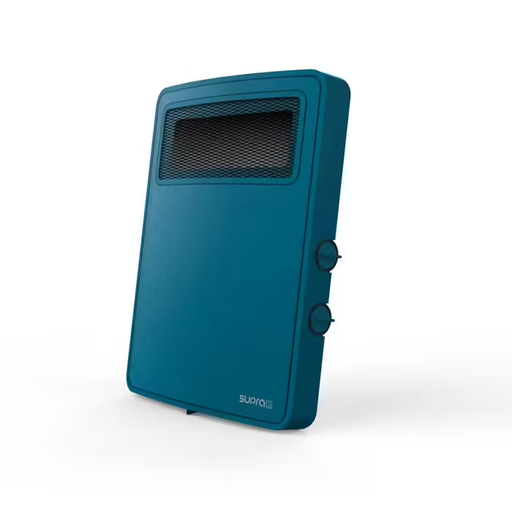
The profile : Perfect for occasional, targeted use. Simple and mobile, it heats a small office or bedroom in minutes before you settle in, without being cluttered with superfluous features.
This model is designed for quick, short bursts of heat. The user is in control; it's not meant to run continuously for hours, which prevents overconsumption.
Immediate forced-air heat; Ultra-portable and lightweight (1.85 kg); Two heat settings to adjust power.
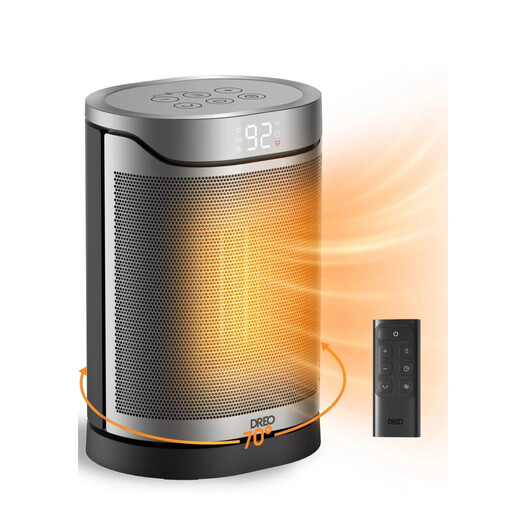
The profile : The ideal companion for remote workers or those looking for a silent space heater for a bedroom. Its precise thermostat and Eco mode maintain a comfortable temperature without sending the bill through the roof.
It debunks the "silent" myth by providing a measured, low noise level (25–42 dB). It also avoids the raw power trap thanks to its thermostat, adjustable to the degree, and its various heating modes.
PTC ceramic technology; Precise thermostat (5–35 °C); Complete package of 8 safety features (Shield360?); Remote control included.
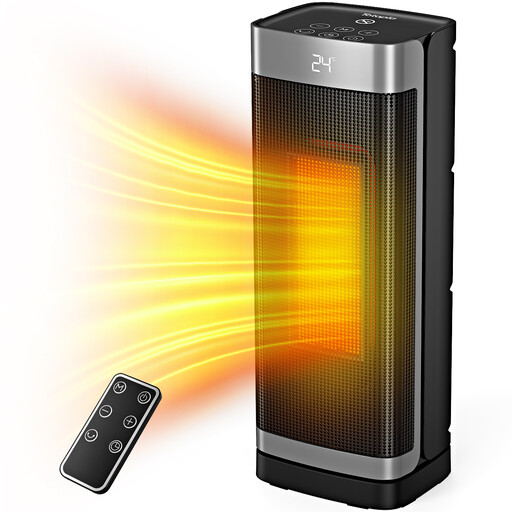
The profile : With its 2000W of power and wide oscillation, this model is built to heat a living room or playroom. The remote control and 12-hour timer make it very practical for daily family use.
It checks all the safety boxes by including overheat protection and a tip-over switch. This provides peace of mind for use in a busy living space.
2000W power for larger spaces; Oscillation for even heat distribution; Remote control and 12h timer.
We have selected a full range of products that meet our selection criteria and UK safety standards.
Consumption depends on its power (in watts) and how long you use it. A 1500W (or 1.5 kW) device running at full power for one hour consumes 1.5 kWh. To control your bill, opt for a small electric heater with a precise thermostat and an Eco mode: it will only turn on when truly necessary.
Not necessarily. The ceramic (PTC) technology relates to the heating element, not the fan. The noise primarily comes from the fan. That said, ceramic models, which are often higher quality, tend to incorporate better-designed motors and blades (e.g., DC brushless motors), which reduces noise. The only true measure is the decibel (dB) value provided by the brand: aim for under 45 dB for a quiet environment.
Absolutely not! The use of an electrical appliance in a wet room is highly regulated. A space heater for the bathroom must be certified with an appropriate Ingress Protection (IP) rating. The bare minimum is the IP21 standard, which guarantees protection against vertical water drips. Always check for this certification before buying a device for this purpose—it's a critical safety issue.