
Livraison le jour même ou le lendemain

Qualité garantie

Débloquez vos offres de bienvenue: Livraison GRATUITE | Jusqu'à -80 % | 30 jours d'essai gratuits à JoyPlus
Téléchargez l'application
When the temperature drops, quickly heating a specific room becomes an obsession. A freezing office while working from home, a chilly bathroom first thing in the morning, a guest room that needs to feel welcoming... the space heater emerges as the go-to solution. But be careful—faced with a jungle of models and sometimes vague marketing promises, it's very easy to make the wrong choice.
As a Product Specialist at Joybuy, my job is to do the legwork for you. Let's forget the technical jargon and get straight to the point: finding the appliance that will truly meet your needs, without sending your electricity bill sky-high.
The market is overflowing with tempting promises. Before you pull out your credit card, keep these three classic pitfalls in mind that often lead to buyer's remorse.
To get it right, scrutinise these three essential criteria. They are crucial for judging the effectiveness and suitability of a space heater.
There's no single miracle technology, but rather several solutions, each with its own strengths.
Power, measured in Watts (W), determines the appliance's ability to heat a certain volume. As a general rule, you need about 100W per square metre for a well-insulated room with a standard ceiling height (2.5m).
But for a low-energy space heater, raw power isn't everything. The real difference lies in smart features:
A portable electric heater must be equipped with reliable safety features. Always check for the presence of these three elements:
To move from theory to practice, let's see how these criteria apply to a few models designed for very different user profiles.
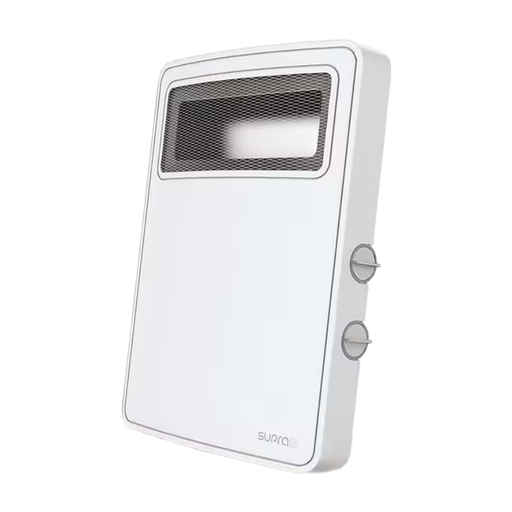
Why it's a match: Perfect for a quick, targeted blast of heat in a bathroom (just before a shower) or an office. Its compact size and handle make it very easy to move and store.
No false promises: it doesn't claim to be silent, but instead focuses on fast, directional heating. Its IPX1 certification is clearly displayed, qualifying it for safe use in a bathroom (outside of direct water spray zones).
Its lightning-fast heat-up time and two heat settings (1000/2000W) allow it to adapt to any situation. The washable dust filter is a real bonus for maintaining air quality.
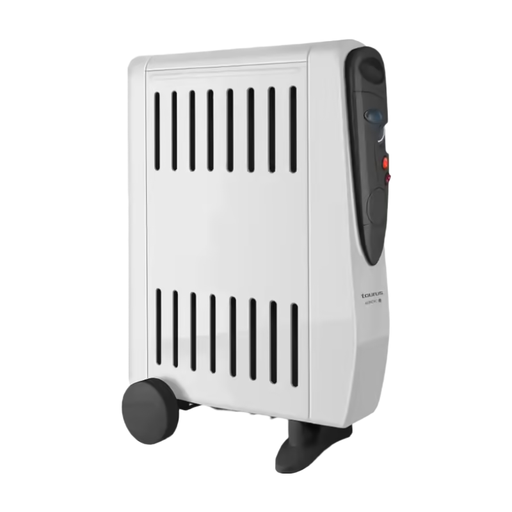
Why it's a match: Ideal for maintaining a cosy temperature in a bedroom or living room without any background noise. Its inertial heat is gentle and continuous, and will never disturb your sleep or concentration.
Here, silence isn't a marketing gimmick but a direct result of its oil-filled technology, which operates without any fan. It therefore perfectly meets the quest for a silent space heater.
Its dual heat diffusion (via radiation and convection) ensures perfectly even warmth. The integrated humidifier is a clever feature to combat dry air, a common complaint about electric heating.
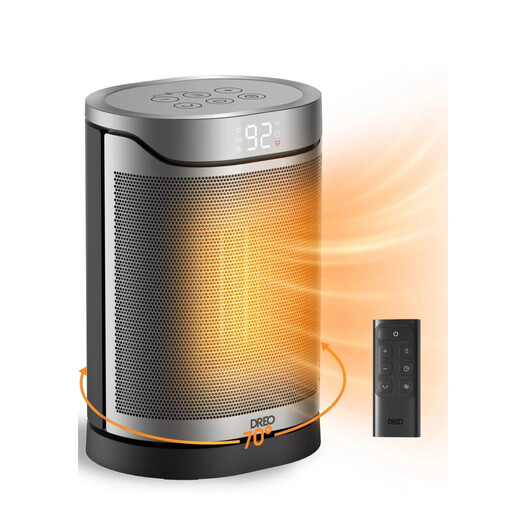
Why it's a match: For those who spend hours at their desk and want an appliance that is powerful, safe, and discreet. It combines the speed of ceramic heating with handy modern features like a remote control and a timer.
It avoids the overconsumption trap thanks to its precise thermostat (adjustable from 5 to 35°C) and smart power modes. The result, according to the manufacturer, is real energy savings for consistent comfort.
Its comprehensive safety system (Shield360?), including tip-over and overheat protection, offers complete peace of mind for extended use. Its particularly low noise level (25-42 dB) makes it very discreet.
We have put together a complete, up-to-date selection of products that meet our demanding selection criteria and French safety standards.
A 2000W (or 2 kW) appliance running at full power for one hour will consume 2 kilowatt-hours (kWh). The cost will, of course, depend on the price per kWh set by your electricity provider. In practice, however, a space heater rarely runs at full power continuously. The key to controlling your bill is to use the thermostat, timer, or ECO mode to heat only when it's truly necessary.
It is highly recommended to choose a model designed for this purpose. An oil-filled radiator with a thermostat is the safest option for overnight use, thanks to its stable heat and lack of a fan. If you prefer a fan heater, ensure it is equipped with essential safety features (overheat and tip-over protection) and, if possible, a timer to schedule its shutdown. In any case, the golden rule remains the same: place the appliance far away from any flammable materials (curtains, duvets, blankets...).
Yes, for quickly warming up the room before you get into bed. However, for prolonged use overnight, the fan noise can quickly become disruptive for light sleepers. For optimal nighttime comfort, a silent space heater like an oil-filled radiator or a ceramic heater with a "night" mode is much more suitable.