
Livraison le jour même ou le lendemain

Qualité garantie

Débloquez vos offres de bienvenue: Livraison GRATUITE | Jusqu'à -80 % | 30 jours d'essai gratuits à JoyPlus
Téléchargez l'application
Is your central heating struggling to reach the back office?? Does the guest room feel like an icebox?? That's your cue: the time for an electric space heater has come. But be warned, the market is a jungle of marketing promises designed to make you fall for the wrong device. Our mission: to help you decode fact from fiction and make an informed choice, far from the siren song of advertising.
Before you start, watch out for these three common pitfalls?:
To avoid making a mistake, focus on a few technical parameters that define a device's performance and suitability for your needs.
The power, in Watts (W), must match the size of the room. The rule of thumb?? Allow about 100W per square metre for a properly insulated room with a standard ceiling height (2.5?m).
A space heater with a thermostat is essential for maintaining a stable temperature and optimising consumption. It shuts the device off once the desired temperature is reached and turns it back on if needed.
A good portable electric radiator should be truly portable. Check for sturdy casters and an ergonomic handle to move it effortlessly from one room to another. On the safety side, ensure the device has at least the following protections?:
Here are a few models that cater to different user profiles, taking into account performance and safety criteria.
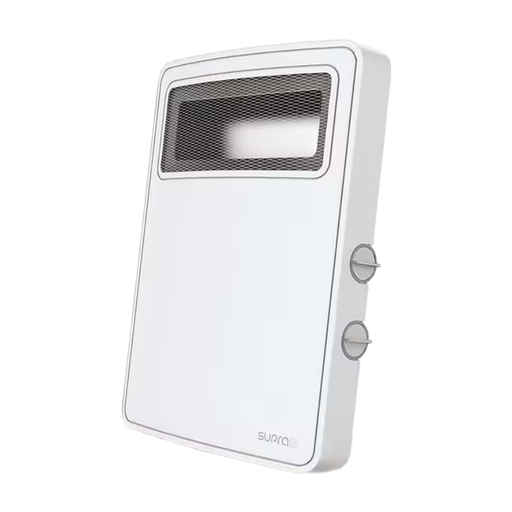
Why it's a match : Ideal for those looking for a simple and quick solution to occasionally heat a room. Its flat design and handle make it easy to store and move. It gets straight to the point: heating quickly and effectively.
It includes essential safety features (tip-over, overheat) and its IPX1 certification allows for occasional use in a bathroom. It thus sidesteps the classic pitfall of using an unsuitable device in a wet room.
Two power levels (1000W/2000W) and a mechanical thermostat for simple control. Its cool fan function makes it a useful 2-in-1 device all year round.
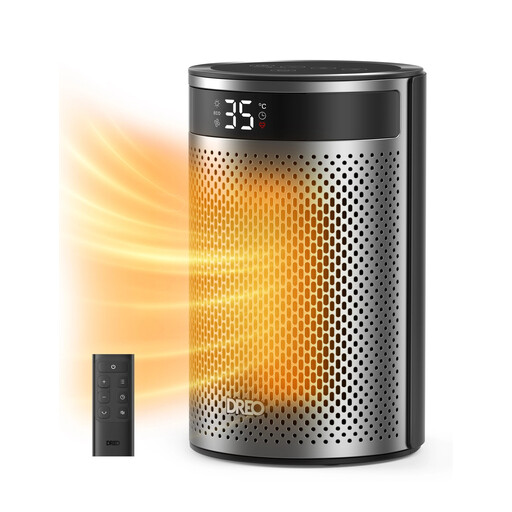
Why it's a match : Perfect for a bedroom or office, this device combines the speed of PTC ceramic heating with quiet operation. Its precise thermostat and ECO mode make it an ally for controlling consumption without sacrificing comfort.
It directly tackles the noise trap. Its brushless DC motor promises a very low noise level (34 dB), as quiet as a library. Here, the promise of silence isn't an empty marketing claim: it's backed by numbers.
Adjustable thermostat from 5 to 35°C, 12h timer, remote control, and a comprehensive safety system (Shield360?). Its ECO mode allows for smart energy management.
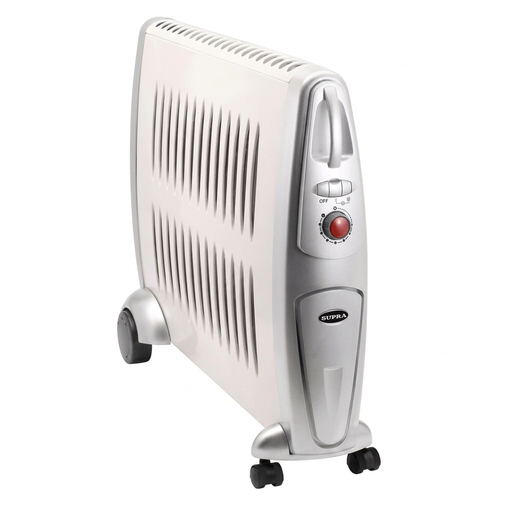
Why it's a match : For those who find that electric heating dries out the air, this model is a two-in-one solution. It combines gentle, inertial heat with a humidifying function to maintain optimal ambient comfort.
It tackles a common, annoying side effect of space heaters: dry air. Its built-in 0.7 L humidifier maintains a comfortable humidity level, a real plus for overnight use.
Dual heating core (heating element + ceramic) for fast and lasting heat. Three power levels (600/900/1500W) and a triple safety system (thermostat, limiter, tip-over).
Our editorial team has analysed and selected other models that meet our performance and safety criteria.
It depends on its power (in kW) and your usage duration (in hours). The calculation is simple: Power (kW) × Number of hours × Price per kWh from your contract. For example, a 1500W (or 1.5?kW) device turned on for 3 hours will consume 4.5?kWh. To keep the bill in check, nothing beats a precise thermostat and a well-managed ECO mode.
Yes, but under strict conditions. The device must be explicitly designed for prolonged use and include all essential safety features: overheat protection, tip-over safety, and ideally, a timer. In any case, place it on a stable surface, far from any flammable materials (curtains, duvets, furniture), and never block the ventilation grilles.
It all depends on the technology and build quality. A simple fan heater, under heavy use, will last a few seasons. Conversely, an oil-filled radiator or a radiant panel, with fewer mechanical parts, can last for many years. The secret to longevity? Regular maintenance, especially dusting the filters and grilles.