
Livraison le jour même ou le lendemain

Qualité garantie

Débloquez vos offres de bienvenue: Livraison GRATUITE | Jusqu'à -80 % | 30 jours d'essai gratuits à JoyPlus
Téléchargez l'application
As the cold weather sets in, the space heater emerges as a smart solution for boosting comfort without sending your electricity bill skyrocketing. But be warned: the market is a jungle of models with sometimes misleading claims. As a product expert at Joybuy, I'm here to guide you. Let's break down the pitfalls to avoid so you can make the right choice with confidence.
It's tough to navigate the multitude of options. The result? Too many users end up with a device that's unsuitable, too energy-hungry, or not safe enough. Here are the most common mistakes to avoid.
To find the energy-efficient and effective space heater you need, it's essential to understand a few key parameters. These are what determine its performance and suitability for your use case.
Each technology meets a different need.
A good rule of thumb is 100W per square metre for a well-insulated room with a standard ceiling height (2.5m).
Be aware that this calculation is just a baseline. Poor insulation, high ceilings, or large windows will require more power to compensate for heat loss.
Here are a few models that suit different user profiles, taking performance and safety criteria into account.
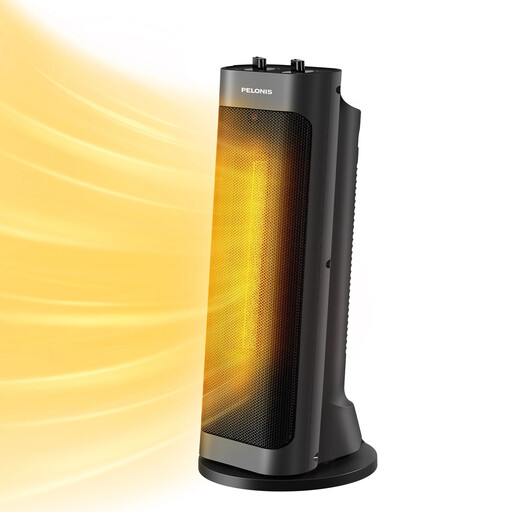
Why it's a great choice: This small space heater is perfect for a home office or a small bedroom. Its ceramic technology instantly warms up a personal space, and its compact design with a built-in handle makes it incredibly easy to move.
It perfectly illustrates the smart use of a space heater: quickly and effectively heating a targeted area, which is far more economical than turning up the central heating for just one person in the house.
Ultra-fast heat-up (the manufacturer claims 20°C in 3 seconds), 70° oscillation to better distribute heat, and triple safety features (tip-over, overheat, fire-retardant materials).
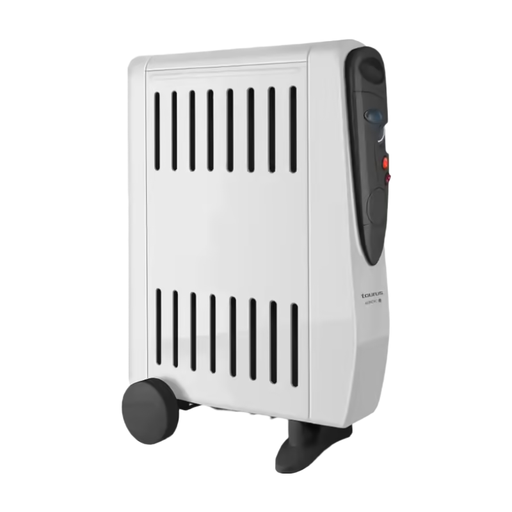
Why it's a great choice: Perfect for those who want long-lasting comfort in a living area. This oil-filled radiator silently diffuses soft, even heat, making it an excellent choice for a living room or as a bedroom heater for the night.
It doesn't just heat powerfully; it heats smartly. Its thermal inertia smooths out consumption peaks and maintains a stable temperature, which is much more comfortable and efficient over the long term than a simple convector heater.
Completely silent operation, an adjustable thermostat for precise temperature management, and a built-in humidifier to combat dry air—a real bonus for respiratory comfort.
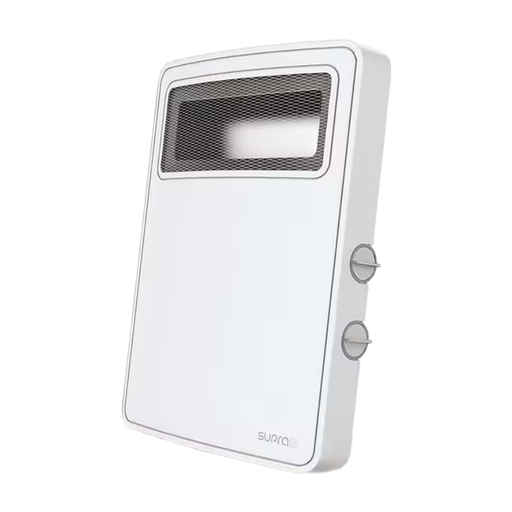
Why it's a great choice: This is THE solution for anyone looking for a safe bathroom heater. Its IP21 certification guarantees risk-free use in a damp environment. Its forced-air heat is perfect for raising the temperature in minutes before a shower.
It directly addresses the safety pitfall of wet rooms. Instead of risking the use of a non-compliant device, this model is specifically designed and certified IP21 for this purpose. That's a non-negotiable criterion.
IP21 certification for the bathroom, a slim and compact design, dual heat settings (1000W/2000W), and the essential tip-over and overheat protections.
We have curated a full range of products that meet our strict selection criteria and safety standards.
Consumption depends on two factors: its power (in kW) and its duration of use (in hours). To estimate it, the calculation is simple: multiply the power in kilowatts by the number of hours of use, then by the price per kWh from your electricity provider. For example, a 1500W (or 1.5 kW) device running for 2 hours a day will consume 3 kWh. Fortunately, a good thermostat drastically reduces the bill by only activating the heater when it's truly necessary.
Yes, provided you choose a modern model equipped with all the essential safety features (overheat protection, tip-over switch) and a reliable thermostat. Thermal inertia radiators (like oil-filled models) are particularly recommended for this use: they are silent, and their heat is gentle and constant. The golden rule: always ensure the device has clear space around it, is placed on a stable surface, and is kept away from any flammable materials (curtains, duvets, blankets, etc.).
Applying the 100W/m? rule, a 1500W heater is an excellent starting point for a properly insulated 15 m? bedroom. If the room is poorly insulated or has large windows, a 2000W model would be a wiser choice. It will reach the desired temperature faster and maintain it without constantly running at full power.