
Livraison le jour même ou le lendemain

Qualité garantie

Débloquez vos offres de bienvenue: Livraison GRATUITE | Jusqu'à -80 % | 30 jours d'essai gratuits à JoyPlus
Téléchargez l'application
Soybean paste, a cornerstone of Chinese cuisine, is often the secret ingredient that elevates a home-cooked meal to the next level, giving it that authentic, restaurant-quality flavour we all love. Yet, between yellow soybean paste and spicy soybean paste, navigating the jungle of labels—often as mysterious as a Mandarin proverb—can be a challenge.
This guide is here to help you demystify the world of this essential Chinese condiment. Our mission?is to provide clear, practical information to help you choose the perfect soybean paste for your recipes and your palate, without getting bogged down in marketing jargon.
Before we get to our top picks, here are the key criteria to ensure you make the right choice.
This is the first and simplest criterion: with or without chilli??
A quick look at the ingredients list speaks volumes about the quality. Traditional recipes rely on a simple base?: soybeans (sometimes broad beans, Vicia faba), salt, wheat flour, and water. Today, the trend is towards short ingredient lists. The "additive-free" claim or the use of non-GMO soybeans are major selling points for many consumers. A good thick soy sauce, as one might describe soybean paste, should have a rich texture where you can still sometimes see pieces of the beans.
For such a traditional product, trusting well-known brands is often a guarantee of quality and consistency. Haday (known in China as Haitian) is a true institution, one of the country's most respected condiment brands, with a history stretching back several centuries. Their products combine ancestral know-how with modern manufacturing processes, ensuring an authentic flavour praised by home cooks and professional chefs alike.
Here is our selection from the Haday brand, featuring products that each meet specific culinary needs.
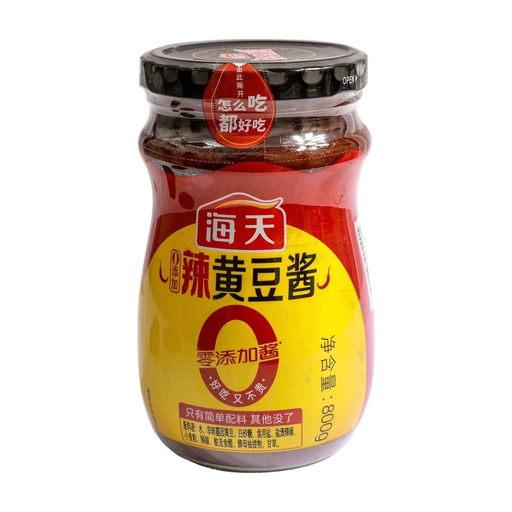
Why We Love It This version stands out for its "0% additives" composition (according to the brand, this means no artificial colours or unnecessary preservatives; check the ingredient list to confirm). Made from non-GMO soybeans and salted chillies, it offers a deep flavour and a perfectly balanced heat. Its texture, where you can still see pieces of the beans, is a testament to traditional fermentation.
Pros
Who is it for?? For lovers of Sichuan cuisine and anyone who isn't afraid of dishes with a bold character. It's the perfect choice for making an authentic Mapo Tofu or simply spicing up everyday meals with an umami kick.
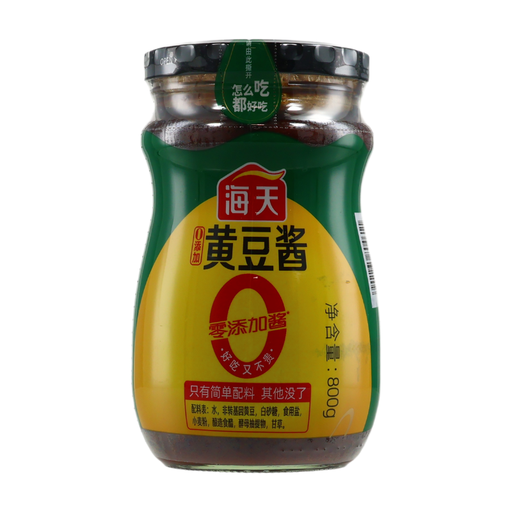
Why We Love It This non-spicy version is a staple in everyday Chinese cooking. Its flavour strikes a perfect balance between salty and a hint of sweetness, with an intense fermented aroma and a smooth texture. Haday's "0-Added" label reflects the brand's commitment to meeting the growing demand for more natural products.
Pros
Who is it for?? For anyone looking for a versatile, non-spicy soybean paste for everyday cooking. Perfect for families and for those new to the flavours of Chinese cuisine.

Why We Love It This is the famous yellow soybean paste (huangdoujiang). Carefully fermented, it develops a rich aroma and a taste where saltiness is subtly balanced by a sweet note. Its 340g size is perfect for more occasional use or for those who want to try it before committing to a larger jar.
Pros
Who is it for?? For those who want to cook specific dishes from Northern China or who prefer milder fermented flavours. It's also an excellent gateway to discovering the world of soybean pastes.
The world of fermented soy-based condiments is vast. If our selection doesn't quite match what you're looking for, or if your curiosity drives you to explore other textures and flavours, feel free to browse our catalogue.
Explore our complete collection of minced soy and fermented pastes to find the condiment that will elevate your next dish.
1. What is the difference between soybean paste and soy sauce?? It's all about texture and use. Soybean paste is a thick paste, sometimes with chunks, used as a cooking base (for stir-fries, stews, sauces). Soy sauce, on the other hand, is a liquid condiment used for final seasoning, marinades, or as a dipping sauce. In terms of taste, soybean paste offers a much more complex and deep fermented flavour.
2. How should I store soybean paste after opening?? Once the jar is opened, it must be stored in the refrigerator with the lid tightly closed. This is essential?! The oil that sometimes rises to the surface forms a natural protective barrier. To enjoy its full flavour, it is best to consume it within a few months of opening.
3. Can soybean paste be used in non-Asian dishes?? Absolutely?! Its umami richness makes it a powerful secret ingredient for boosting many dishes. A spoonful of spicy soybean paste can add incredible depth to a chili con carne, a barbecue marinade, or a bold vinaigrette. The non-spicy version, meanwhile, can enrich a bolognese sauce or a simple vegetable stew. Don't be afraid to experiment?