For people keeping an eye on sugar
You check the carbohydrate and “of which sugars” figures per 100 ml so you don’t accidentally choose a flavoured drink instead of a plain or unsweetened one.


When choosing a soya drink while shopping with diabetes in mind, first compare the carbohydrates and sugars, then the fat and saturated fat on the label. “Low fat” on its own tells you nothing about the sugar content: also check the amount you drink and distinguish plain or unsweetened options from flavoured versions.
You check the carbohydrate and “of which sugars” figures per 100 ml so you don’t accidentally choose a flavoured drink instead of a plain or unsweetened one.
You compare the fat and saturated fat figures on the label rather than relying on the word “light” alone.
You want a soya drink for coffee, cereal or cooking, and pay attention to the ingredients list and nutrition information.
The French national health insurance authority recommends comparing nutrition information on the same basis—in this case, per 100 ml for a drink—and then taking the amount you consume into account.
| Criterion | What to check | Who is this for? |
|---|---|---|
| Sugars and carbohydrates | Compare “carbohydrates” and “of which sugars” per 100 ml, then consider how much you pour. | If a flavoured option might replace my usual drink, I want to know how much sugar and carbohydrate it contains. Around 50% of consumers would make this their top priority when shopping. |
| Fat | Check “fat” and “of which saturates” per 100 ml, without assuming this tells you anything about the sugar content. | When I’m looking for a lower-fat drink, I want to compare several products before choosing. This would be the priority for around 30% of consumers. |
| Plain ingredients | Check the ingredients list; look separately at any added nutrients if these matter to you. | For coffee and cooking, I prefer a plain recipe with ingredients that are easy to check. Around 20% of consumers would put this need first when shopping. |
These claims do not describe the same ingredients. E.Leclerc’s Bio Village Nature no-added-sugars product listing shows 0.7 g of sugars per 100 ml; the Alpro Red Berries recipe shown by Carrefour contains sugar and concentrated fruit juice, among other ingredients.
Check the ingredients list and the “of which sugars” figure for the specific product you’re considering.
A claim about fat does not tell you how much carbohydrate or sugar a soya drink contains.
Compare these figures separately on the same per-100 ml basis, then take your serving size into account.
Soya is listed as an ingredient in the drinks concerned. In 2025, Anses also highlighted a risk of exceeding toxicological reference values for isoflavones among consumers of soya-based foods, in a publication focusing on catering in communal settings.
Check the allergen information. If you drink soya regularly or have a particular medical condition, seek tailored advice from a healthcare professional rather than using the packaging to decide how often to consume it.
The range includes a Soya No Sugars drink, as well as other recipes that should be checked separately.
The No Sugars product shown by Carrefour is a plain soya drink that can also be used in cooking.
The product reviewed is an organic, unsweetened soya drink.
E.Leclerc’s Bio Village product is an organic, plain soya drink labelled “no added sugars”.
The product reviewed is an organic, plain soya drink made with organic soya juice.
This selection features a soya drink labelled Less Sugar. If you’re shopping with diabetes in mind and are particularly watching your fat intake, compare its nutrition information with that of the specific product you usually use.
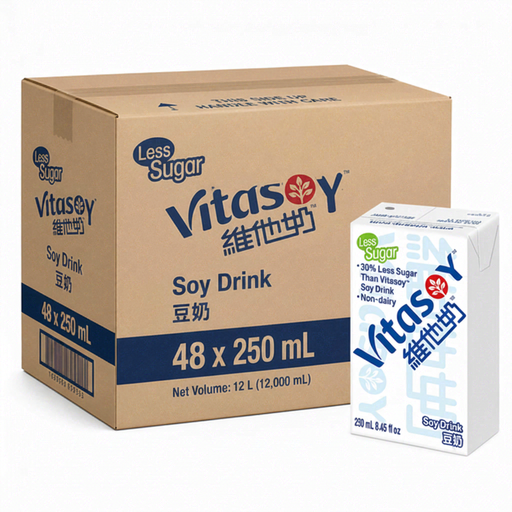 Image unavailable
Worth considering if you’re looking for individual cartons of soya drink: this recipe contains sugar and fructose, despite the Less Sugar label. Check the label for sugars, carbohydrates, fat and saturates on a comparable basis. Also confirm how many cartons are included in the pack before buying.
No: this claim says nothing about carbohydrates or sugars. The French national health insurance authority recommends comparing nutrition information per 100 ml, then taking the amount you consume into account. So, depending on your priorities, check the fat and saturated fat figures too.
No: a drink carrying this claim may still list sugars in its nutrition information. For example, E.Leclerc lists 0.7 g of sugars per 100 ml for Bio Village Plain Soya with no added sugars. Check the figure for the product you choose.
Anses’s advice on isoflavones does not allow us to set an amount that is right for everyone here. Its 2025 publication highlights a risk of exceeding toxicological reference values among consumers of soya-based foods and concerns catering in communal settings. If you consume soya regularly or have a medical condition that calls for particular precautions, seek personalised advice.
Follow the instructions on the carton you buy, as they vary by product. For an Alpro soya drink in its range, Joybuy recommends storing it between +1 °C and +7 °C and consuming it within 5 days of opening. Don’t automatically apply these instructions to a different drink.