People replacing milk in their everyday diet
For cereal, coffee or simple recipes, you’ll want a soya drink that suits the way you use it. Check the ingredients, allergens, sugars and storage instructions after opening.


When shopping locally for a milk alternative, choose a soya drink to suit the way you’ll use it. Go for an unflavoured option if you prefer a short ingredients list, or an enriched version if the stated calcium and vitamin levels matter to you. Compare sugars and protein on a like-for-like basis, then check the ingredients and allergens on the carton you buy: a dairy-free drink is not suitable for someone with a soya allergy.
For cereal, coffee or simple recipes, you’ll want a soya drink that suits the way you use it. Check the ingredients, allergens, sugars and storage instructions after opening.
If these factors influence your choice, check the organic label, the origin of the soya and where the product was made separately on the product you buy. Terres Univia’s 2025 barometer found that people in France want information about the origin, composition and use of soya foods.
To choose between two soya drinks, compare protein and sugars per 100 ml, then check whether calcium or vitamins are listed. An unflavoured recipe and an enriched one may not have the same nutritional profile.
When shopping locally, start with what matters most to you, then compare the labels of the products available in your shop.
| Criteria | What to check | Who is it for? |
|---|---|---|
| Ingredients and allergens | Ingredients list and declared allergens, especially soya; check the information about dairy ingredients to suit your needs. | If I need to avoid dairy products, I want to know exactly what’s in the carton, while remembering that a soya allergy means choosing something else. Around 31% of consumers put this check first. |
| Organic status, origin and recipe | Organic label, origin of the soya if stated, and length of the ingredients list. | When cooking with an unflavoured drink, I might prefer a short ingredients list and want to know where the soya comes from rather than relying on the brand name. This is the top priority for around 31% of consumers. |
| Nutritional profile | Sugars and protein per 100 ml; calcium and vitamins, if listed. | If I use this drink regularly instead of milk, I want to compare what different recipes provide, without assuming an unflavoured version is enriched. Around 23% of consumers prioritise this information. |
| Local availability and storage | Pack size available in your shop and storage instructions after opening. | I want to find a pack size that suits how often I use it and follow the storage instructions once the carton is open. This is a top priority for around 15% of consumers. |
Soya is still an allergen, even in a drink labelled lactose-free. In France, the DGCCRF reminds food businesses that allergenic ingredients must be highlighted on food labels.
If you have an allergy, read the ingredients list and warnings on the carton you buy rather than relying on the front of the pack alone.
For babies from birth to one year old, Anses states that replacing specially formulated foods with other products may pose risks.
Do not replace breast milk or infant formula with an everyday soya drink; ask a healthcare professional for advice about your particular circumstances.
The products reviewed by Auchan have different recipes and nutritional information. A short ingredients list does not, by itself, mean a drink is enriched with calcium or vitamins.
Compare the values per 100 ml and check the added ingredients in each product you’re considering.
These examples refer to specific products. Check the label of the product you find in store, as recipes can vary within the same brand.
Among the Alpro drinks featured by Auchan is a soya option enriched with calcium and vitamins.
The unflavoured soya drink featured by Auchan is suitable for drinking and cooking.
The Bjorg Organic Unsweetened product featured by Auchan is a good choice if you’re looking for a short ingredients list.
The organic unflavoured soya drink featured by E.Leclerc lists both the origin of the soya and the place of manufacture as France.
These products suit different needs: cartons for everyday use or coffee, ready-to-drink portions, and powder to mix. To compare them, check the ingredients and nutritional information for each variety. Powder can’t be directly compared with a ready-to-drink beverage without taking its preparation into account.
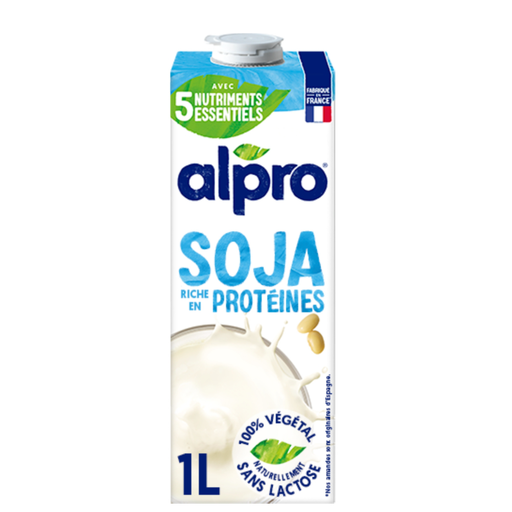 Image unavailable
Worth considering if you’re looking for a carton of soya drink for everyday use. For this variety, check the label for sugars, any added nutrients and the soya allergen before choosing it.
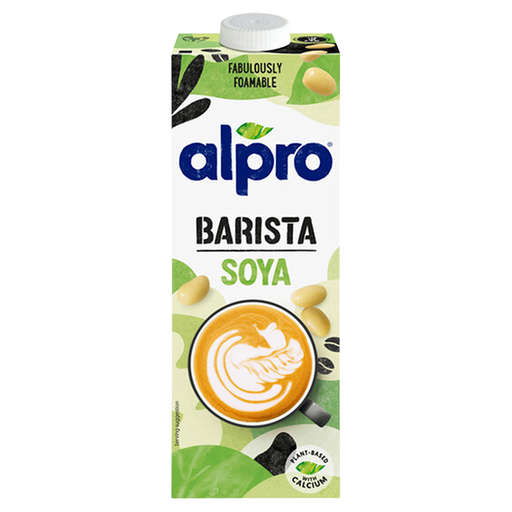 Image unavailable
This Barista variety is aimed in particular at people looking for a soya drink to use in coffee. Check the sugars, ingredients and storage time after opening on the packaging; it contains soya.
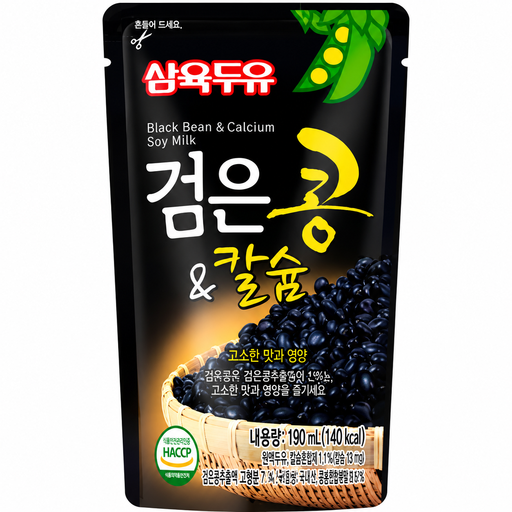 Image unavailable
The 190 ml size is a good option if you’d prefer a ready-to-drink portion rather than a large carton. If calcium is one of your reasons for choosing it, compare the amount stated on the packaging. Also check the sweetening ingredients and soya allergen.
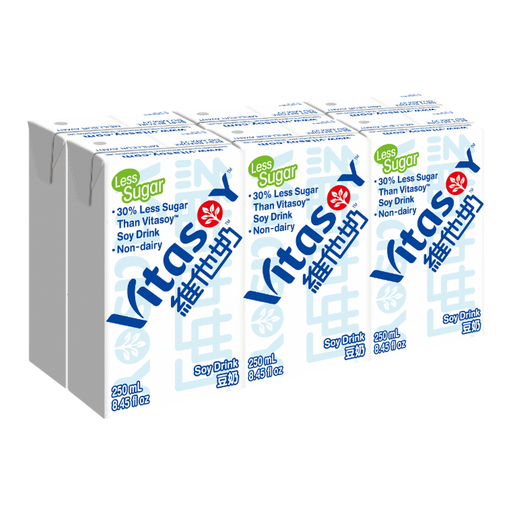 Image unavailable
These individual portions may suit you if you prefer to open one small carton at a time. Don’t assume the sugar content from the words “Less Sugar”: check the nutritional information and allergens on the packaging.
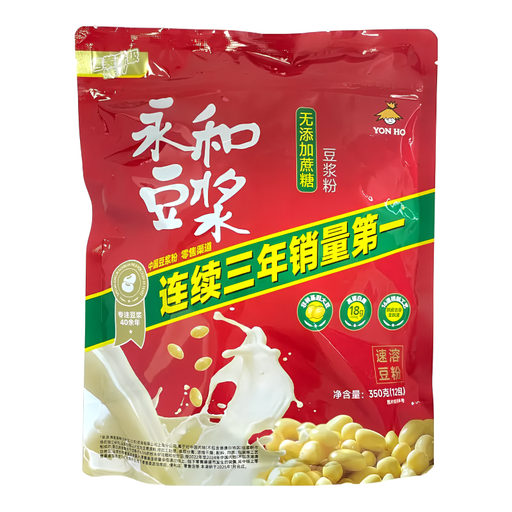 Image unavailable
This powder is designed to make a soya drink; it isn’t ready to drink straight from the pack like a carton. The ingredients list includes malt syrup, so check the sugars on the packaging and follow the mixing instructions before comparing nutritional values.
No. If you need to avoid dairy products, read the full ingredients list and allergen information on the carton you choose. The DGCCRF reminds food businesses that allergenic ingredients must be highlighted on food labels; soya itself is not suitable for anyone with a soya allergy.
Compare the “of which sugars” figure per 100 ml, then check the ingredients list. Among the products featured by Auchan, Bjorg Organic Unsweetened contains 0 g of sugars per 100 ml, while an enriched Alpro drink contains 2.5 g per 100 ml and lists sugar as an ingredient. These figures don’t apply to other varieties from these brands.
No. An everyday soya drink is not a substitute for breast milk or infant formula for a baby under one year old. Anses states that replacing specially formulated foods with other products may pose risks.
Follow the instructions on the carton you buy, as storage times vary by product. Reseal it and follow the product-specific instructions for refrigeration and consumption after opening.
No. This nutritional guide doesn’t replace checking the ingredients and allergens if you’re looking to avoid dairy products. When comparing soya drinks, also check the sugars and protein per 100 ml, as well as any calcium content.