People preparing soft plant-based meals
You use a soya drink in blended soups, purées, porridge, sauces, smoothies or soft desserts, and want to be able to check its ingredients easily.


For blended soups, purées or porridge that are easy to chew, choose a soya drink according to its role in the recipe: a plain option with a short ingredients list, added calcium or a stated protein content. If you need vegan certification, check the packaging rather than assuming it from the word ‘plant-based’. A thin drink is not automatically suitable for someone who has difficulty swallowing liquids.
You use a soya drink in blended soups, purées, porridge, sauces, smoothies or soft desserts, and want to be able to check its ingredients easily.
You compare protein, calcium, sugars and added ingredients in the context of what else is in the meal, rather than relying on the label ‘plant-based drink’ alone.
If drinking causes coughing, discomfort or choking, ease of chewing is no longer enough to guide your choice. The consistency of liquids should be assessed individually with a healthcare professional.
First, work out what texture the meal needs, then consider what you want the soya drink to do. Check the product you’re buying for proof of vegan status, its ingredients and storage instructions.
| Criteria | What to check | Who is this for? |
|---|---|---|
| Meal texture | Whether it will be used in a soft or blended dish; if there is a swallowing difficulty, follow individual advice about liquids. | If I’m making a purée or blended soup, I want a texture the person can manage. If they have difficulty swallowing, I won’t assume a thin drink is suitable. Around 36% of consumers would put this texture requirement first. |
| Vegan status | Ingredients list and, if required, vegan certification or an explicit vegan claim on the packaging. | If certification is essential to my purchase, a plant-based or organic recipe isn’t enough proof. This would be the top priority for around 29% of consumers. |
| Nutritional content | Protein, calcium and sugars on the same basis, particularly per 100 ml; added ingredients. | If the drink is complementing a soft meal, I want to know exactly what the product I’ve chosen provides, rather than relying on a claim on the front of the pack. Around 21% of consumers would prioritise this specific nutritional contribution. |
| Recipe and storage | The ingredients in a plain version and storage instructions after opening. | If I regularly cook in small quantities, I prefer a recipe that suits my dishes and a pack size I can use within the stated timeframe. Around 14% of consumers would put this need first. |
A soya drink can be used in a soft dish, but its liquid consistency does not automatically make it suitable for someone with a swallowing difficulty. The Haute Autorité de Santé (French National Authority for Health) advises that, when a specific consistency is needed, the appropriate level should be recommended for each person individually.
If drinks cause coughing or choking, ask a doctor or speech and language therapist for advice before serving the drink as it is or changing its texture.
The European Commission classifies information stating that a food is suitable for vegans as voluntary information. So, a plant-based recipe alone does not prove that it is certified.
If certification is essential, look for a certification logo on the packaging of the product you’re buying, and check its ingredients list too.
Recipes can differ in their other ingredients and sugar content. For example, E.Leclerc lists added calcium, as well as sugar and stabilisers, in the VEGE drink featured here; Auchan states that Alpro Protéine contains 10 g of protein per 200 ml serving. These details alone don’t tell you everything about the meal as a whole.
Compare the nutritional values on the same basis, then read the ingredients list for each product.
How long a drink can be kept depends on the product. For its plain soya drink, Auchan Bio advises refrigerating it and using it within five days of opening.
Before buying several cartons, check the instructions for the exact product and choose a pack size that suits how you’ll use it.
Classic soya drinks and options marketed as higher in protein. Compare the recipe and declared nutritional values for each version.
A plain organic soya drink to consider if you’re looking for a short ingredients list for soft dishes.
A soya drink with added calcium, giving you a point of comparison with a plain recipe.
A plain organic soya drink whose ingredients may make it a good base for soft plant-based recipes.
A plain organic soya drink to consider if you prefer a recipe made with soya juice.
This selection includes soya drinks for use in some soft dishes or to serve alongside a meal. Compare the pack size and label with your recipe; don’t assume any thin drink is suitable for someone with a swallowing difficulty.
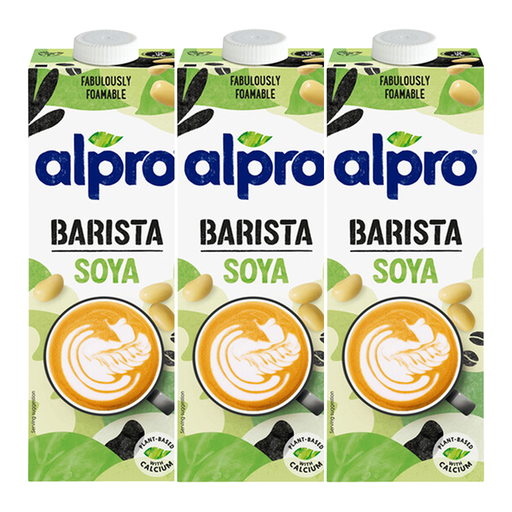 Image unavailable
For cereal or sweet and savoury recipes that use a soya drink as an ingredient. This pack contains three 1 L cartons. Check the ingredients of this Barista version if you’re looking for added calcium or a specific vegan claim.
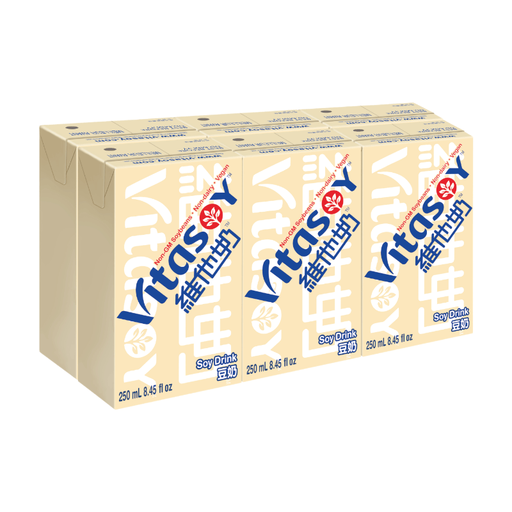 Image unavailable
An option in individual cartons for making a smoothie or soft dessert. Check the ingredients of this Original version if sugars or vegan certification matter to you; follow the storage instructions after opening too.
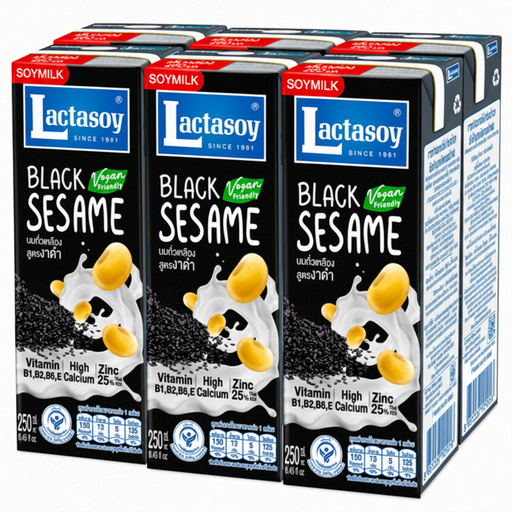 Image unavailable
To serve with a soft meal if you’d prefer a soya drink with black sesame rather than a plain option. The pack contains six 250 ml servings. The product information lists soya and sesame: check the packaging for allergens, sugars and any vegan certification you require.
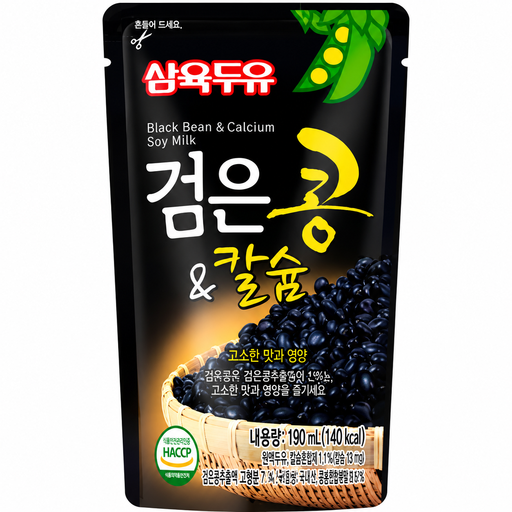 Image unavailable
An individual serving of soya drink to consider alongside a soft meal. If calcium is a key reason for your choice, compare the nutritional information and sugars with those of other products. Check for any vegan certification you require too.
No. ‘Plant-based drink’ and ‘organic’ don’t prove that a product is vegan-certified. If certification is essential, look for a certification logo on the packaging and check the ingredients list of the product you’re buying.
You can use it as a liquid ingredient in a soft or blended dish, such as porridge, purée, blended soup or sauce. Then choose the recipe and nutritional values according to what’s already in the dish. Adding a drink alone doesn’t define the meal as a whole.
Don’t assume that it is. The Haute Autorité de Santé (French National Authority for Health) says that the appropriate consistency for someone with oropharyngeal dysphagia should be recommended individually by a healthcare professional. Ask for advice before serving or thickening the drink.
Follow the timeframe and storage instructions on the carton you’ve chosen. For the plain Auchan Bio and Alpro Protéine products mentioned here, the product information says to refrigerate and use within five days of opening. Don’t assume these instructions apply to other drinks.
No. An ordinary soya drink should not replace breast milk or formula designed for infants. Anses warns that replacing these with other drinks, including plant-based ones, can carry risks. Ask a healthcare professional for advice about feeding an infant.