Do not buy a multi-pack of regular soya drink to replace breast milk or infant formula for a child under one: Assurance Maladie advises continuing with infant formula until this age, and Anses distinguishes plant-based drinks from formula specially designed for infants. For an older child, if you are considering an occasional drink, check the ingredients, serving size and whether it contains soya. For school or nursery, distinguish between a drink brought from home and a meal served as part of a catered service, for which Anses has a specific recommendation.
Who is this option for?
Parents of a baby starting to eat solid foods
If you’re looking for a convenient format for your child’s usual milk, their age affects your decision. Assurance Maladie advises continuing with infant formula until the age of one; Anses explains that regular plant-based drinks are not formulated like infant or follow-on formula.
Parents of an older child
If you’re considering soya drink as an occasional option, compare products individually: Carrefour and Auchan product listings show different recipes and nutritional information. The word ‘original’ or the presence of added vitamins is not enough to establish whether a drink is suitable for its intended use.
Families preparing a snack for school
An individual carton doesn’t, on its own, address allergy concerns or whether a school will allow it. Check the school’s rules on drinks brought in from home. Where a diet is needed for medical reasons, the French Ministry of Education states that an individual care plan (PAI) can set out the necessary adjustments.
What should you check before buying?
Start with your child’s age and the intended role of the drink. If it isn’t replacing milk for a baby, check the ingredients and how it would be served.
| What to consider |
What to check |
Consumers concerned |
| Age and purpose of the drink |
Check the child’s age and do not use regular soya drink instead of breast milk or infant formula before the age of one. |
If my child is still a baby, I should keep their usual milk as part of introducing solid foods rather than choosing based on the convenience of a multi-pack. Around 33% of consumers may put this question first. |
| Recipe and serving size |
Compare the ingredients, sugar content per 100 ml and volume of each carton; distinguish an original recipe from a flavoured one. |
For occasional consumption after the age of one, I want to know what each serving contains before choosing an individual format. The recipe may be the main concern for around 42% of consumers. |
| Soya and school policies |
Check for the soya allergen and the school’s rules; distinguish a snack brought from home from a meal served as part of a catered service. |
When I’m preparing a snack for school or nursery, I need to consider any allergy my child may have and the school’s rules. This could be the top priority for around 25% of consumers. |
Common misconceptions to avoid
-
Confusing soya drink with infant formula
An easy-to-carry carton, even if it’s fortified or organic, is not the same as infant formula. According to Anses, regular plant-based drinks are not formulated to meet babies’ needs in the way that infant and follow-on formula are.
Before the age of one, don’t plan to use a multi-pack of soya drink as a replacement for your child’s usual milk. If a food needs to be excluded, ask your child’s doctor which formula to use.
-
Assuming a high-protein or flavoured recipe is the same as an original one
Product ingredients vary. For example, Carrefour lists a short ingredients list for its Carrefour Bio Original soya drink, while the Alpro Soya Protein Original product listing includes sugar and stabilisers.
Check the ingredients and sugar content per 100 ml for the product you’re considering. A claim about protein, calcium or vitamins doesn’t make it equivalent to infant formula.
-
Assuming a small carton will be allowed at school
An individual format doesn’t mean the drink is free from soya. Anses also recommends not serving soya-based foods in catered settings to avoid excessive isoflavone intake.
Before preparing a lunchbox, ask the school what drinks families are allowed to send in. If your child has an allergy or needs a medical diet, ask about the adjustments set out in a PAI.
Brands to compare
These products illustrate ingredients and formats to check on the label. Their inclusion here does not mean they are suitable for babies or available in individual multi-packs.
Carrefour Bio
Carrefour lists an organic original soya drink in a 1 L carton.
- The listed ingredients show organic soya juice made with water and 8% non-GM organic soya beans.
- This product contains soya, and its 1 L carton is not an individual serving in a multi-pack.
Alpro
Carrefour’s listing for Alpro Soya Protein Original is for a soya drink in a 1 L carton.
- Carrefour lists 10 g of protein per 200 ml serving for this product, as well as calcium and vitamins B2, B12 and D2.
- Its recipe includes sugar and stabilisers. These nutritional details do not make it infant formula.
Auchan Bio
Auchan lists an organic original soya drink in a 1 L carton.
- The product listing provides nutritional information, including protein and sugar, so you can compare it with other drinks.
- The 1 L carton is not a multi-pack of individual servings and must not be used as infant formula.
Bio Village
E.Leclerc lists an organic original soya drink with no added sugars in a 1 L carton.
- The product name identifies an original recipe with no added sugars, which you can compare with the labels on other products.
- The product listing states that it is not suitable as a replacement for breast milk or infant formula for babies under one.
A multi-pack option on Joybuy
This pack of small cartons suits anyone looking for individual servings for occasional consumption after the age of one, outside catered settings. Check the ingredients and school or nursery rules before including it in a lunchbox; it is not a replacement for a baby’s usual milk.
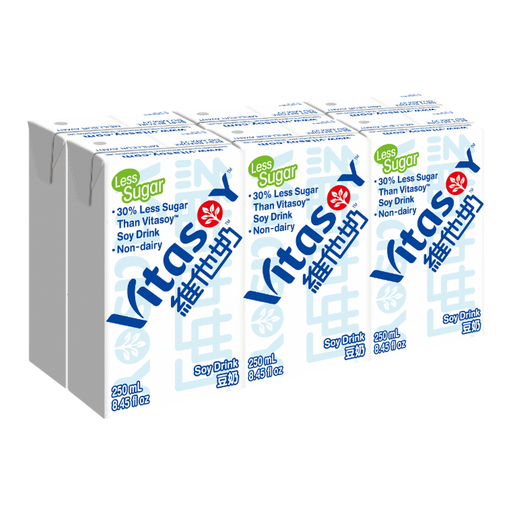 Image unavailable
Vitasoy Soya Bean Milk with Less Sugar, 6 × 250 ml
The six individual cartons may be a practical option when you need separate servings for a child over one, if you’re considering soya drink occasionally outside catered settings.
The product contains soya and added sugar, so don’t assume from its name that it has no added sugars. Compare the nutritional information and ingredients on the packaging of the variant you choose.
Do not use it instead of breast milk or infant formula before the age of one. If you’re packing a snack for school or nursery, check the school’s rules.
View on Joybuy
Frequently asked questions
Can soya drink replace infant formula while a baby is being introduced to solid foods?
No, not before the age of one. Assurance Maladie says that milk remains the basis of a baby’s diet while they start eating solid foods, and that infant formula should be continued until this age. Anses distinguishes regular plant-based drinks from formula specially designed for babies.
Can I put a carton of soya drink in a lunchbox for school or nursery?
First check the school’s rules on drinks brought in from home: an individual carton doesn’t mean it will be allowed. For meals served as part of a catered service, Anses recommends not serving soya-based foods to avoid excessive isoflavone intake.
What should I do if my child is allergic to soya or needs a medical diet?
If your child is allergic to soya, don’t choose a drink whose ingredients list includes soya. To arrange a diet for medical reasons at school, the French Ministry of Education provides for an individual care plan to set out the necessary adjustments with everyone involved.
Does added calcium or vitamins make soya drink equivalent to infant formula?
No. These details describe the ingredients in a particular product, but they don’t change the fact that a regular plant-based drink is not infant formula, as Anses explains. First check your child’s age and how you intend to use the drink, then compare the ingredients and nutritional information of the products you’re considering.


