Home bakers who control the sugar themselves
If you make bread or plant-based bread rolls, the sugar and flavourings already in the drink can affect your recipe. Auchan product listings show that ingredients vary between products.


To keep control of your bread recipe, start by choosing an unflavoured soya drink, then check the sugars and ingredients in the specific product you buy. The word “mature” alone doesn’t mean a drink will give your bread more character; with a sweetened or fortified drink, the main thing is to check whether it suits your recipe.
If you make bread or plant-based bread rolls, the sugar and flavourings already in the drink can affect your recipe. Auchan product listings show that ingredients vary between products.
You’d like to use the same drink in dough and other dishes. The Sojasun product listing on Auchan describes its plain drink as suitable for sweet and savoury recipes, but doesn’t specify how it performs in bread.
You compare ingredients, stated origin, organic claims or nutritional values. Auchan and Carrefour product listings let you compare these details without assuming they indicate an “aged” drink.
Start with the ingredients that could affect your recipe, then look at any other features that matter to you. If the bread is for catering in a collective setting, how it will be used becomes a consideration in its own right.
| Criteria | What to check | Who it matters to |
|---|---|---|
| Sugars and flavourings | Check the ingredients and the amount of sugar per 100 ml for the exact product before changing the sugar in your recipe. | If I’m making a lightly sweetened dough, I want to control its flavour without accidentally adding sugar or flavouring. Around 40% of consumers put this first. |
| Ingredients and origin | Compare the ingredients list, organic claim and the origin of the soya, if it’s stated on the packaging. | When choosing my drink, I look first for a short ingredients list or a stated origin, without assuming this will produce a particular result in bread. This is a priority for around 30% of consumers. |
| Nutritional information | Compare the protein per 100 ml, as well as the stated calcium and vitamins, without treating these figures as an indicator of baking performance. | I also use this drink in other ways and want to compare its stated nutritional values. Around 20% of consumers prioritise this. |
| Catering in a collective setting | If the bread is for catering in a collective setting, consider the Anses recommendation on soya-based foods before choosing this ingredient. | When I’m planning a menu for a collective catering service, how it will be used comes before my taste or ingredient preferences. This is a priority for around 10% of consumers. |
This word alone doesn’t tell you what’s in the drink or how it will perform in bread dough.
Start with the recipe you plan to make and compare the ingredients and nutritional information of specific products.
Auchan product listings show that sugar levels vary between products, so swapping one for another could change the proportions you had planned.
Check the sugar per 100 ml and whether sugar is listed as an ingredient before deciding if you need to change the amount added to the dough.
Nutritional values let you compare drinks, but they don’t show on their own how a particular flour, yeast and drink will work together.
If you switch products, try a small batch using your recipe rather than assuming the crumb or rise will be different.
The Alpro product listing on Auchan describes a soya drink that can be used as an ingredient in sweet and savoury recipes.
The Carrefour listing for its 1 L organic plain soya drink describes a soya drink made with water and 8% non-GMO organic soya beans.
The Auchan Bio listing describes a plain soya drink made with organic soya juice sourced from France.
The Sojasun product listing on Auchan describes a 1 L plain drink for sweet and savoury cooking.
These two 1 L Alpro drinks are worth considering if your recipe calls for a soya drink. Check their ingredients before using them in place of the plain version specified in the recipe.
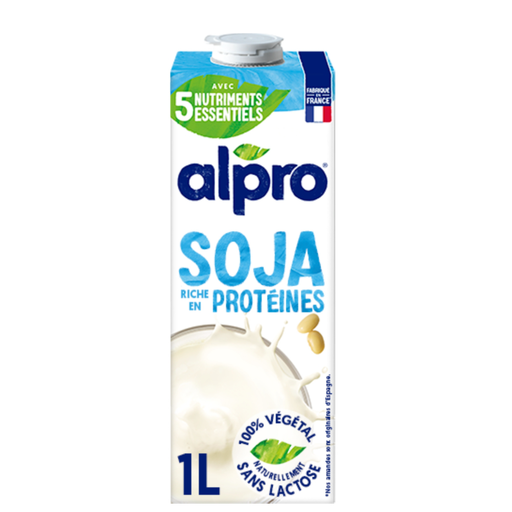 Image unavailable
Worth considering for a recipe that calls for a soya drink and lets you adjust the ingredients. The sugar, flavouring, salt and stabiliser listed for this product are worth bearing in mind if you want precise control over the dough’s flavour.
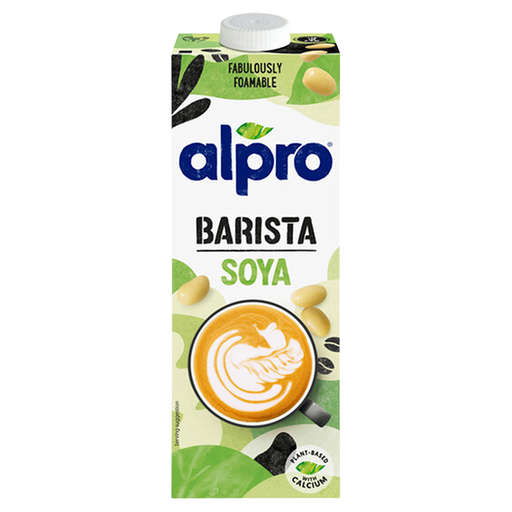 Image unavailable
Consider this if you’d like to use the drink in several recipes and can check whether it suits your bread recipe. This product contains sugar, flavouring and a stabiliser; don’t assume its Barista variant will give your dough a particular result.
Follow the instructions on the carton you’re using. The Auchan listings for Auchan Bio, Auchan, Alpro and Sojasun products say to refrigerate after opening and consume within five days; the stated temperatures vary by product.
No. If the recipe contains a soya drink, the bread contains soya. Check the ingredients of every product you use, along with any warnings about possible traces on the packaging.
In a publication dated 24 March 2025, Anses recommends not serving soya-based foods in collective catering to avoid excessive isoflavone consumption. This recommendation applies to menus in collective settings; it isn’t a general ban on cooking with soya at home.