People who check what’s in their lunch
You want to compare the protein, calcium or vitamins shown on the label without assuming that all soya drinks have the same nutritional profile.


For a lunch during the school holidays, choose a soya drink for how you plan to use it rather than looking for a ‘mature’ or ‘aged’ version: go for an unflavoured option for a neutral-tasting recipe, a flavoured one if you want a particular taste, or a protein-enriched one if its stated protein content is your top priority. Then check the sugars, allergens, pack size and storage instructions for the specific product. If the meal is being served in a communal catering setting, you’ll also need to take different precautions from those for a family lunch.
You want to compare the protein, calcium or vitamins shown on the label without assuming that all soya drinks have the same nutritional profile.
You’re deciding between an unflavoured recipe and a vanilla one, or between a large carton and individual portions. Sugar content and storage after opening also matter.
You need to take account of allergies, the consumer’s age or the setting in which the meal is served. For communal catering, Anses recommends not serving soya-based foods.
An unflavoured, flavoured, fortified or protein-enriched recipe won’t necessarily meet the same needs. Start by thinking about how you plan to use it at lunch, then compare the information for the drink you’re considering.
| Criterion | What to check | Who is it for? |
|---|---|---|
| Protein and fortification | Compare the protein content using the same measure, per 100 ml or per serving, and check which calcium or vitamins are listed. | If I’m choosing this drink primarily for its nutritional profile, I want to compare the figures for the specific product with those for another recipe. Around 40% of consumers might prioritise this. |
| Taste and sugars | Distinguish between unflavoured and flavoured options, then compare the ‘of which sugars’ figure per 100 ml. | For cooking or serving with a meal, I might prefer a neutral taste; if I choose vanilla, its flavour matters more. This could be the top priority for around 30% of consumers. |
| Pack size and storage | Choose between a 1 L carton and individual portions, and read the instructions for after opening. | If lunch is being taken out or a carton is likely to be left open, I’ll choose a size that suits how it will be used. Around 20% of consumers might put pack size first. |
| Allergens and meal setting | Check the ingredients for soya and distinguish between a private meal, infant feeding and communal catering. | If allergies, the consumer’s age or communal catering are a factor, I need to address this before comparing flavours. It could be the top priority for around 10% of consumers. |
A soya drink can contain an allergen even if it’s lactose-free. The DGCCRF reminds consumers that allergenic ingredients must be highlighted on the labels of pre-packed foods.
If you’re concerned about an allergy, read the ingredients list on the carton you’ve chosen rather than relying on a single claim on the front.
Auchan product listings show 0.4 g of sugars per 100 ml for Sojasun Nature and 3.7 g per 100 ml for Bjorg Soja Vanille in the small pack. These figures relate to two different recipes.
Compare the ‘of which sugars’ figure per 100 ml for the products you’re interested in. Don’t assume a drink’s sugar content from its name alone.
A 1 L carton won’t suit every consumption pattern. The Auchan listing for Sojasun Calcium Vitamine D says to refrigerate the drink after opening and consume it within 5 days.
Choose a size that suits the portions you have planned, and follow the instructions on each pack.
An opened carton kept beyond its stated consumption period could also lead to waste.
Anses recommends not serving soya-based foods in communal catering, due to the risk that some consumers may exceed the toxicological reference values for isoflavones. This recommendation applies to communal catering, not automatically to a private meal.
If lunch is provided by a school canteen or holiday club, check the arrangements with the organisation before planning to serve this drink.
Auchan product listings include UHT soya drinks, both unflavoured and with added calcium and vitamin D.
The 1 L Natural Protein Soya product is different from the brand’s other drinks.
The organic vanilla soya drink listed by Auchan is available in a pack of 3 × 25 cl.
Carrefour offers a 1 L UHT soya drink with calcium under this brand.
The retailer offers a 1 L carton of soya-based plant drink.
For a holiday lunch, these options include individual portions in black sesame or Less Sugar varieties, as well as a multipack of 1 L cartons of Alpro Soya Barista. Choose the flavour and pack size to suit how you plan to serve them.
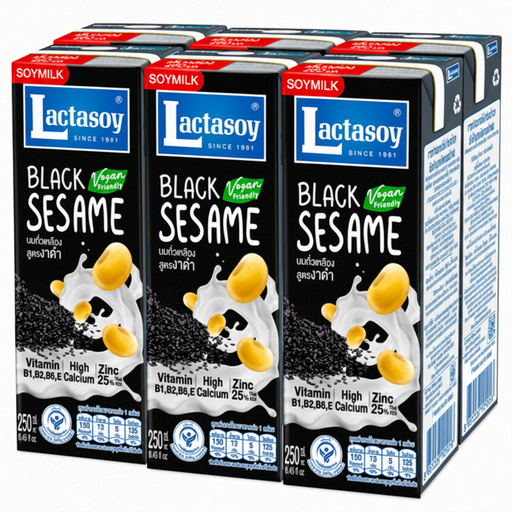 Image unavailable
A good option for a lunch where you’re looking for a black sesame flavour and individual portions. The pack contains six 250 ml cartons. If soya or sesame is a concern, check the allergens on the packaging.
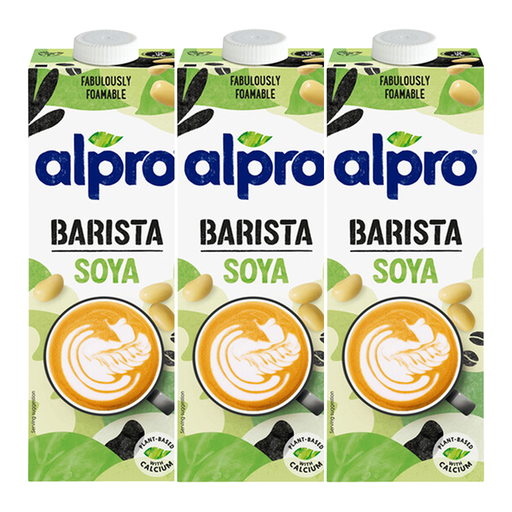 Image unavailable
Worth considering if you’ll be serving lunch several times and need larger cartons. The pack contains three 1 L cartons. Plan how you’ll use them after opening and follow the storage instructions for each one.
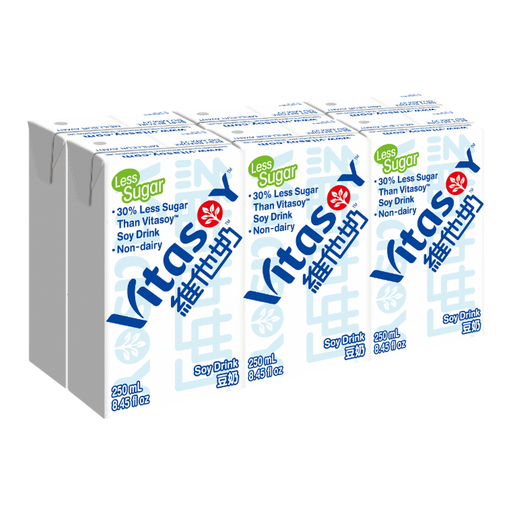 Image unavailable
This pack contains six 250 ml cartons, making it easy to take an individual portion for lunch. The Less Sugar label doesn’t tell you the exact sugar content: compare the figure per 100 ml on the label.
Choose according to how you plan to use it: an unflavoured option for a neutral-tasting recipe, a flavoured one if you want a particular taste, or a protein-enriched product if its stated protein content is your top priority. Then check the sugars and nutritional values for the specific recipe. For example, the Carrefour listing for Alpro Natural Protein Soya states 10 g of protein per 200 ml serving; this figure doesn’t apply to other Alpro products.
Follow the storage instructions and use-by period shown on the carton you’ve chosen. The Auchan listing for Sojasun Calcium Vitamine D says to consume it within 5 days of opening. Don’t automatically apply this period to another drink.
No. An ordinary soya drink shouldn’t replace breast milk or formula designed for infants. In its advice on feeding from birth to one year, Anses highlights the risks of substituting these with drinks that aren’t specially designed for this purpose.
If lunch is part of a communal catering service, Anses recommends not serving soya-based foods to limit the risk that some consumers may exceed the toxicological reference values for isoflavones. Check with the organisation how meals are arranged; this recommendation doesn’t automatically apply to a private family lunch.
Read the ingredients list on the specific packaging and look for soya highlighted in the text. The DGCCRF says allergenic ingredients must be highlighted on the labels of pre-packed foods. A statement about lactose doesn’t replace this check.