Shoppers comparing pack sizes
You’re filling your everyday basket and want to compare cartons of similar sizes, rather than judging a small portion against a 1 L carton.


For your everyday shop, compare pack sizes first and choose a plain recipe if you want a soya drink for cooking or cereal. A version fortified with calcium and vitamin D meets a different need: check its ingredients and sugar content too, as these drinks aren’t interchangeable.
You’re filling your everyday basket and want to compare cartons of similar sizes, rather than judging a small portion against a 1 L carton.
You use soya drink in coffee, with cereal or in cooking, and check the ingredients and sugar content before choosing.
You want to tell the difference between a soya drink containing calcium and vitamin D and a plain recipe with no declared fortification.
The word “mature” doesn’t, by itself, describe a specific soya drink recipe. To choose, start with how you plan to use it, then check the product name, ingredients and nutritional information for the exact product.
| Criterion | What to check | Who it’s for |
|---|---|---|
| Pack size | Volume of each carton and number of units in the multipack. | I’m doing my everyday shop and want to compare like-for-like quantities, without confusing a single-serve portion with a 1 L carton; around 36% of shoppers would put this need first. |
| Plain recipe | Ingredients list and the “of which sugars” figure per 100 ml. | For cooking or pouring over cereal, I prefer to choose a recipe knowing what it contains and how much sugar it has; this would be the priority for around 29% of shoppers. |
| Fortification | Declared amounts of calcium and vitamin D per 100 ml. | I’m specifically looking for a fortified version and don’t want to assume that a plain drink provides the same nutrients; around 21% of shoppers would make this their main criterion. |
| Taste and drinking as it is | Flavourings, added ingredients and ready-to-drink format. | If I drink it straight from the carton, taste and format matter more than whether it’s neutral enough for cooking; around 14% of shoppers would choose based on this use first. |
These terms answer different questions. A fortified recipe may also contain sugar and other ingredients; you can’t tell what’s in it from the word “soya” alone.
For cooking, check the ingredients and sugars per 100 ml. If you’re looking for calcium and vitamin D, check their declared amounts separately.
Soya is an allergen, so look for it in the ingredients. Check the carton you choose for storage instructions after opening.
If you have an allergy, read the allergen information for the exact product again. Once opened, follow the temperature and storage time stated on the packaging.
According to Anses, everyday plant-based or animal-based drinks are not a substitute for breast milk or infant formula for children under one.
For feeding an infant, use a product suitable for their age and ask a healthcare professional for advice if you’re considering a change.
The 1 L organic plain option featured by E.Leclerc gives you the chance to look at a short ingredients list.
These ranges include soya products to compare separately, including a plain organic Carrefour Bio drink.
Auchan’s 1 L organic plain soya drink is made with soya sourced from France, according to its product page.
The 1 L soya drink featured by Carrefour contains calcium and vitamins B2, B12 and D2.
These two Vitasoy multipacks contain individual 250 ml cartons. They’re suitable for comparing ready-to-drink pack sizes, rather than plain recipes or drinks fortified with calcium and vitamin D.
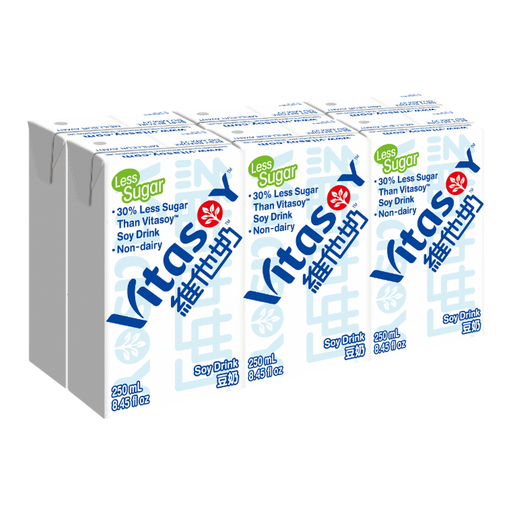 Image unavailable
The six individual cartons are handy if you’re looking for portions to take with you. “Less Sugar” doesn’t mean “no added sugars”, so check the ingredients and the “of which sugars” figure before choosing this recipe.
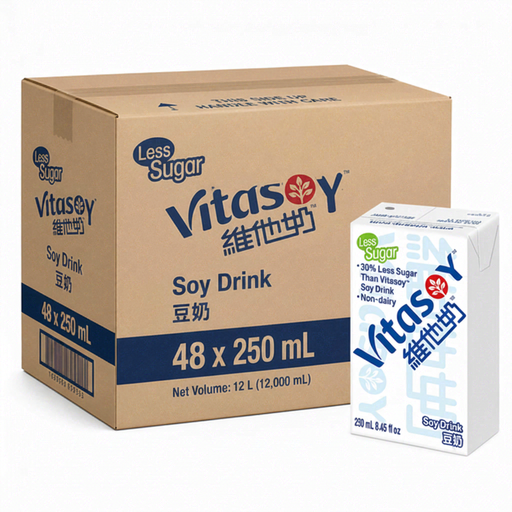 Image unavailable
The pack of 48 individual cartons is a good fit if you need a larger quantity. Check the ingredients and nutritional information on the packaging, particularly if sugar or protein content will affect your choice.
Yes. Soya used as an ingredient must be listed as an allergen, as explained by Service Public Entreprendre for processed foods. If you have an allergy, check the ingredients list and allergen information for the product you’re buying.
Follow the instructions on the carton you buy. For its organic plain soya drink, Auchan recommends refrigerating it at a maximum of +6 °C and drinking it within five days of opening.
No. According to Anses, everyday plant-based or animal-based drinks are not a substitute for breast milk or infant formula for babies under one. Ask a healthcare professional for advice if you have any questions about feeding your baby.
It depends on the recipe and the dish you’re making: fortification alone doesn’t tell you how a drink tastes or what other ingredients it contains. The Sojasun Calcium + Vitamin D recipe featured by the brand contains sugar, among other ingredients. Check the ingredients list if you’re looking for a neutral base.