People comparing the protein in their snacks
After a workout, you may be looking for an easy drink to add to a snack. Compare the grams of protein in the portion you plan to drink, rather than relying on the recipe name alone.


For a post-workout snack, choose a soya drink by comparing the protein in the amount you’ll actually drink, followed by the ingredients. Don’t expect a single drink to take care of recovery. Carrefour France lists 10 g of protein per 200 ml for its Alpro chocolate product, while E.Leclerc lists 3.7 g per 100 ml for Bio Village Unsweetened. These figures apply to those recipes only. If your household needs around 2 L, two 1 L cartons will give you that volume, but they won’t be the same as a single 2 L container.
After a workout, you may be looking for an easy drink to add to a snack. Compare the grams of protein in the portion you plan to drink, rather than relying on the recipe name alone.
You want to keep several litres at home without opening all the containers at once. The 1 L options let you build up that volume with several cartons; check the storage instructions for each one.
You’re deciding between an unsweetened recipe and a flavoured drink containing calcium and vitamins. Check the ingredients and nutritional information for the specific product: you can’t tell what’s in it from the word ‘soya’ alone.
Start with the amount you’ll drink and the recipe you want, then check whether the pack size suits your household’s needs. A drink fortified with calcium and one described as high in protein aren’t necessarily two different options: the Alpro chocolate product described by Carrefour France has both features.
| Criteria | What to check | Who it matters to |
|---|---|---|
| Protein per serving | Grams of protein per 100 ml, then for the amount you’ll actually drink. | If I choose this drink for a post-workout snack, I want to know how much protein I’ll get in a glass. Around 31% of consumers are said to put protein per serving at the heart of their choice. |
| Recipe and fortification | The ingredients list, sugars per 100 ml and whether calcium or vitamins have been added. | For regular use, I prefer to make an informed choice between an unsweetened recipe and a flavoured or fortified version. The ingredients are said to be the main consideration for around 31% of consumers. |
| Restocking and origin | Origin or production details for the product you choose, and the pack size you’ll need to restock. | When my household regularly buys the same drink, I want to be able to find a recipe and origin details that matter to me. Around 23% of consumers are said to prioritise this kind of regular choice. |
| Volume and storage | The size of each container and the storage instructions once opened. | I need around 2 L at home, but I don’t want to open more drink than my household can finish within the stated time. This is said to be the main concern for around 15% of consumers. |
Per 200 ml, the Bio Village product listed by E.Leclerc provides 7.4 g of protein, compared with the 10 g Carrefour France lists for its Alpro chocolate product described as high in protein. These figures don’t describe every recipe from either brand.
Convert the figures to the serving you plan to drink before comparing two products.
A US pint and an imperial pint aren’t the same volume. So this wording alone doesn’t tell you that the pack contains 2 L.
If you want a single container, look for ‘2 L’ on the product. If you’re only concerned with the total volume, compare two 1 L cartons instead.
For its Plain Soya Drink, Sojade says to keep it refrigerated and consume it within five days of opening. Instructions may differ for other products.
Open cartons as you need them and follow the instructions on each one.
The chocolate product described by Carrefour France is an option to consider if you’re looking for a soya drink marketed as high in protein.
The retailer offers several soya drinks in 1 L cartons, including Carrefour Bio and Carrefour Sensation products.
The Bio Village plain soya drink described by E.Leclerc provides a point of comparison for a 1 L recipe.
These products show three ways to stock up on soya drinks: a multipack of 1 L containers, individual portions and a single 1 L container. Compare their volume with your target of around 2 L; none of these options is a single 2 L bottle.
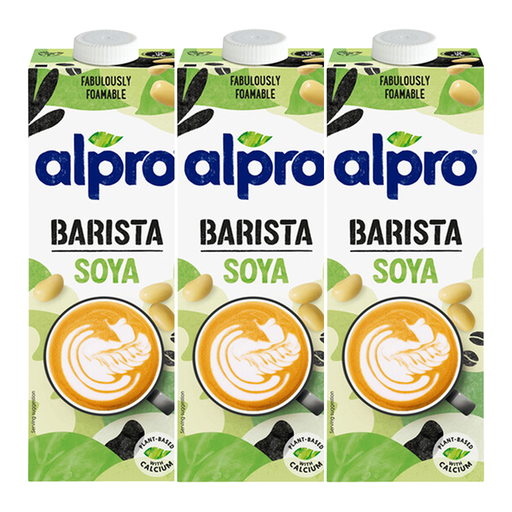 Image unavailable
For a household that regularly drinks soya, this pack splits the volume across three containers. It contains 3 L in total and isn’t a single 2 L bottle.
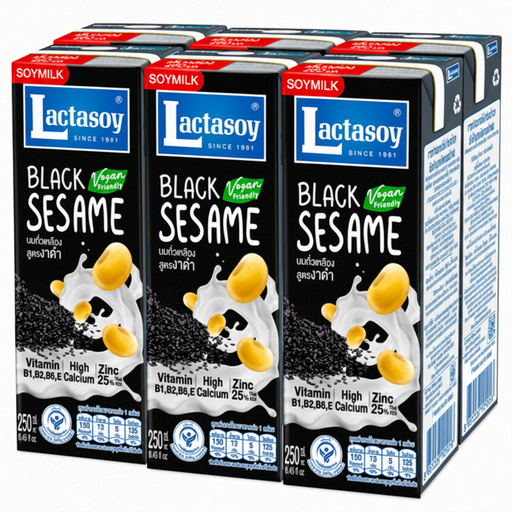 Image unavailable
If you prefer to open an individual portion for your snack, this pack contains six 250 ml servings. Its total volume is 1.5 L, which is less than your target of around 2 L; check the label if soya or sesame is a concern for you.
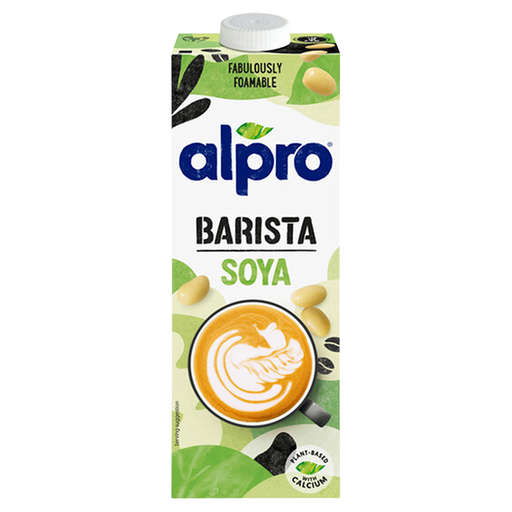 Image unavailable
If you want to build up around 2 L using 1 L containers, this product lets you compare the pack size with your needs. Check how many units you’re ordering: this product is one 1 L container.
No. None of these drinks can guarantee recovery after exercise on its own. To decide how it fits into a snack, consider how much you’ll actually drink and take the rest of your diet into account.
Compare their protein content for the same volume, then look at their ingredients and sugars. For 200 ml, the figures E.Leclerc gives for Bio Village plain work out at 7.4 g of protein; Carrefour France lists 10 g for its Alpro chocolate product described as high in protein. These figures apply to those products only.
Follow the instructions for the product you’ve bought. For its Plain Soya Drink, Sojade recommends keeping it refrigerated and consuming it within five days of opening.
Check the ingredients list for soya and read the allergen information on the specific product. Also check the other ingredients in the recipe, including sesame if it appears in the product name.