Shoppers who prefer glass packaging
You’re ordering online and want to know what the container is made of before you check out. The word ‘bottle’ isn’t enough: look for an explicit mention of glass for the size you’ve chosen.


First, choose a recipe to suit how you’ll use it, any ingredients you need to avoid and the salt content. Then, before ordering, check that the exact size is explicitly listed as being in glass. Compare nutritional values on the same basis, and check availability after selecting your store or delivery option.
You’re ordering online and want to know what the container is made of before you check out. The word ‘bottle’ isn’t enough: look for an explicit mention of glass for the size you’ve chosen.
Whether you’re making a stir-fry, marinade or dressing, you’ll need to choose between a classic or sweet recipe, then pick a size that suits how often you use it.
If you need to avoid gluten or keep an eye on your salt intake, check separately for a ‘gluten-free’ claim, allergens in the ingredients and the salt value on the label of the exact product you’ve chosen.
Start by choosing a recipe that suits how you’ll use it and any dietary requirements. Then confirm the container material, size and availability for the specific option you’re adding to your basket. A sauce labelled gluten-free isn’t necessarily reduced in salt.
| Priority | What to check | Who is it for? |
|---|---|---|
| Glass and ordering | An explicit ‘glass’ listing for the exact size; availability after selecting your store or delivery option. | If I’m set on receiving a glass container, its material matters more than how the bottle looks; around 42 % of shoppers make this their priority. |
| Ingredients and salt | Allergens and, if needed, a ‘gluten-free’ claim; the salt value per 100 ml when labels use the same basis. | If I need to avoid wheat or watch my salt intake, the recipe matters more than the size; roughly 33 % of shoppers prioritise these checks. |
| Use and size | The type of recipe, the container size and storage instructions after opening. | For marinades or dressings, I look for a flavour and quantity that suit how I’ll use it; around 25 % of shoppers put this choice first. |
A container’s name doesn’t necessarily tell you what it’s made of. A Carrefour listing described a 150 ml glass bottle, while also saying that the product was unavailable.
Look for ‘glass’ alongside the size and product you’ve chosen. If it isn’t clear, ask the seller to confirm before ordering.
Carrefour’s listing for Kikkoman classic soy sauce includes wheat among the ingredients. Kikkoman lists a separate tamari with a ‘gluten-free’ claim.
Check the ‘gluten-free’ claim and ingredients on the label of the product you’re actually buying, even if you already know the brand.
These claims relate to different things: choosing a gluten-free tamari doesn’t, by itself, tell you how much salt it contains.
Compare the ‘salt’ value for the same quantity, such as per 100 ml, rather than relying on the recipe name.
A product may appear online but not be available to order from your selected store or with your chosen delivery option.
Select your store or enter your address, then check availability, size and pack quantity before checking out.
Kikkoman offers classic and sweet soy sauces, a reduced-salt option and a tamari labelled gluten-free.
Auchan offers a 150 ml salted soy sauce under its own brand, as well as other options in its online range.
Carrefour lists Kikkoman soy sauces, including classic and sweet varieties.
This 150 ml soy sauce is a handy smaller size for serving with sushi or sashimi. If glass is a deciding factor for you, check the container material on the listing for the size you’re ordering.
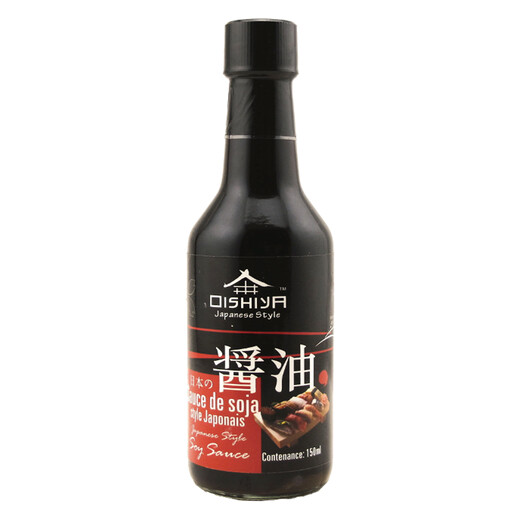 Image unavailable
This 150 ml size could be a good choice if you’re looking for a soy sauce to serve with sushi or sashimi.
If you need to avoid soy or wheat, check the allergens on the label of the product you order.
No. To choose soy sauce in a glass bottle, look for the material to be explicitly stated on the listing or packaging for the exact size, or ask the seller to confirm.
Look for an explicit ‘gluten-free’ claim on the product you’ve chosen and check its ingredients. The Kikkoman classic soy sauce listed by Carrefour contains wheat, while Kikkoman describes its tamari as gluten-free.
Compare the salt value for the same quantity, such as per 100 ml when products show values on this basis. A ‘gluten-free’ claim is no substitute for this check.
Check the ingredients, allergens, size and nutritional information for the exact product. When comparing sauces, use values given on the same basis: per 100 g or per 100 ml, depending on the labelling.
No. Check that you can add the size you want to your basket after selecting your store, entering your address or choosing a delivery option. A Carrefour listing for soy sauce in a glass bottle showed the product as unavailable.