For a nursery lunchbox, a standard soy drink should only be considered if it is suitable for your child’s age and needs, and the nursery allows you to bring it. Check the ingredients, allergens and storage instructions for the specific product you choose. According to Anses, standard plant-based drinks are not a substitute for infant formula from birth to one year. If your child needs to avoid certain foods, follow your healthcare professional’s advice and agree arrangements with the nursery.
When might you consider this drink?
Parents of a child with a confirmed dairy exclusion
Your choice depends on which allergen needs to be avoided and the advice given for your child. As Ameli reminds parents, you should carefully check the label of the exact product. You should also agree arrangements for your child’s care and any dietary restrictions with the nursery.
Parents of a child over one
If the drink is occasionally served with a meal or as a snack, compare its ingredients without assuming that it can automatically replace your child’s usual milk. Age alone is not enough to determine whether a particular product is suitable.
Parents preparing a nursery lunchbox
Before choosing a format, ask the nursery whether it accepts drinks brought from home and how they should be labelled, stored and served. If your child needs dietary adjustments, an individual care plan (PAI) can set out how these should be managed, as explained by Ameli.
What should you check before choosing?
Start by working out what role the drink will play in your child’s diet and whether they need to avoid any foods. Then compare labels and formats that fit in with the nursery’s arrangements.
| What to consider |
What to check |
Who is this for? |
| Age and purpose of the drink |
Your child’s age and how the drink will be used: served with a meal or used to replace their usual milk. |
If my child is an infant or this drink is intended to replace their milk, I need to confirm the right option with their healthcare professional. Around 31% of consumers put this first. |
| Allergens and nursery arrangements |
The ingredients and allergens in the exact product, followed by the care arrangements and PAI if adjustments are needed. |
If my child has to avoid certain foods, I want to prevent an allergen mix-up both when choosing a product and when serving it. This is the top priority for around 31% of consumers. |
| Ingredients |
The ingredients list, the sugars shown in the nutritional information, and any added calcium or vitamins. |
If I’m looking for an unflavoured option or a particular formulation, I compare products rather than relying on the word ‘plant-based’ alone. Around 19% of consumers put ingredients first. |
| Pack size and storage |
The container size, instructions for after opening, and the nursery’s storage and serving rules. |
A drink that’s easy to bring in won’t be useful if its container or storage requirements don’t suit the nursery. Convenience is the top priority for around 19% of consumers. |
Common misconceptions to avoid
-
Assuming ‘plant-based’ or ‘lactose-free’ means allergen-free
These claims alone don’t tell you whether a product meets your child’s dietary restrictions. Soy drinks contain soy, and you should check the exact packaging for other ingredients or possible traces.
If your child has an allergy, follow medical advice and check the label every time you buy the product, even if you’ve bought it before.
-
Replacing an infant’s milk with a standard plant-based drink
Anses distinguishes standard plant-based drinks from infant formula and follow-on formula, which are specially formulated to meet babies’ needs from birth to one year.
If your child is under one or you’re considering replacing their milk, ask their healthcare professional for advice before choosing a product.
-
Buying a large pack before checking with the nursery
The pack you buy must be acceptable to the nursery and suitable for its labelling, storage and serving arrangements.
Ask the nursery which drinks and containers it accepts, and what to do if a PAI is needed.
You may not be able to bring a drink you’ve already bought if its container or storage requirements don’t fit the nursery’s facilities.
Brands to know when comparing labels
Alpro
Alpro offers several soy drinks, including unflavoured and flavoured options. Compare the specific variety rather than assuming the whole range has the same ingredients.
- According to Carrefour’s product information for Alpro soy plant-based drink in a 1 L carton, this product contains calcium and vitamins B2, B12 and D2.
- The same ingredients list includes sugar and soy; these details may not apply to other Alpro products.
Sojasun
Sojasun offers an unflavoured soy drink and other varieties, including options with calcium and vitamin D.
- Carrefour’s product information for Sojasun Sans Sucres lists ‘100% SOY Juice’ in its ingredients.
- This product contains soy and should not be confused with infant formula. Check the ingredients of each other variety separately.
Carrefour
Carrefour stocks its own-brand soy drinks alongside well-known brands, with unflavoured, organic and flavoured recipes.
- Having several products to choose from makes it easier to compare their ingredients lists and nutritional information.
- The range depends on the store and collection method. Check the label of the specific product you choose.
Soy drinks available on Joybuy
These soy and soy-based drinks come in a range of formats and varieties. Check with the nursery before choosing one. Before bringing a drink in, check your child’s age, any dietary restrictions and the label of the product you receive.
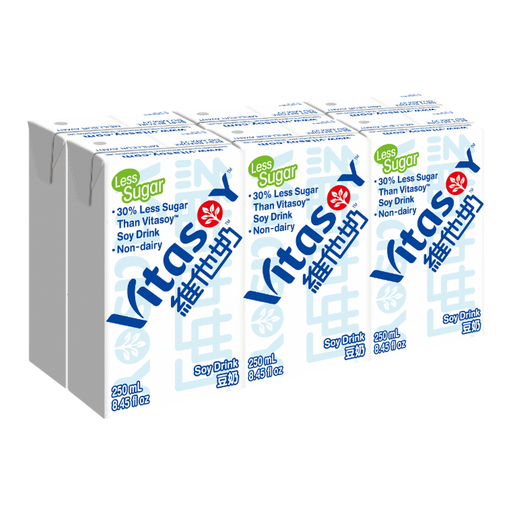 Image unavailable
Vitasoy Soya Bean Milk with Less Sugar, 6 × 250 ml
The 250 ml cartons may be worth considering if the nursery accepts this size and type of container.
This variety has ‘Less Sugar’ in its name. Compare the sugars shown on its packaging with those of other products. Also check the allergens and storage instructions after opening.
View on Joybuy
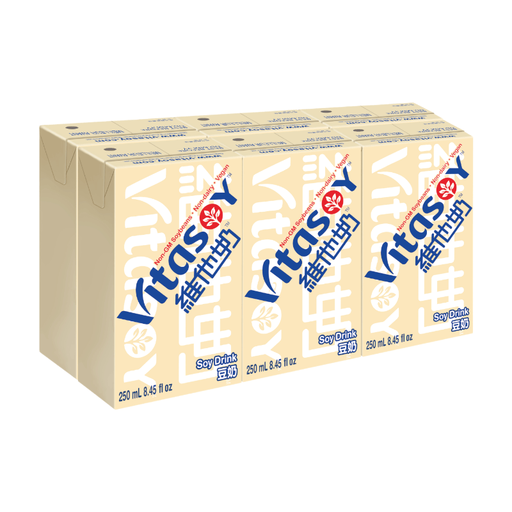 Image unavailable
Vitasoy Original Soy Milk, 6 × 250 ml
This pack of six 250 ml cartons may suit families looking for individual portions, subject to the nursery’s rules on containers.
This is the ‘Original’ variety. Check its ingredients and sugar content on the packaging, along with any allergens relevant to your child and the instructions for after opening.
View on Joybuy
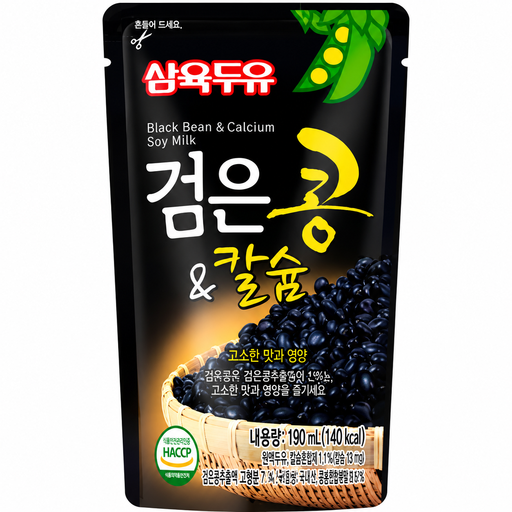 Image unavailable
SAHMYOOK Black Bean & Calcium Soybean Milk, 190 ml
The stated 190 ml size may be suitable if the nursery accepts this type of container and the volume fits the intended use.
The name mentions black beans and calcium. Check the label for the ingredients and nutritional values of this product. Also check how many units you’re buying and the storage instructions.
View on Joybuy
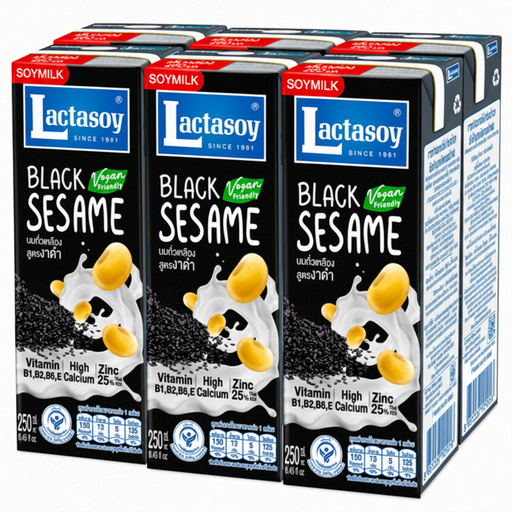 Image unavailable
Lactasoy Soy Milk with Black Sesame, 6 × 250 ml
The six 250 ml cartons offer individual portions, but check that they meet the nursery’s rules.
This is a black sesame variety, not an unflavoured soy drink. If your child needs to avoid soy, sesame or another ingredient, check the packaging and follow their dietary restrictions. Also compare the sugar content per serving.
View on Joybuy
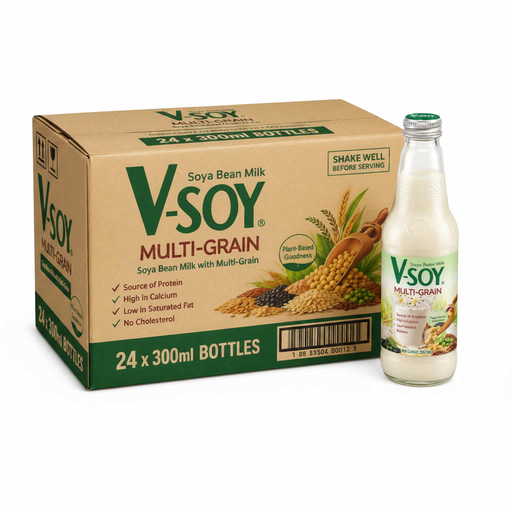 Image unavailable
V-Soy Multi-Grain Soy Bean Milk, 24 × 300 ml
These 300 ml cartons may appeal to families looking for individual containers, provided the size suits the intended use and the nursery’s rules.
This multigrain drink is not an unflavoured variety. If your child needs to avoid certain foods, check the list of grains and allergens, then read the storage instructions for before and after opening.
View on Joybuy
Frequently asked questions
Is a ‘lactose-free’ soy drink automatically suitable for a child with a milk allergy?
No. The claim ‘lactose-free’ alone doesn’t tell you whether the product meets your child’s prescribed dietary restrictions. Check the ingredients list, allergens and any warnings about traces on the exact packaging. Soy drinks also contain soy, which may be an allergen your child needs to avoid.
Can you replace an infant’s milk with a soy drink from the plant-based drinks aisle?
No. According to Anses, a standard plant-based drink does not meet the needs of an infant from birth to one year in the way that specially formulated infant formula does. If you have any questions about replacing milk or food exclusions for an infant, speak to their healthcare professional.
Do you need a PAI to bring a particular drink to nursery?
A PAI may be needed if your child’s health requires dietary adjustments. Whether one is put in place depends on your child’s circumstances and the care arrangements. Ameli says it can set out dietary restrictions in group settings. Ask the nursery manager and medical team what arrangements to follow.
What should you compare on the labels of two soy drinks?
First, compare the ingredients and allergens against your child’s specific dietary requirements. Then check the sugars in the nutritional information and compare the volume. If they matter to your choice, look at the calcium and vitamins listed for each product. Finally, check that the storage instructions fit in with the nursery’s arrangements.


