Runners planning their carbohydrate intake
You’d like to include soy drink with breakfast or as a snack, while choosing other foods separately to provide the carbohydrates planned for your training.


When preparing for a marathon, choose soy drink as part of a meal or snack, not as your only source of carbohydrates or as a race-day hydration strategy. According to the IRBMS, energy intake is a key consideration for marathon runners. Compare the drink’s recipe according to your priorities, while planning suitable foods and drinks for your training separately.
You’d like to include soy drink with breakfast or as a snack, while choosing other foods separately to provide the carbohydrates planned for your training.
You drink soy drink around your training sessions and check the protein, calcium or vitamin D content of the specific product you choose, without assuming that all recipes are the same.
You’re looking for a drink to enjoy regularly and compare the ingredients, sugars, volume and storage instructions for each variety.
If you’re considering soy drink while training for a marathon, start by thinking about how it fits into your meals. Its nutritional profile doesn’t replace your choice of other foods or the drinks planned for race day.
| What to compare | What to check | Who it matters to |
|---|---|---|
| Carbohydrate content | Check the carbohydrate and sugar values on the label; choose the foods and drinks for your training separately. | I want to know what the drink actually adds to my breakfast, without relying on it alone before a race. Around 36% of consumers prioritise this distinction. |
| Protein and added nutrients | Compare the protein content, then check whether calcium and vitamin D are included and in what quantities for that specific variety. | If I drink soy after training or at breakfast, I want to make an informed choice between fortified and unfortified recipes. This is a priority for around 29% of consumers. |
| Ingredients and sugars | Check the ‘of which sugars’ line, the ingredients list and allergens. Make sure you’re comparing like with like: per 100 ml or per 100 g. | For a drink I have regularly, I’d rather know exactly what’s in it than rely on its name. Around 21% of consumers put ingredients and sugars at the top of their list. |
| Pack size and storage | Check the carton size and storage instructions for the product you’re buying. | I need a pack size that works for my meals and can be stored as directed on the product. For around 14% of consumers, practicality comes before other considerations. |
The IRBMS puts energy intake at the heart of marathon preparation. Soy drink on its own isn’t a carbohydrate and hydration plan for race day.
If it suits you, include it as part of a meal or snack; plan your other sources of fuel and race-day drinks separately.
Bjorg and Auchan product pages list recipes with different sugar and protein values. Bjorg gives its figures per 100 g, while Auchan gives them per 100 ml, so the two bases shouldn’t be confused.
To compare two products, check their nutritional information and ingredients lists on the packaging, taking note of the units shown.
Plant-based soy drink contains soy. The DGCCRF reminds food businesses that allergenic ingredients must be highlighted on food labels.
If you’re allergic to soy, don’t choose a drink that contains it. Check the ingredients list and allergens for every product.
Carrefour’s 1 L Alpro soy drink contains calcium and vitamins D2, B2 and B12.
The range includes a Soja Calcium + Vitamine D drink.
Bjorg offers an organic, unsweetened plain soy drink.
Auchan offers a 1 L carton of plant-based soy drink.
E.Leclerc offers a 1 L carton of organic plain soy drink with no added sugars.
This selection includes ready-to-drink soy drinks and a powder to mix. Compare the pack size and recipe if you’re choosing something for a meal or snack; none of these products is, on its own, a marathon fuelling strategy.
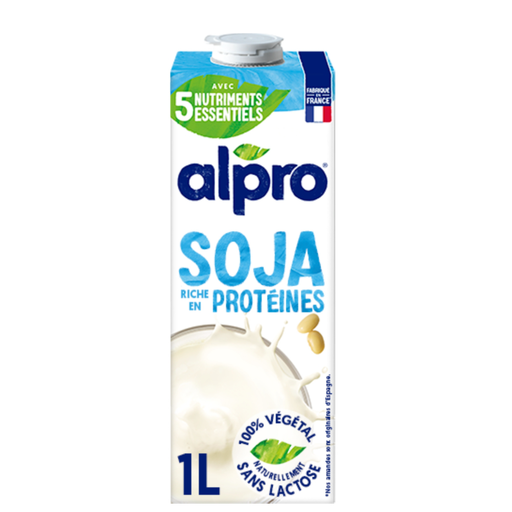 Image unavailable
Worth considering if you’re looking for a soy drink to have with breakfast or as a snack.
This product is described as fortified with calcium and vitamins D2, B2 and B12. To compare its sugar and protein content with another drink, use the figures and units shown on the packaging.
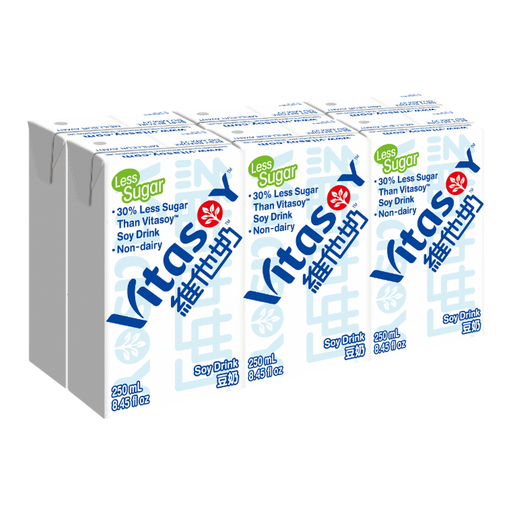 Image unavailable
The pack of individual cartons could suit you if you’d like to spread your drinks across several meals or snacks.
Check the total sugars on the label. The words ‘Less Sugar’ in the product name don’t tell you, by themselves, how much sugar to factor into your choice.
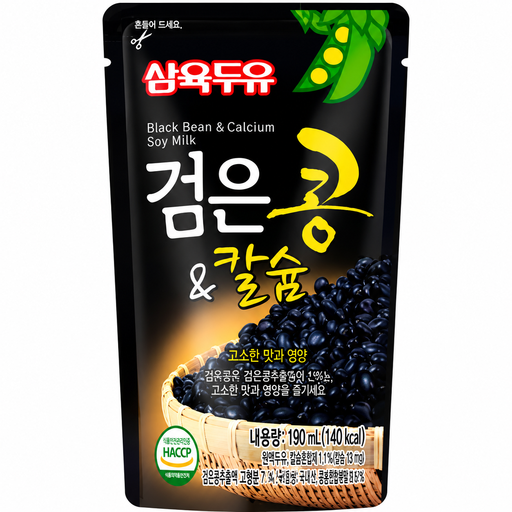 Image unavailable
The individual pack could fit into a meal or snack if you prefer a ready-to-drink portion.
If calcium is a priority, check how much the carton contains and also look at the sugars listed per portion.
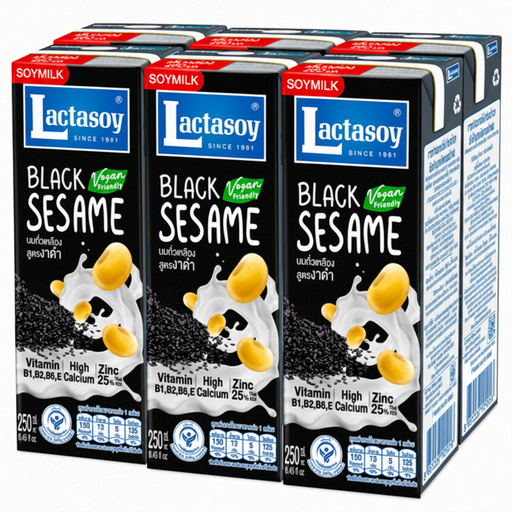 Image unavailable
This pack of individual portions could suit anyone looking for a black sesame soy drink to have with meals or as a snack.
Check the sugars per carton and the allergen list before buying, particularly if soy or sesame is a concern for you.
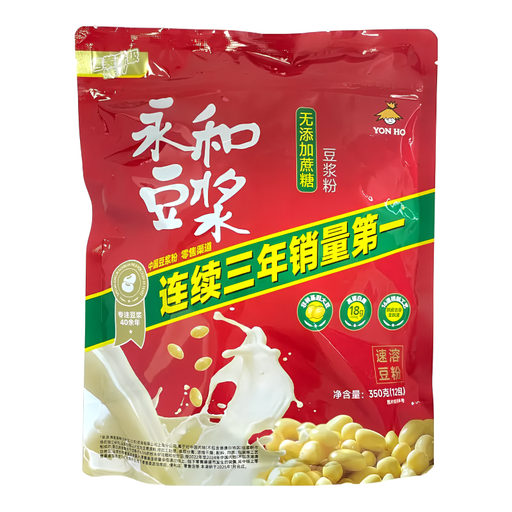 Image unavailable
This powder is for anyone who would rather make their own drink than open a ready-to-drink carton.
The word ‘Unsweetened’ in the product name isn’t enough to assess its sugar content. Check the ingredients, nutritional values for the powder and preparation instructions on the packaging.
No. It can be part of a meal or snack, but it isn’t, on its own, enough to provide carbohydrates and hydration for a race. The IRBMS highlights the importance of energy intake when preparing for a marathon. Plan your other foods and drinks separately, in line with your race-day arrangements.
Choose according to what you want to prioritise: the drink’s sugar content, or whether it contains calcium and vitamin D. Bjorg and Sojasun product pages show different nutritional profiles. Check the ingredients and nutritional values for the exact variety, and don’t assume that added nutrients also provide the carbohydrates planned for your race.
Follow the instructions on the carton you’ve bought, as these depend on its recipe and packaging. For example, the Joybuy product page for Alpro 1 L soy drink says to refrigerate it at between +1 °C and +7 °C and consume it within five days of opening.
If you’re allergic to soy, don’t choose a drink that contains it. Check the ingredients and highlighted allergens on every pack. The DGCCRF reminds food businesses that allergenic ingredients must be highlighted on food labels.