Runners training for a marathon
You want to include a soy drink with meals or snacks, while keeping it separate from the fuelling you plan to use during the race.


For meals in a household preparing for a marathon, choose a soy drink recipe to suit everyday use, then check the volume of each container: several 1 L cartons are not the same as one 2 L bottle. Don’t confuse this drink with the carbohydrate fuelling planned for race day; test that separately during training.
You want to include a soy drink with meals or snacks, while keeping it separate from the fuelling you plan to use during the race.
You buy several litres over the week and need to weigh up the total volume, how many cartons you’ll open and how long they’ll keep.
You check the sugars, protein and any added calcium or vitamin D in the specific product, rather than relying on the brand name alone.
First, decide whether the drink is for meals or whether you’re looking for race-day fuelling. Then compare the recipe and the volume per unit. If a listing says “4 pint”, check exactly what it means before assuming it refers to one 2 L container.
| Criterion | What to check | Who this matters to |
|---|---|---|
| Fuelling during the race | Carbohydrates per serving and how the drink fits into a fuelling plan tested during training. | I don’t want to rely on my breakfast drink as my only source of fuel during the marathon. Around 33% of consumers prioritise this distinction. |
| Everyday recipe | Sugars and protein per 100 ml, and whether calcium and vitamin D have been added. | For my usual meals, I’m looking for a recipe whose ingredients and nutritional values suit the way I’ll use it. This comparison comes first for around 33% of consumers. |
| Format and storage | The volume of each unit, the number of cartons and storage instructions after opening. | My household gets through several cartons, but I don’t want to open more drink than we can use. Format is the priority for around 27% of consumers. |
| Ingredients and allergens | The ingredients list and allergen information for the specific product you’re buying. | If I need to avoid an ingredient, whether it’s present determines my choice before the format or recipe. Around 7% of consumers put this check first. |
A low-carbohydrate plain recipe you drink at breakfast won’t automatically replace a carbohydrate fuelling strategy during the race.
Choose a drink for your meals, and test separately during training what you plan to consume during exercise.
Three 1 L cartons add up to several litres to buy, but they’re not one 2 L container. The amount you open at a time also affects how you store it.
Check the number of units and their capacity before choosing a multipack for your household.
A plain recipe and a flavoured or fortified one may have different ingredients and nutritional values, even within the same range.
Compare the nutritional information per 100 ml and the ingredients list for each product.
Soy is an ingredient to avoid if you have a soy allergy. How long a drink keeps after opening depends on the product; Auchan says the soy drinks mentioned here should be used within five days.
Read the label on the product you buy and open cartons at a rate that suits your household’s consumption.
These products let you compare specific recipes and formats; a brand name alone doesn’t tell you what to expect from its entire range.
A 1 L soy drink is listed on a Joybuy product page.
The Calcium + Vitamin D recipe is an option if you’re looking for a fortified soy drink.
Carrefour offers an organic plain soy drink in a 1 L carton.
E.Leclerc offers 1 L soy drinks, including plain recipes with no added sugars and vanilla options.
Auchan offers soy drinks in 1 L cartons, including an organic plain recipe.
These Alpro options are for everyday drinks and recipes: two individual 1 L cartons and a pack of three 1 L cartons. They’re not single 2 L bottles or a race-day fuelling plan.
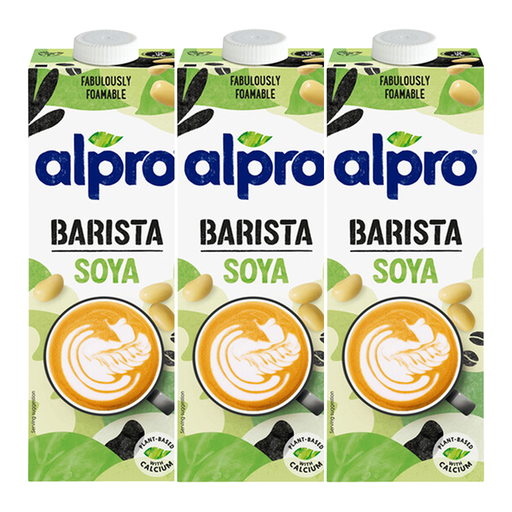 Image unavailable
For households that use soy drink in cereal or recipes. The pack contains three 1 L cartons, not one 2 L bottle; check the storage instructions on the packaging.
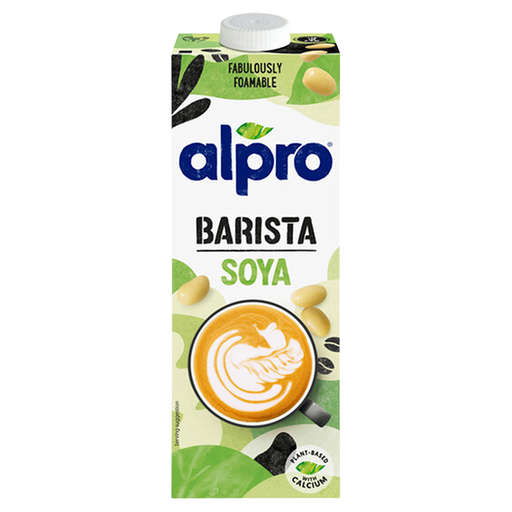 Image unavailable
For drinks, cereal and everyday recipes while you train. This carton contains 1 L; check the label on the exact product if fortification is one of your priorities.
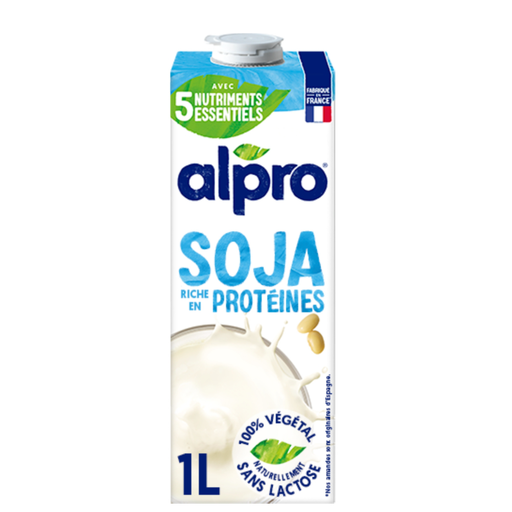 Image unavailable
For breakfast or household recipes. The carton contains 1 L; read the nutritional information on the packaging before comparing figures, including the serving size used.
Don’t assume that a soy drink intended for meals will meet your fuelling needs during a race. The endurance research cited by PubMed looks at carbohydrate intake during exercise and the benefits of testing your chosen foods during training. Check the carbohydrate content of your drink and plan your race fuelling separately.
Follow the instructions for the product you buy. For the Auchan soy drinks mentioned here, Auchan advises refrigerating them and using them within five days of opening.
Choose the recipe that suits the way you want to use it with meals; don’t assume one is always better than the other. E.Leclerc gives 0,7 g of sugars per 100 ml for its Bio Village plain drink with no added sugars; Sojasun gives 120 mg of calcium per 100 ml for its Calcium + Vitamin D recipe. Compare the other nutritional values and ingredients for each product too.
Soy drink isn’t suitable for anyone with a soy allergy. Check the ingredients list and allergen information on the packaging of the product you’re considering, rather than relying on the general description “plant-based drink”.