Anyone looking for a plain option
If you drink soy with lunch, add it to cereal or use it in a savoury recipe, you may prefer a product whose ingredients and sugars are easy to compare.


For lunch, a plain soy drink makes it easier to compare ingredients and sugars. If it regularly replaces a dairy drink, check the calcium and vitamins in the product you choose too. A flavoured version is more about personal taste, so be sure to check its label separately.
If you drink soy with lunch, add it to cereal or use it in a savoury recipe, you may prefer a product whose ingredients and sugars are easy to compare.
If you often have a plant-based drink instead of a dairy drink, check whether each product is fortified with calcium and vitamins.
For coffee, a smoothie or a particular recipe, a flavoured option may be more appealing. Compare its ingredients and sugars with those of a plain version.
For lunch, consider the recipe, any fortification and how you plan to use it. The word ‘soy’ alone doesn’t tell you about any of these.
| What to consider | What to check | Who it matters to |
|---|---|---|
| Sugars and ingredients | Read the ingredients list and the ‘of which sugars’ figure per 100 ml. Note the difference between ‘no added sugars’ and ‘sugar-free’. | I want a plain drink that won’t add a sweet flavour to my meal. Around 29% of consumers prioritise ingredients and sugars. |
| Calcium and vitamins | Check the calcium and vitamins listed on your chosen carton, particularly D and B12 if these nutrients are important to you. | If I often replace a dairy drink, I don’t want to assume that all soy drinks have the same nutritional content. Fortification is a priority for around 29% of consumers. |
| Taste and how you’ll use it | Choose a product suited to the drink or recipe you have in mind, then compare the ingredients in a flavoured version with those in a plain one. | For coffee or a particular recipe, I first look for a flavour that works for that purpose. Around 21% of consumers prioritise taste or cooking use. |
| Pack size and in-store availability | Check the volume and recipe of the product available at your usual supermarket. | I need a pack size that suits how much I drink and a product I can find when I shop. This comes first for around 21% of consumers. |
A drink with no added sugars may still contain sugars, as shown in its nutritional information.
Compare the ingredients list and the ‘of which sugars’ figure per 100 ml on the products you’re considering.
A plain recipe and a fortified one may not meet the same needs. Santé publique France points out that the nutritional composition of plant-based drinks differs from that of animal milk.
If calcium or vitamins matter to you, check that they’re listed on the exact carton you’re considering.
Plain, mellow and flavoured varieties can have different ingredients and sugar levels.
Choose a flavour to suit how you plan to use it, then compare its nutritional information with that of a plain version.
Soy is an allergen that must be listed in food information, according to the European Commission. Some recipes also combine soy with other ingredients.
Read the label on each product, even if you’re only switching to a different flavour or brand.
The Nature soy drink listed at Carrefour is an example of a recipe to compare for drinking with a meal or using in cooking.
The range includes soy drinks for different purposes, including a barista version featured by Alpro.
Bjorg’s range includes plain, sugar-free soy drinks as well as mellow and vanilla varieties.
The 1 L organic plain soy drink listed at Carrefour is an example of a plain recipe.
The products listed at Auchan include an organic plain soy drink and another described as a source of calcium.
These products are mainly flavoured soy drinks, individual portions and a powder to prepare. If you’re choosing something for lunch, distinguish ready-to-drink products from powder, and check the sugars and any fortification on each pack.
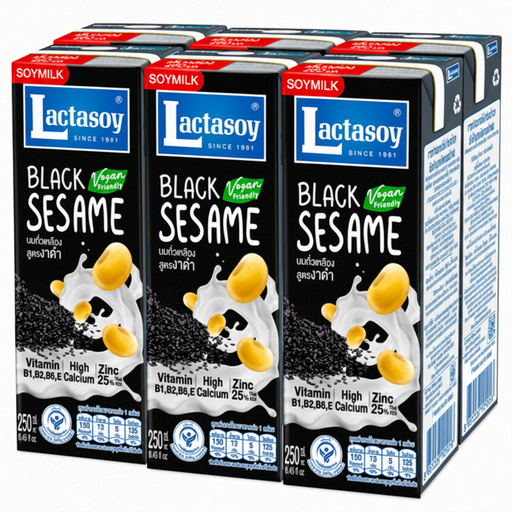 Image unavailable
Worth considering if you enjoy the taste of black sesame in an individual portion. The product listing gives 13 g of sugars per 250 ml carton. If calcium matters to you, check the amount and what the value shown on the packaging refers to. The recipe contains soy and sesame.
 Image unavailable
This individual portion is a good option if you’re looking for black sesame flavour. It contains 5.16 g of sugars per 100 ml. Check the label if the amount of calcium or vitamins is important to your choice. The drink contains soy.
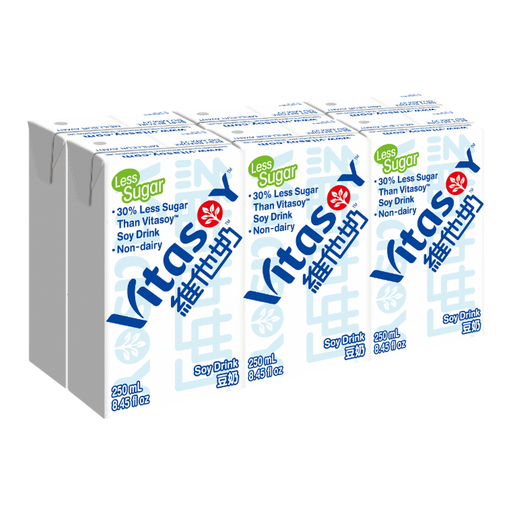 Image unavailable
The small cartons may suit you if you want to take a soy drink with you. This recipe contains added sugar and fructose, so don’t assume from the name that it has no added sugars. The protein information in the product listing is contradictory, so check the packaging before comparing this product on that basis.
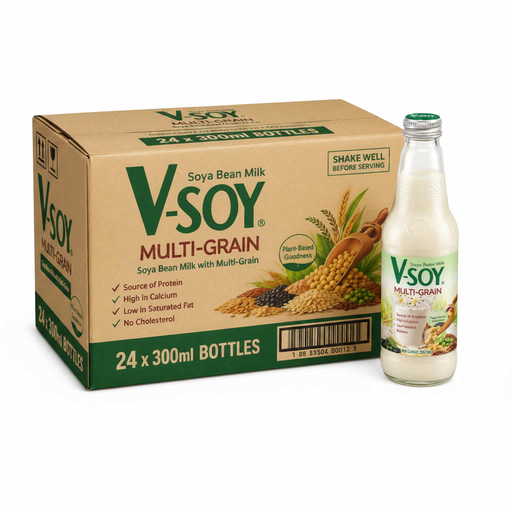 Image unavailable
This recipe combines soy and grains, making it a good option if you’re looking for individual cartons rather than a plain drink. It contains 6.5 g of sugars per 100 ml, as well as soy and barley. Check the label if calcium or vitamin fortification matters to you.
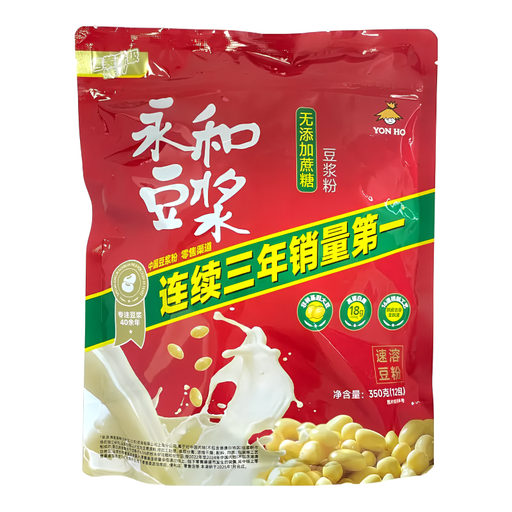 Image unavailable
This powder is for anyone who prefers to prepare their drink just before having it; it isn’t a ready-to-drink carton. The product listing states 4.5 g of sugars per 25 g serving, and the ingredients include malt syrup despite the ‘Unsweetened’ description. Check the packaging before choosing it to limit added sugars.
No. As Santé publique France points out, their nutritional compositions are not identical. If you regularly have a plant-based drink instead of a dairy drink, check the calcium and vitamin D in the product you choose, as well as vitamin B12 if you need it.
Anyone with a soy allergy should avoid drinks that contain soy. The European Commission lists soy as an allergen that must be declared in food information. Read the ingredients list on the exact product you’re considering, and look out for any other ingredients as well.
Follow the instructions on the carton you’ve bought. The Auchan Bio and Sojasun product listings checked at Auchan recommend refrigerating the drink after opening and consuming it within five days. Don’t assume this applies to every recipe.