Larger households planning a barbecue
If you’re planning on around 3 L for drinks and recipes, check how many cartons or bottles are in the multipack. That way, you can open only what you need and follow the storage instructions for each container.


If you need around 3 L of soy drink for a barbecue, check the total volume and the number of containers: a 3 L multipack doesn’t necessarily mean one large bottle. For cooking, choose a recipe that suits your dish by checking the ingredients and sugars on the label, and bear in mind how long it will keep once opened.
If you’re planning on around 3 L for drinks and recipes, check how many cartons or bottles are in the multipack. That way, you can open only what you need and follow the storage instructions for each container.
For both savoury and sweet dishes, compare the plain options and ingredient lists. The Auchan product information, for example, says Sojasun Nature can be used in both types of recipe.
If protein or added calcium and vitamin D matter to you, check the nutritional information for the exact product, per 100 ml. These features vary from one soy drink to another.
For a barbecue with a larger household, start by checking how much you can actually use, then choose a recipe to suit what you plan to serve. “6 pint” doesn’t refer to a specific French pack size here, so think in litres and check the net volume shown on the product.
| Criteria | What to check | Who is this relevant to? |
|---|---|---|
| Volume and storage | Total net volume, number of containers and instructions for use after opening. | If I’m serving several people without opening the whole multipack at once, I want to know the size of each container and be able to use its contents in time; around 36% of consumers would make this a priority. |
| Recipe and sugars | Ingredients, flavourings and the “of which sugars” figure per 100 ml. | If I’m using the same drink in both savoury and sweet dishes, I’d rather know what it tastes like before choosing it; this would be a priority for around 27% of consumers. |
| Nutritional information | Protein and any added calcium or vitamins, per 100 ml. | When I’m looking for a specific nutritional feature, the product range name alone isn’t enough to compare options; around 27% of consumers would prioritise this comparison. |
| Ingredients and origin | Ingredient list, organic status and the origin of the soya, where stated. | I may prefer a short ingredient list or a clearly stated origin, even if that means putting a family-size pack second; around 10% of consumers would make this their top criterion. |
Auchan and Carrefour product pages list 3 L Bjorg multipacks, including one made up of three 1 L bottles. So the total volume doesn’t tell you how many units you’ll need to store or open.
Before ordering, check the number of containers and the volume of each one. Open them as you need them, where the pack allows.
It can be difficult to finish several opened containers at the same time within the period stated on their packaging.
Recipes vary: the Auchan page for one of its own-brand soy drinks lists sugar, while the page for the Bjorg Douceur multipack lists cane sugar and vanilla flavouring. These ingredients may influence your choice of a base for a savoury dish.
Check the ingredients and the “of which sugars” figure for the exact product. Save flavoured options for dishes where that flavour works.
The Auchan page for Alpro Protéine states that a 200 ml serving contains 10 g of protein. A serving and a 100 ml portion aren’t the same basis for comparison.
Compare the nutritional information per 100 ml side by side before looking at protein, sugars or any other values that matter to you. The DGCCRF says that nutritional information for liquids is given on this basis.
Soya is an allergen to look out for in the ingredients list. The DGCCRF says that allergenic ingredients in prepacked foods must be highlighted there.
If you need to avoid soya, check the label of every product you plan to serve rather than relying on the information on the front of the pack.
The details below apply to the specific products mentioned, not to every drink sold under each brand.
The Auchan product page we checked lists a 1 L high-protein soya option.
Different products let you compare a Nature drink with one described as enriched with calcium and vitamin D.
The brand appears on product pages for plain soy drinks as well as multipacks with a total volume of 3 L.
A 1 L organic plain soy drink lets you compare the ingredients in an individual carton.
A 1 L organic plain option lists France as the origin of its organic soya drink.
This multipack contains three 1 L bottles, giving you around 3 L for a larger household. You can open the bottles separately. If you also plan to cook with the drink, check the recipe and storage instructions.
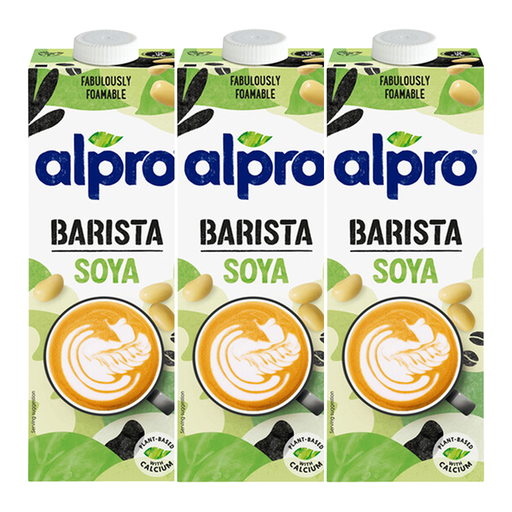 Image unavailable
If you need around 3 L of soy drink for a barbecue with a larger household, this multipack contains three 1 L bottles rather than one large container.
If you’re looking for an unflavoured base for cooking, check the ingredients and sugars in this product. Also check the storage instructions after opening before opening several bottles.
This wording doesn’t give a single sales volume, as it doesn’t specify which type of pint is meant. For the roughly 3 L you need for this barbecue, check the total net volume in litres and the number of bottles or cartons instead.
Not necessarily: the Carrefour page for one Bjorg multipack says it contains three 1 L bottles. Check the packaging for the product you choose if you want to open the containers one at a time.
Follow the storage time and temperature shown on the packaging for your product. The Auchan Bio page says to use it within five days and keep it at a maximum of 6 °C after opening, while the page for the Bjorg Douceur multipack says four days. These instructions aren’t interchangeable.
Start with the ingredients and flavourings to see whether the recipe suits your dish, then compare the “of which sugars” figure per 100 ml. A plain drink and a vanilla-flavoured one won’t necessarily work in the same way in a sauce or dessert.
Check the ingredients list of every product before serving it. The DGCCRF says allergenic ingredients must be highlighted on the labels of prepacked foods, so don’t rely only on the information on the front of the pack.