Those looking for clearly labelled sourdough
You want to see sourdough starter in the ingredients, rather than infer its presence from an artisan-style description. The Carrefour listing for Brioche Pasquier states the proportion used.


If sourdough is your main consideration for a morning coffee, choose a croissant whose ingredients explicitly include sourdough starter. If you want one that’s ready to eat, look for ready-to-eat options; if you can use the oven in the morning, a ready-to-bake version fits a different routine and isn’t necessarily made with sourdough. Carrefour’s listing for the Brioche Pasquier croissant states that it contains 7% sourdough starter, as well as yeast. Check the full recipe, allergens and storage instructions before choosing.
You want to see sourdough starter in the ingredients, rather than infer its presence from an artisan-style description. The Carrefour listing for Brioche Pasquier states the proportion used.
A ready-to-eat croissant means there’s no need to plan for baking. A frozen, ready-to-bake product, such as the Epi d’Or option listed by E.Leclerc, requires an oven and time before coffee.
The presence of butter or sourdough starter doesn’t tell you everything about a recipe. Check the full ingredients list to see what other fats, yeast and allergens are in the product you’re considering.
When choosing something to go with your morning coffee, start with what matters most to you, then check the specific product. Sourdough croissants, ready-to-eat croissants and ready-to-bake options don’t all suit the same routine.
| What to consider | What to check | Who is it for? |
|---|---|---|
| Sourdough starter | Look for sourdough starter in the ingredients and check its proportion if stated. Check separately for yeast. | If I’m specifically looking for a sourdough croissant, I want to see it mentioned in the recipe, not just in the description. Checking for sourdough starter would be the top priority for around 33% of consumers. |
| Ingredients | Compare the stated butter content and any other fats or ingredients that matter to you in each product. | To choose a recipe that suits my preferences, I look beyond the words “made with pure butter”. Ingredients would come first for around 27% of consumers. |
| Preparation and storage | Tell ready-to-eat products apart from ready-to-bake ones, and follow the storage instructions for each. | When coffee needs to be served quickly, I look for a croissant that’s ready to eat; if I’m planning to use the oven, I can consider a ready-to-bake option. The morning routine would be the main consideration for around 20% of consumers. |
| Allergens | Check the ingredients list and allergen information on the product you’re actually buying. | If there are ingredients we need to avoid at home, I check the label before choosing a product. This would be the main concern for around 20% of consumers. |
The ingredients list for the Brioche Pasquier croissant published by Carrefour states that it contains both 7% sourdough starter and yeast. So the presence of sourdough starter doesn’t tell you everything about the recipe.
Read the full ingredients list if yeast, oils or emulsifiers affect your choice.
A statement about butter doesn’t confirm that sourdough starter is present. For example, E.Leclerc’s listing for the Epi d’Or croissant describes a frozen, ready-to-bake product made with pure butter, but doesn’t present it as a sourdough croissant.
If sourdough starter is essential for you, look for it in the ingredients of the exact product you’re considering.
A ready-to-eat croissant and a frozen, ready-to-bake croissant need different preparation. Maison Kayser says its croissant can be kept at room temperature for 8 hours in its packaging paper.
Decide whether you want to serve it straight away or bake it in the morning, then follow the preparation and storage instructions for your chosen product.
A frozen, ready-to-bake option also needs freezer space and an oven.
A sourdough croissant can contain several allergenic ingredients. The listings for Brioche Pasquier and Maison Kayser both identify wheat and milk; Maison Kayser’s listing also mentions egg.
If you have an allergy, check the label on the product you’re actually buying, including any warnings about possible traces.
These examples relate to specific products: a brand may offer other recipes or formats. Always check the listing and label for the croissant you’re considering.
A packaged croissant that lists sourdough starter, available from retailers including Carrefour and Auchan.
An artisan option to buy close to when you plan to eat it, depending on local collection or delivery options.
A viennoiserie supplier whose catalogue is aimed in part at foodservice and professional retailers.
A frozen, ready-to-bake, pure-butter croissant listed by E.Leclerc.
A ready-to-eat, pure-butter croissant to enjoy with your coffee, with no need to bake it at home.
This selection features a croissant filled with hazelnut and cocoa to enjoy with your morning coffee. If you’re looking specifically for a plain sourdough croissant, check that this recipe is what you want before ordering.
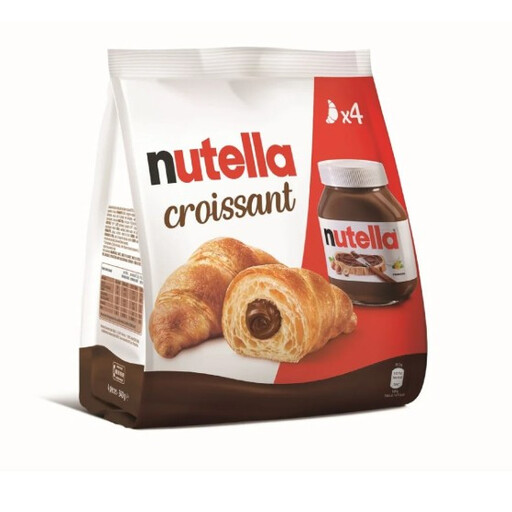 Image unavailable
Enjoy these with a coffee for a hazelnut and cocoa-filled viennoiserie. The pack contains four croissants, with a stated total weight of 340 g. If sourdough or a no-bake option is essential for you, check the ingredients and preparation instructions before buying.
Not necessarily. The ingredients list for the Brioche Pasquier croissant published by Carrefour states that it contains 7% sourdough starter and also mentions yeast. Check the full recipe if the method of making is important to your choice.
Start by checking the ingredients, highlighted allergens and net quantity. France’s Directorate-General for Competition, Consumer Affairs and Fraud Control highlights these as key information for pre-packed foods in France. Also check the date and storage instructions for the product you buy.
No. Follow the instructions for the specific product. Maison Kayser says its croissant can be kept for 8 hours at room temperature in its packaging paper, while Auchan says to keep the packaged Brioche Pasquier croissant in a cool, dry place and reseal the bag properly.
No. The Brioche Pasquier and Maison Kayser croissants featured here both list wheat and milk; Maison Kayser also mentions egg. If you have an allergy, check the ingredients and any warnings about possible traces on the product you’re actually buying.