For Friday drinks, choose an artisan croissant described as being made with sourdough if you can buy it close to serving time, a packaged sourdough croissant if you want to prepare the platter without baking, or a frozen, ready-to-bake option if you have an oven and enough time. Check the ingredients for the specific product you choose: sourdough doesn’t rule out yeast, and a ready-to-bake croissant isn’t necessarily made with sourdough.
Who are these options for?
If you’re looking for a sourdough croissant
If sourdough is your main priority, check that it appears in the ingredients, then plan your purchase around serving time. Maison Kayser describes its croissant as made with homemade natural sourdough, although the ingredients also include yeast.
If you’re planning savoury fillings
The number of croissants, their size and how they need to be prepared all matter when putting together a platter. Europasty presents its Croissant Levain Sophie as suitable for both sweet and savoury recipes; E.Leclerc describes its EPI D'OR croissants as frozen and ready to bake.
If you want to prepare your platter without baking
A pack that’s ready to serve means you won’t need to reserve the oven on Friday evening. Auchan’s product listing for Pasquier sourdough croissants states that the pack contains eight and provides the ingredients and storage instructions to check before buying.
What should you look for?
First decide whether your priority is sourdough, savoury fillings or the time you have before serving. Then compare the exact products, as these features don’t always come together.
| What to look for |
What to check |
Who it’s for |
| Sourdough in the recipe |
Look for sourdough in the ingredients and check separately whether yeast is included. |
If I’m mainly looking for a croissant made with sourdough, the product name alone isn’t enough to help me choose. Around 36% of consumers make this their top check. |
| Size for savoury fillings |
Compare the weight per croissant, the number in the pack and how they need to be prepared. |
When putting together filled bites, I first need a size that suits the way I plan to serve them. This is a priority for around 29% of consumers. |
| Preparation on Friday |
Check whether the croissants are ready to serve or need baking, then follow the storage instructions. |
If I have limited time before my guests arrive, I first choose based on how much preparation is needed. Around 21% of consumers prioritise this. |
| Ingredients and allergens |
Read the ingredients and allergen information for the product you’re buying; if you’re buying from a bakery, ask the staff. |
When I’m putting together a platter for guests with dietary restrictions, I first need to choose a suitable recipe or plan an alternative. This is the top priority for around 14% of consumers. |
What not to overlook
-
Assuming “sourdough” means no added yeast
The ingredients listed by Maison Kayser and by Auchan for the Pasquier product include both sourdough and yeast. So the product name alone doesn’t tell you whether the recipe is free from added yeast.
Check the ingredients for the exact product if this distinction matters to you.
-
Planning to serve them warm without checking the preparation instructions
E.Leclerc describes its EPI D'OR croissants as frozen and ready to bake. Bridor’s 75 g professional croissant, on the other hand, is ready to prove, so it needs time to rise before baking.
Check the instructions and make sure you have the time and equipment you need before choosing either option.
Baking ties up the oven at a time when you may also need it for the fillings.
-
Focusing on sourdough and forgetting about allergens
Ingredients vary between croissants, and adding a filling doesn’t change what’s already in the pastry. The DGCCRF reminds food businesses that allergens must be clearly highlighted on the labels of relevant products.
Ask your guests about their needs and check the information for the product you’ll actually be serving. Provide a separate option if necessary.
-
Buying an artisan croissant too far in advance
Maison Kayser says its croissant can be kept in its paper packaging at room temperature for eight hours. This guidance applies to that product, not to all bakery croissants.
Buy as close to serving time as possible and follow the instructions for your chosen product.
Brands to know when comparing sizes and formats
Maison Kayser
An artisan option if you’re looking for a croissant described as made with natural sourdough and can arrange to buy it close to serving time.
- Maison Kayser says its product is made with homemade natural sourdough and contains 26% butter.
- The ingredients also include yeast, and delivery for this offer is limited to the Île-de-France region.
Pasquier
A packaged option labelled “Sourdough Croissants”, for preparing a platter without baking them straight away.
- Auchan’s product listing states that the pack contains eight croissants, weighs 320 g and contains 7% sourdough.
- It also lists yeast, rapeseed oil, an emulsifier and a dairy flavouring. Compare the ingredients if you’re looking for a particular recipe.
EPI D'OR
A frozen, ready-to-bake option if you’d like to bake the croissants just before drinks.
- E.Leclerc says this product contains six all-butter croissants and 23% butter.
- Sourdough isn’t listed among the ingredients, and the product listing advises checking local availability.
Europasty
A professional option if you can bake the croissants and prepare filled versions on site.
- Europasty describes its 90 g Croissant Levain Sophie as suitable for both sweet and savoury recipes.
- This manufacturer’s product listing is aimed at professionals and doesn’t confirm that it’s available to retail customers.
Bridor
A professional, ready-to-prove option to consider if you have the time and equipment for preparation.
- Bridor’s product listing describes a 75 g croissant containing 22% butter.
- This product needs to prove before baking, and sourdough isn’t listed in its ingredients.
An option on Joybuy
For a sweet option with drinks, this selection features croissants filled with hazelnut and cocoa. For savoury bites with fillings, choose a plain croissant whose size and ingredients suit the way you plan to prepare it.
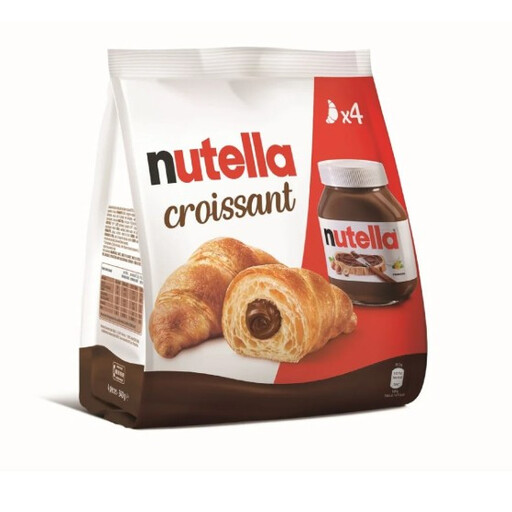 Image unavailable
NUTELLA hazelnut and cocoa-filled croissants, pack of 4, 340 g
Worth considering if you’d like to serve sweet, filled croissants rather than prepare plain croissants with a savoury filling. The pack contains four croissants and weighs 340 g. Before planning to serve them, check the preparation instructions, ingredients and allergen information on the packaging.
View on Joybuy
Frequently asked questions
Does a “sourdough” croissant always mean no added yeast?
No. The ingredients listed by Maison Kayser and Auchan for the Pasquier croissant include both sourdough and yeast. If avoiding added yeast is important to you, check the exact product before buying.
Can you fill a sourdough croissant for savoury drinks?
Yes, as long as its size and preparation suit the bites you have in mind. Europasty describes its 90 g Croissant Levain Sophie as suitable for both sweet and savoury recipes; this applies to a professional product.
How can you check the allergens in a platter of croissants?
Check the ingredients and allergen information for every product you’re serving, including the fillings. If you’ve bought croissants without individual packaging, ask the retailer for the information available rather than trying to guess their ingredients from how they look.
Are frozen, ready-to-bake croissants suitable for impromptu drinks?
They are if you already have the product, an available oven and enough time to follow the baking instructions. E.Leclerc describes its EPI D'OR croissants as frozen and ready to bake. Check local availability before relying on this option for Friday evening.


