What should you check before choosing?
For a local market, start with the recipe you’re looking for, then check how the croissants will be stored, baked and served.
| Criteria |
What to check |
Who this matters to |
| ‘Sourdough’ labelling |
Look for this wording in the product name; ask whether the recipe also contains yeast. |
I’m specifically looking for a croissant described as sourdough, not just a recipe that lists sourdough among its ingredients. Around 36% of consumers prioritise this distinction. |
| Baking and serving |
Check whether the product is ready-baked or bake-off, along with its storage conditions and baking instructions. |
To serve at the right time, I need a format that suits the stall’s equipment and preparation time. This is the top priority for around 29% of consumers. |
| Ingredients and allergens |
Check the ingredients and allergen information; look separately for any organic labelling. |
Before choosing for people who are mindful of ingredients or allergens, I want to be able to check the exact composition. Around 21% of consumers put this check at the top of their list. |
| Pack size and local availability |
Compare the total weight and number of croissants, and check whether collection is available from your chosen seller. |
If I’m buying for a local market, I need the right number of croissants in a format I can actually collect. Pack size or local availability is the top priority for around 14% of consumers. |
Croissants selected on Joybuy
This selection features a frozen, filled croissant for baking, made with both sourdough and yeast. It’s worth considering if you can keep the product chilled and bake it on site, but shouldn’t be confused with a selection of croissants explicitly labelled as ‘sourdough’.
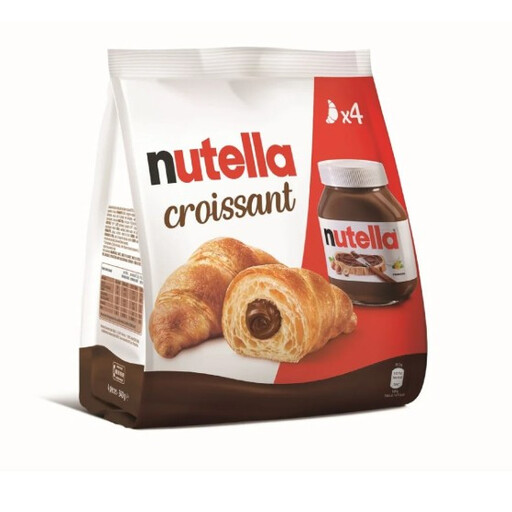 Image unavailable
NUTELLA-filled croissants, cocoa and hazelnut, x4, 340 g
Worth considering for a stall that can store frozen products and bake them before serving. The pack contains four filled croissants, weighing 340 g in total; the ingredients list includes 14% sourdough as well as baker’s yeast. Check the baking instructions before planning your service. The listed allergens include wheat, hazelnuts, milk, soya and eggs.
View on Joybuy
Frequently asked questions
Is a croissant that contains sourdough always labelled as ‘sourdough’?
No. Auchan’s butter croissant x4 contains yeast and dried spelt sourdough, while Fou de Pâtisserie lists a product called ‘Organic Sourdough Croissant’. If the process matters to you, check the product name and ask whether yeast is added.
How can I find out about allergens in a croissant sold unpackaged at a market?
Check the information displayed on or near the product, and ask the seller about the specific croissant. In France, Légifrance requires allergen information for non-prepacked foods to be displayed in this way; ingredients vary from one croissant to another.
Is an artisan or sourdough croissant necessarily organic?
No. Being artisan-made or containing sourdough doesn’t prove that a croissant is certified organic. The French Ministry of Agriculture describes organic certification as regulated and subject to checks, so look for the relevant label on the product you’re considering.
Are ready-to-bake croissants suitable for a local market stall?
Yes, as long as the stall can meet the storage requirements and has the equipment and time needed to bake them. Aldi’s MANNAPAIN pack of six all-butter croissants is ready to bake; if you won’t be baking on site, look for a ready-baked option instead.


