Who is this choice for?

People who want to include a pastry in their lunch

You’d like to enjoy a croissant without making it your whole meal. Manger Bouger’s recommendations focus in particular on fruit and vegetables, pulses and wholegrain starchy foods, so what else you have for lunch matters just as much as your choice of croissant.

People who compare labels

You’re looking for a recipe that clearly lists sourdough and want to compare the ingredients, serving size and nutritional values, rather than deciding based on the words ‘sourdough’ alone.

People who need to avoid certain ingredients

You need to know the allergens in the exact product before choosing it. Brioche Pasquier lists wheat, gluten, butter and milk among the ingredients in its sourdough croissant. Sourdough doesn’t mean ‘gluten-free’ or ‘dairy-free’.

What to check

For a pre-packed croissant, compare the ingredients list and nutritional values on a like-for-like basis. At a bakery, ask what ‘sourdough’ means for the recipe and request any allergen information you need.

What mattersWhat to checkWho is this for?
What’s in your lunch Plan what else you’ll have with your meal, such as vegetables or a piece of fruit, depending on your usual habits. If I have a croissant for lunch, I also want to think about what I’ll have with it. Around 36% of consumers put the overall make-up of the meal first.
Serving size and ingredients Compare the nutritional values per 100 g, then for the amount you plan to eat. Check the ingredients too. To compare two croissants, I need to know what my serving contains, not just the name of the recipe. Around 29% of consumers put serving size and ingredients first.
Whether it contains sourdough Look for sourdough in the ingredients list or ask the seller to clarify the recipe. I’m specifically looking for a sourdough croissant and want to distinguish it from one simply described as artisan. This is the top priority for around 21% of consumers.
Allergens and storage Check the allergen information for the exact product and follow its storage instructions. Before choosing based on taste or serving size, I need to check that the ingredients and storage instructions suit me. This is the top priority for around 14% of consumers.

Common misconceptions to avoid

  • Assuming ‘sourdough’ means better nutrition

    Sourdough describes one part of the recipe, not the whole product. Brioche Pasquier lists sourdough in its croissant, but also butter and sugar.

    Check for sourdough if that’s your recipe preference, then look separately at the ingredients and nutritional values.

  • Comparing croissants without considering their size

    A larger croissant won’t necessarily be the same serving size as another product. Lidl, for example, sells an XXL croissant, so take its size into account when comparing what you’ll actually eat.

    Compare the nutritional information for the same quantity, then check the serving size you plan to eat.

  • Assuming a sourdough croissant is free from allergens

    The sourdough croissant sold by Brioche Pasquier contains wheat, gluten, butter and milk, among other ingredients. The word ‘sourdough’ doesn’t mean these ingredients are absent.

    If you need to avoid an allergen, read the information for the exact product, including any ‘may contain’ warnings. For pastries from a bakery, ask the seller for details.

  • Confusing an all-butter croissant with a sourdough croissant

    The Bridor ready-to-bake croissant sold by PassionFroid and the XXL croissant sold by Lidl aren’t identified as sourdough croissants in the information reviewed.

    If sourdough is a must-have, look for it in the recipe for the exact product or ask the seller to confirm.

Brands and retailers to know

Brioche Pasquier

A pre-packed sourdough croissant that’s a useful reference when comparing a specific recipe.

  • Brioche Pasquier lists 7% sourdough in the ingredients for its croissant.
  • The recipe also contains wheat, gluten, butter and milk, among other ingredients. The sourdough doesn’t change this.

Auchan

A retailer listing Pasquier sourdough croissants in a pack of 8, weighing 320 g.

  • The product listing includes the ingredients and storage instructions.
  • Check the information and storage instructions on the packaging of the pack you buy.

Carrefour

A retailer with a pastries section and a listing for Brioche Pasquier croissants in a 640 g bag.

  • You can compare the bag size with other clearly identified products.
  • Check the product listing and label to confirm whether your chosen product contains sourdough, rather than assuming it does because it’s listed under ‘croissants’.

Bridor

An all-butter, ready-to-bake croissant that’s different from a confirmed sourdough croissant.

  • PassionFroid describes a 60 g Bridor croissant containing 21% butter.
  • The information reviewed for this product doesn’t confirm that it contains sourdough.

Lidl

A ready-to-eat XXL croissant that’s distinct from a product identified as a sourdough recipe.

  • Lidl clearly describes this product as a large-size croissant.
  • The product name alone doesn’t confirm that it contains sourdough. Check the recipe if this matters to you.

A product to consider on Joybuy

This pack of filled croissants could be an option for a lunch that includes a pastry. If you’re specifically looking for a sourdough recipe, check the ingredients list for the product you choose.
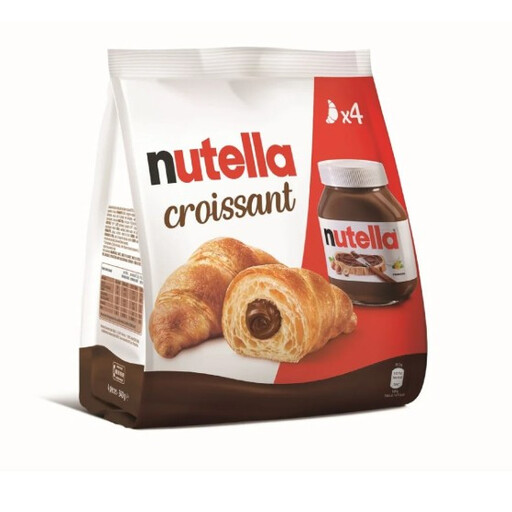
NUTELLA pack of four hazelnut and cocoa-filled croissants, 340 g

NUTELLA Hazelnut and Cocoa-Filled Croissants, x4, 340 g

Worth considering if you’d like filled croissants rather than a plain croissant for lunch. The pack contains four croissants weighing 340 g in total. Check the packaging for ingredients, allergens, nutritional values and preparation instructions before deciding whether it suits your needs.

View on Joybuy

Frequently asked questions

Does a sourdough croissant necessarily have nutritional benefits?

No. The presence of sourdough alone isn’t enough to establish that a product has nutritional benefits. Look at the whole recipe, serving size and nutritional values of the croissant you’re thinking of buying.

What should I eat with a sourdough croissant for lunch?

A croissant can be part of your meal rather than the whole meal. When choosing what else to eat, Manger Bouger recommends including fruit and vegetables, pulses and wholegrain starchy foods.

Is Nutri-Score compulsory on a pack of croissants?

No. Santé publique France explains that producers can choose whether to display Nutri-Score. If it’s shown, also check the ingredients list and nutritional information when comparing products.

What information should I check on a pre-packed croissant?

Check the product name, ingredients list, allergen information, quantity, nutritional information and the date shown on the packaging. For pre-packed food sold in France, the Directorate-General for Competition, Consumer Affairs and Fraud Control reminds shoppers that allergenic ingredients must be highlighted.

Is a sourdough croissant suitable if I need to avoid gluten or milk?

The words ‘sourdough’ don’t guarantee that a product is free from gluten or milk. Brioche Pasquier lists wheat, gluten, butter and milk in its sourdough croissant, so always check the ingredients and any ‘may contain’ warnings for the exact product.