Anyone who wants to check for sourdough
If sourdough matters more to you than the words ‘all-butter’, check the ingredients list. To find out more, ask the baker or manufacturer what type of starter they use and how the dough is fermented.


For an afternoon treat with no preparation, choose a croissant that’s already baked. If you’d like to serve it warm, consider frozen croissants that are ready to bake, provided you have the time and equipment. If sourdough is your deciding factor, check the ingredients list and ask what type of sourdough starter is used and how the dough is fermented. Simply listing it as an ingredient doesn’t prove that the croissants are artisan-made using sourdough.
If sourdough matters more to you than the words ‘all-butter’, check the ingredients list. To find out more, ask the baker or manufacturer what type of starter they use and how the dough is fermented.
Frozen croissants that are ready to bake are a good option if you have room to store them and can set aside time to prepare them before serving.
With croissants that are already baked, there’s no need to use your oven at home. If you’re also looking for sourdough, check that separately: a croissant being ready to eat tells you nothing about its recipe.
Start by choosing what matters most for your afternoon treat: the recipe, serving them warm, having them ready straight away or checking for allergens.
| What matters | What to check | Who is it for? |
|---|---|---|
| Sourdough and recipe | Look for sourdough in the ingredients. If the artisan method matters to you, ask how long the dough is fermented and how the process works. | If I’m looking for a sourdough croissant, I want to be able to tell the difference between a listed ingredient and a documented method of production. Around 33% of consumers would make this their priority. |
| Serving warm | Check whether the croissants are ready to bake, then read the pack for storage and baking instructions. | If I want to serve warm croissants at afternoon tea, I can plan ahead and make room in the freezer and allow time for preparation. This would be the top priority for around 27% of consumers. |
| Ready to serve | Check that the product is already baked, and look at the pack size and storage instructions. | When afternoon tea isn’t planned, I’d rather be able to put the croissants on the table without using the oven. Around 20% of consumers would prioritise this convenience. |
| Allergens | Read the information on the product you’re buying, or ask the retailer if the croissants are unwrapped. | If I need to avoid an allergen, knowing exactly what’s in the product comes before choosing a format. For around 20% of consumers, this would be the first thing to check. |
‘All-butter’ describes an aspect of the recipe, not whether sourdough is used. Carrefour lists sourdough in the ingredients for its La Boulangère croissants, while Auchan lists dried spelt sourdough starter for some products. These details alone don’t tell you how the dough is fermented.
If you’re specifically looking for an artisan sourdough croissant, check the ingredients and ask about the starter and fermentation process.
Croissants that are ready to bake need freezer space and time before serving. The product details for frozen Auchan and Carrefour Classic’ croissants say not to refreeze them once defrosted.
Choose this format for an afternoon treat you can plan ahead for. Otherwise, go for croissants that are already baked.
The recipes we checked include ingredients such as wheat and milk. Other ingredients and possible traces vary by product. The DGCCRF says allergens must be emphasised in the ingredients list on pre-packed foods.
Check the label on the croissants you’re buying. If they’re unwrapped, ask the retailer for allergen information.
A packaged croissant range to consider if you want to serve afternoon tea without baking, while also checking whether sourdough is used.
Its ready-prepared and frozen options let you consider whether sourdough or baking the croissants at home matters more to you.
A frozen, ready-to-bake option to consider when you can prepare your afternoon treat in advance.
Its professional range includes preparation details that could help you ask a seller specific questions about fermentation.
This selection features a hazelnut and cocoa-filled croissant for an afternoon treat at home. Check that you like the filling before choosing it instead of a plain croissant.
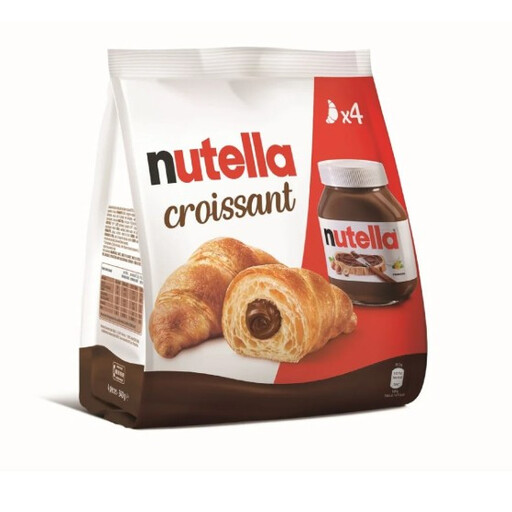 Image unavailable
Worth considering if you’d like to serve filled croissants rather than plain ones. The pack contains 4 croissants and weighs 340 g. Before serving, check the product for preparation instructions, ingredients and allergen information.
No. Carrefour’s listings for La Boulangère and some Auchan products include sourdough in their recipes, but this alone doesn’t establish that an artisan method or a particular fermentation time is used. If the process matters to you, ask the baker or manufacturer for more details.
Frozen croissants that are ready to bake are a good option if you have a freezer and an oven, and time to follow the instructions on the pack. For its pack of 6, Auchan recommends defrosting for 15 minutes before baking for 15 to 20 minutes at 180 °C. Instructions may differ for other products.
Not if the product instructions say you shouldn’t. The listings we checked for frozen Auchan and Carrefour Classic’ croissants say not to refreeze them once defrosted. Follow the instructions on the pack you buy.
For a pre-packed croissant, read the ingredients list on the product you buy: the DGCCRF says allergens must be emphasised there. If the croissant is sold unwrapped, ask the retailer for allergen information rather than relying on its appearance or name.