What should you check?
First check anything that affects whether the product can be eaten. Then choose a recipe and pack size to suit what your child will accept and how you plan to serve it.
| Criteria |
What to check |
Who is it for? |
| Allergens and school |
Read the ingredients, allergens and any ‘may contain’ statements on the product you buy. For school, check the relevant arrangements and whether a PAI is in place. |
If an allergen or special school diet is involved, first establish whether the croissant can be served before considering its taste. Around 42% of consumers would make this their top priority. |
| Taste and texture |
Compare the filling and the weight of each croissant, then offer a small amount before choosing a larger pack. |
If my child is quick to reject a new flavour or texture, I prefer to see how they react before planning several portions. Around 33% of consumers would make this their top priority. |
| Meal planning |
Check how many croissants are in the pack, the storage instructions and, where relevant, whether any preparation is needed. |
To fit a croissant into our family routine, I need to be able to store and serve it at the right time. Around 25% of consumers would put this kind of planning at the heart of their choice. |
Product featured on Joybuy
This selection features a pack of four croissants filled with hazelnut and cocoa. The filling is worth bearing in mind if you’re looking for a plain croissant for your child to try.
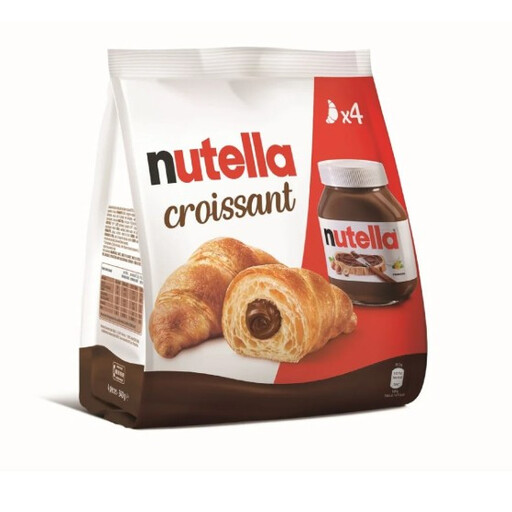 Image unavailable
NUTELLA Filled Croissants, hazelnut and cocoa, x4, 340 g
Worth considering if you’d like your child to try a hazelnut and cocoa filling; the pack contains four croissants weighing 340 g in total. This product must be baked before eating: follow the instructions on the packaging. If an allergy is a concern, check the allergens and any ‘may contain’ statements on the pack you buy before serving it.
View on Joybuy
Frequently asked questions
How can you check whether a croissant contains sourdough?
Read the ingredients list for the specific product rather than relying on its appearance or the term “all-butter”. The Auchan listing for Brioche Pasquier croissants states that they contain 7% sourdough; Maison Kayser mentions homemade natural sourdough. In both cases, the presence of sourdough doesn’t mean the croissant is yeast-free.
Is a sourdough croissant suitable for a child with allergies?
The presence of sourdough doesn’t tell you whether a croissant is suitable for a child with allergies. The Brioche Pasquier and Maison Kayser sourdough products described here include ingredients containing gluten and milk; Maison Kayser also lists egg. Check the product you buy and follow the medical advice specific to your child’s allergy.
What should you check before taking a croissant to school?
Ask the school about the rules for your child’s snacks or meals. For a child with an allergy or a special medical diet, the French Ministry of National Education says an Individual Care Plan can set out any necessary adjustments.
Can a sourdough croissant make up for a missed breakfast?
No. Its sourdough content doesn’t make it a substitute for breakfast. The French Agency for Food, Environmental and Occupational Health & Safety (Anses) says that missing breakfast shouldn’t lead to routinely making up for it later. Choose the croissant for the meal occasion you have in mind, rather than making it an automatic fix for a missed meal.
How should you store the sourdough croissants featured here?
For Brioche Pasquier croissants, follow the date and storage instructions on the pack. The Auchan listing recommends keeping them in a cool, dry place and closing the bag securely. Maison Kayser says its croissant keeps for 8 hours at room temperature in its paper packaging; bear this in mind if you’re buying it in advance.


