What should you check before buying?
If you’re specifically looking for sourdough fermentation, start with the recipe. Then check that the format and storage instructions suit when you’ll be eating the croissant.
| Criteria |
What to check |
Who is it for? |
| Type of sourdough |
Check how the sourdough is described in the ingredients and whether baker’s yeast is also included. If sourdough fermentation is essential to you, ask what role it plays in the dough. |
I want to be able to distinguish a recipe that declares natural sourdough from one that mentions inactive sourdough. Around 40% of consumers prioritise this proof of how the recipe is made. |
| Format and storage |
Check whether the product is ready to eat or needs baking, as well as the number of croissants in the pack and the storage instructions for that product. |
For a short break, I need a croissant I can carry and eat when I want to. Convenience is the top priority for around 30% of consumers. |
| What’s in your lunch |
Read the ingredients, allergens and any declared traces. For pre-packed products, compare the nutritional values per 100 g. |
If I need to avoid an ingredient or plan other foods for lunch, the croissant’s ingredients matter more than what it’s called. These concerns come first for around 30% of consumers. |
Brands to consider based on the recipe
These products show different uses and ingredient descriptions. Just because a croissant is available in a shop doesn’t confirm that it has been fermented with sourdough.
Maison Kayser
Its croissant product page describes a homemade natural sourdough starter and lists sourdough in the ingredients.
- Worth considering if you’re looking for an explicit claim that natural sourdough is used.
- The ingredients include wheat, milk and egg. Also check the storage instructions and whether the product is available to buy where you are.
Auchan
The product pages we checked distinguish between an 80 g croissant with inactive spelt sourdough and a pack of four croissants containing dried spelt wheat sourdough.
- The ingredient lists make it possible to compare the formulations of the two products.
- ‘Inactive’ or ‘dried’ doesn’t prove on its own that the dough has undergone natural sourdough fermentation.
Lidl
Its all-butter croissant product page describes a ready-to-eat product and states that it contains 27% butter.
- A ready-to-eat format suits you if you need to buy something to eat straight away.
- The ingredients we checked list baker’s yeast but don’t mention sourdough. Check the allergen and trace information too.
Carrefour
Its online bakery range includes several pack sizes of wrapped croissants.
- The number of croissants and the packaging can help you choose a format to take with you.
- The ‘sourdough’ description found in this range applies to a pain au chocolat, not to a croissant recipe.
Bridor
Its professional product page features a 75 g croissant that’s ready to prove.
- The preparation instructions make it easy to distinguish this product from a fully baked croissant.
- It needs to be prepared before eating, and its product page doesn’t describe it as a sourdough croissant.
A bake-at-home option on Joybuy
This selection includes Nutella-filled croissants, sold in packs of four and requiring baking before you take them with you. It’s therefore suited to preparing lunch in advance, rather than buying something to eat straight away.
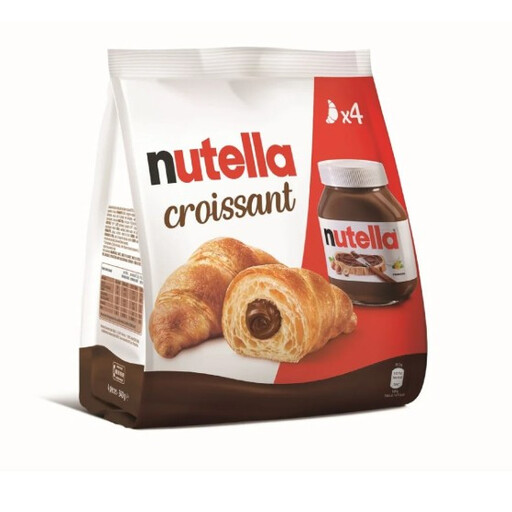 Image unavailable
Nutella-filled croissants x4, 340 g
Consider this if you can bake the croissants before setting off: this frozen product isn’t suitable for eating straight away without an oven. The pack contains four croissants, weighing 340 g in total. The recipe lists sourdough and baker’s yeast. If the sourdough’s role in fermentation is important to you, ask for clarification before buying. The information provided lists wheat, hazelnuts, milk, soya and eggs as allergens.
View on Joybuy
Frequently asked questions
Does a croissant containing sourdough necessarily contain no baker’s yeast?
No. The Maison Kayser croissant recipe lists both sourdough and yeast, while the product page for Auchan’s 80 g croissant lists inactive spelt sourdough. If you’re looking for a particular fermentation process, ask for confirmation of the roles of the sourdough and yeast in the product you’ve chosen.
Does sourdough mean a croissant is gluten-free?
No. The Maison Kayser and Auchan croissants described here both list wheat. Read the ingredients and allergen information for the exact product rather than assuming that ‘sourdough’ means it’s gluten-free.
How can you compare the nutritional information for two croissants of different sizes?
Compare their nutritional values per 100 g, then check the weight of the portion you plan to eat. According to the Directorate-General for Competition Policy, Consumer Affairs and Fraud Control, presenting values per 100 g makes it easier to compare pre-packed foods. However, a single value doesn’t sum up the product or your lunch.
Can a croissant be the only thing you have for lunch on the go?
You can choose a croissant for convenience, but the sourdough description alone doesn’t tell you anything about the other foods in your meal. Manger Bouger, the French Public Health Agency’s website, encourages variety at lunchtime. Choose what to have with your croissant based on how hungry you are and what food is available.


