Households planning several meals
If the soup will be shared or served across two meals close together, a 1 L carton may be the right amount. Check the instructions for once the carton has been opened.


To stock up the cupboard before the new school year, choose a 1 L carton if several people will be sharing the soup, or if you can use the remainder within the stated time after opening. Packs of 2 × 30 cl let you open one portion at a time; dehydrated sachets take up less space, but need to be prepared. Whatever the format, check the quantity, ingredients, allergens and storage instructions for each recipe.
If the soup will be shared or served across two meals close together, a 1 L carton may be the right amount. Check the instructions for once the carton has been opened.
If you eat alone or at different times, a pack of two 30 cl cartons lets you keep the second one sealed until you need it.
If an ingredient or allergen affects your choice, compare recipes individually. For liquid soups, the nutritional information per 100 ml also makes it easier to compare like for like.
Choose this if: you’ll be sharing the soup, or can use the remainder soon.
Keep in mind: once opened, you’ll need to follow the storage conditions and use-by timeframe shown on the carton.
Choose this if: you eat separately or only need one portion at a time.
Keep in mind: the pack contains 60 cl in total, not 1 L.
Choose this if: cupboard space matters more to you than having liquid soup ready to heat.
Keep in mind: you’ll need to follow the preparation instructions and check how much soup it makes.
| What to consider | What to check | Who is it for? |
|---|---|---|
| How much to stock | The total volume of the cartons and the number of meals you have planned. | If I’m planning several meals for the new school year, I want to stock an amount my household will use. Around 36% of consumers would put planning quantities first. |
| Portions and leftovers | The size of each container and the instructions for once it has been opened. | When I’m eating alone or at different times, I’d rather not open 1 L all at once. Portion management would be a priority for around 29% of consumers. |
| Ingredients | The ingredients, allergens and nutritional information per 100 ml for liquid soups. | If certain ingredients matter to me, I need to be able to compare recipes rather than relying on their names alone. Around 21% of consumers would put ingredient information first. |
| Preparation and storage | How to prepare it, how much it makes and how much cupboard space it takes up. | If space is limited or I only want to make a small amount, I could consider a sachet instead of a carton. Around 14% of consumers would prioritise these practical considerations. |
A larger format only helps you avoid leftovers if you use it within the stated time and storage conditions after opening. Some Liebig soups listed by Auchan need to be refrigerated and used within 48 hours.
Before stocking up on several cartons, consider whether you can plan a second meal within the timeframe for each product. If not, consider separate 30 cl containers.
You can’t tell which allergens a recipe contains from its name alone: some soups listed by Carrefour or Auchan include ingredients such as milk or celery.
Check the ingredients list and allergens for each product before stocking up.
This claim doesn’t tell you about the other ingredients or the soup’s nutritional values.
Check the ingredients list, allergens and nutritional information per 100 ml separately.
Carrefour offers own-brand liquid soups in 1 L cartons and packs of 2 × 30 cl.
E.Leclerc’s ECO+ and Régal Soupe ranges include 1 L cartons and packs of 2 × 30 cl.
Liebig soups listed by Auchan are available in 1 L cartons and packs of two 30 cl cartons.
Bio Village offers an organic green vegetable velouté in a 1 L carton, listed by E.Leclerc.
Royco products listed by Carrefour are dehydrated soups in sachets, not liquid soups in cartons.
These products include a soup in two 30 cl cartons and two soups you prepare yourself. First decide whether you want to open a liquid soup or add water during preparation.
 Image unavailable
These two cartons are a good choice if you’d rather open one portion at a time than a 1 L container.
The listed ingredients include celery and milk; also check the label for any warnings about traces of other allergens.
 Image unavailable
This noodle soup mix is a good choice if you’re happy to add water rather than heat up a liquid soup.
The product title gives the weight as 69 g and the volume as 0.70 L. The listed ingredients include gluten, eggs, soya, mustard and milk; also check the packaging for any warnings about traces.
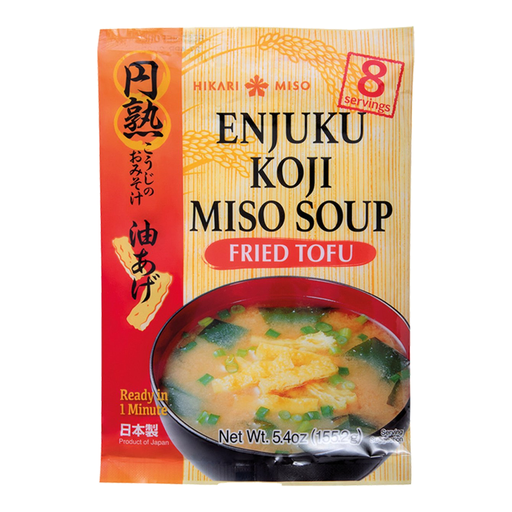 Image unavailable
This miso soup, prepared with hot water, could be a good choice if you’re looking for a cupboard-friendly mix.
Check the pack size and number of portions for the product you choose. Ingredients may vary, so check the label in particular for any fish or wheat.
No: the liquid soups listed by Carrefour, E.Leclerc and Auchan come in cartons, including 1 L and 2 × 30 cl formats. If the container material matters to you, check the details for the product before buying.
Follow the temperature and timeframe stated on the carton you buy. For some Liebig products listed by Auchan, the instructions are to refrigerate the soup and use it within 48 hours of opening. The DGCCRF advises following the manufacturer’s instructions for the specific product.
No: the Nutri-Score is an additional guide, not an indication of allergens or whether a recipe meets your dietary requirements. Manger Bouger explains that it’s calculated per 100 g or 100 ml; also read the ingredients list and nutritional information for each product.
Check the allergens highlighted in the ingredients list for the specific recipe, even if it’s a vegetable soup. Products listed by Carrefour and Auchan show that ingredients vary, including milk and celery; don’t assume what’s in a soup from its name alone.