What should you look for?
First decide whether soup will be served to everyone or simply offered as an option. Then choose the format and check the recipe: liquid soup, an instant sachet and a frozen product all have different preparation and storage requirements.
| Criterion |
What to check |
Who is it for? |
| Quantity for the group |
Total volume and stated number of portions for the product you choose. |
I’m planning to serve a starter to several people and want enough soup without opening too many packs. Around 36% of consumers put this group-sized quantity first. |
| Serve as needed |
Size of each unit and the number of sachets or small containers. |
If only a few guests want soup before the raclette, I’d rather be able to prepare or open separate portions. This flexibility comes first for around 29% of consumers. |
| Ingredients |
Ingredients, allergens and the ‘salt’ line in the nutritional information, taking the serving size into account. |
A guest avoids certain ingredients, or I want to compare the salt content of different recipes before choosing. Ingredients are the priority for around 21% of consumers. |
| Preparation and storage |
Storage instructions and the product’s specific preparation instructions. |
I need to know whether the soup needs heating, reconstituting or keeping in the freezer before adding it to the meal. Around 14% of consumers prioritise how it needs to be prepared and stored. |
Instant and frozen soups available on Joybuy
These products give you the option of serving small portions or adding frozen soup to your raclette meal. They each need to be prepared differently, so check that the number of portions suits your group and follow the instructions on each pack.
 Image unavailable
Royco dehydrated noodle, carrot and mushroom soup, 3 × 20 cl
Worth considering if you’d like to offer a small soup to a few guests rather than serve a large carton to everyone at the table.
Three 20 cl portions are listed. This dehydrated soup needs to be reconstituted, so check the instructions and allergens on the packaging.
View on Joybuy
 Image unavailable
Hikari Enjuku Tofu instant miso soup, 8 sachets
Individual sachets are handy when you want to prepare soup as needed, especially if not everyone wants a portion.
The pack contains eight sachets. Before serving, check how much water is needed per sachet, along with the ingredients and allergens.
View on Joybuy
 Image unavailable
Knorr Thai noodle and mushroom soup, 2 Assorted, 69 g, 0,70 L
This noodle soup may suit a smaller group happy to prepare it in a saucepan rather than simply heat it up.
The pack lists 69 g and 0,70 L. Follow the cooking instructions and check the allergens for the product you receive.
View on Joybuy
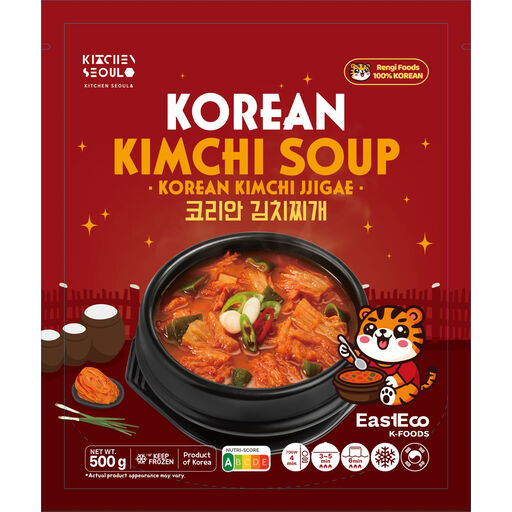 Image unavailable
EastEco Rengi's KOREAN KIMCHI SOUP (JIJIGAE), 500 g
Only consider this if you want to include frozen soup in the meal and have enough room in your freezer.
The pack contains 500 g. Follow the storage and cooking instructions, and check how many portions you’ll need for your group.
View on Joybuy
Frequently asked questions
Should you choose carton, instant and frozen soup in the same way?
No. They can all go with raclette, but their preparation and storage requirements differ. Before choosing, check the quantity served, the product instructions and how much storage space you’ll need, especially for frozen soup.
What should you check on a soup label for raclette?
First check the quantity, ingredients and allergens for the exact product, then look at the nutritional information and the date shown. A vegetable recipe may contain dairy ingredients: the frozen five-vegetable soup featured by Auchan contains cream and butter.
Is the Nutri-Score enough to help you choose between two soups?
No. Nutri-Score doesn’t replace checking the ingredients, allergens and the quantity you plan to serve. Santé publique France explains that displaying it is voluntary for producers. If it matters to your meal, compare the ‘salt’ line in the nutritional information too.
What should you do if the date on a tin of soup has passed?
Start by checking the exact wording: the DGCCRF distinguishes between a best-before date, used on products such as tinned food, and a use-by date. Check that the packaging is intact and follow the manufacturer’s instructions. After opening, follow the storage guidance on the product.


