Hosts who want to avoid leftovers
If soup is a side to your pancakes rather than the main meal, compare how much you’ll need to open at a time. Sachets that make 20 cl and small 30 cl cartons are two ways to serve a smaller amount.


To serve a little soup during pancake night without opening a large pack, start by deciding how much you need. A small carton is a good choice if you want ready-to-serve soup, while a sachet lets you make a portion with hot water. If you’re specifically looking for an individual tin, check the packaging and net quantity: the word “tinned” guarantees neither.
If soup is a side to your pancakes rather than the main meal, compare how much you’ll need to open at a time. Sachets that make 20 cl and small 30 cl cartons are two ways to serve a smaller amount.
Ready-to-serve soup and a dehydrated sachet don’t need the same preparation. Choose according to the equipment you have available, and check the instructions before planning how to serve it.
If a guest needs to avoid certain ingredients, check the exact recipe rather than relying on its name. Read the ingredients list and allergen information on the packaging of the variant you’ve chosen.
For pancake night, the main choice is between ready-to-serve soup in a small pack, a sachet you prepare yourself and a tin to share. The quantities aren’t directly comparable: the cartons and sachets listed here show their volume in centilitres, while the tin is labelled with its net weight in grams.
Choose this if: you want to make portions individually with hot water. Royco, for example, offers sachets that each make 20 cl of soup.
Bear in mind: it’s neither ready-to-serve soup nor a tin.
Choose this if: you’d rather serve soup from two 30 cl cartons, a format found in the Carrefour and E.Leclerc catalogues.
Bear in mind: check the serving instructions and how to store it after opening. A carton isn’t a tin.
Choose this if: you’re planning a shared starter and the net quantity suits the number of guests. Carrefour, for example, lists a 390 g tin of fish soup.
Bear in mind: the weight alone doesn’t tell you whether it’s an individual portion. Make sure the recipe also suits your menu.
| What to consider | What to check | For shoppers who... |
|---|---|---|
| Quantity and leftovers | Quantity per unit, number of units and volume once prepared. | Want to serve a small starter without opening more soup than necessary; around 42% of consumers prioritise a suitable portion size above all else. |
| Preparation | Instructions for heating or adding hot water, and any equipment required. | Prefer to keep the steps before serving soup to a minimum while making pancakes. Ease of serving is the priority for around 33% of consumers. |
| Ingredients | Ingredients, declared allergens and any “may contain” warnings for the exact recipe. | Need to choose a recipe that suits a guest who avoids an ingredient; this check comes first for around 25% of consumers. |
The soups mentioned here include sachets, cartons and a 390 g tin. The category name doesn’t tell you what the packaging is made of or how much to serve.
Check the type of packaging, net quantity, number of units and preparation method together.
A Royco sachet that makes 20 cl of soup needs hot water; it isn’t served like ready-made liquid soup.
Read the instructions for each recipe, and make sure you have the right amount of water and equipment.
The Royco Carrot, Mushroom and Noodle Soup listed on Joybuy contains gluten, celery, milk and chicken. So a name that suggests it’s a vegetable soup isn’t enough to choose it for your guests.
Ask about dietary requirements before you buy, then check the ingredients and “may contain” warnings on the exact product.
Soup offers featured by ALDI France may only be available for a limited time. Seeing a product in a catalogue isn’t enough to plan your menu around it.
Check that the product you want is available at your chosen store before pancake night.
Dehydrated soups in sachets, including packs of 3 or 4 sachets that each make 20 cl, listed by Carrefour and Auchan.
Carrefour’s range of ready-to-serve soups includes 2 × 30 cl and 1 L formats.
E.Leclerc’s range includes soups in cartons, including 2 × 30 cl and 1 L formats.
Brands included in the soup selection featured by ALDI France, with formats including 500 ml and 1 L soups.
These products offer two ways to serve a small amount of soup during pancake night: open a 30 cl carton or prepare a sachet with hot water. If a tin is essential, check the packaging before choosing. The products below come in cartons or sachets.
 Image unavailable
Worth considering if you want to make a small amount of soup at a time. Each of the three sachets makes 20 cl and requires hot water; this isn’t ready-to-serve soup in a tin.
Contains gluten, celery, milk and chicken. Check the “may contain” warnings on the packaging too.
 Image unavailable
Worth considering if you’d prefer ready-to-serve soup in two small cartons rather than a sachet you need to prepare. Each carton contains 30 cl. Check the serving instructions and how to store it after opening on the packaging. This isn’t a tin.
Contains celery and milk; also check the “may contain” warnings on the product you buy.
 Image unavailable
Worth considering if you want to prepare several portions separately: the pack contains eight individual sachets to make with hot water. Check how much water is needed for each sachet before planning how to serve it; this isn’t ready-to-serve soup in a tin.
The description lists soya and gluten, and possible traces of wheat. Check the packaging of the product you choose.
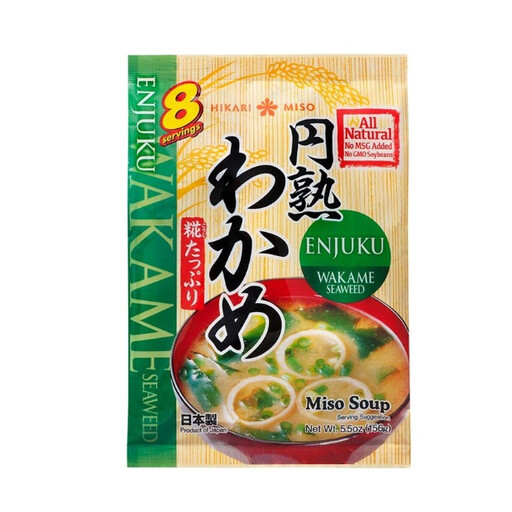 Image unavailable
Worth considering if you want to make separate portions with hot water. The pack contains 156 g and is labelled as eight portions; check the instructions to see how much water you’ll need per portion. This isn’t ready-to-serve soup in a tin.
Contains soya, fish and wheat gluten.
Check the quantity per unit, not just the total quantity in the pack. A pack of three Royco sachets that each make 20 cl, or a pack of two 30 cl cartons, lets you serve one unit at a time. Neither is an individual tin, though.
Check the net quantity, ingredients, preparation instructions, date and storage conditions for the soup you’ve chosen. For pre-packed food, the DGCCRF advises that allergenic ingredients must be highlighted. Check the information for the variant you’re planning to serve.
No. A use-by date (DLC) and a best-before date (DDM) are different. Service-Public.fr warns of a health risk if a use-by date has passed. Check the exact wording on the soup and follow its storage instructions.
It depends on the recipe and the ingredients each guest needs to avoid. The Royco Carrot, Mushroom and Noodle Soup listed on Joybuy contains gluten, celery, milk and chicken. Check the “may contain” warnings too, and read the packaging of the product you actually buy.