Holidaymakers planning their meals
You want to choose an amount that suits the number of bowls you’re planning, without opening a large carton for just one portion.


If your holiday rental has a hob or microwave, a ready-to-heat soup in a carton means you won’t need to mix anything with water. Dehydrated sachets take up less space, but need hot water; frozen soup requires a freezer to be available as soon as you arrive. Then choose an amount to suit your group, and check the preparation and storage instructions.
You want to choose an amount that suits the number of bowls you’re planning, without opening a large carton for just one portion.
You need to consider the space and equipment available in your accommodation: hot water for sachets, a way to heat cartons and a freezer for frozen soup.
You compare recipes by reading the ingredients list, allergen information and salt content, as well as the Nutri-Score where shown.
First check what your accommodation can heat and store. Then choose a format and quantity to suit the meals you have planned.
Choose this if: you have a hob or microwave and want soup that’s ready to heat.
Bear in mind: the carton takes up space, and any leftover soup must be stored according to the instructions on the packaging.
Choose this if: you want compact portions to carry and can heat water.
Bear in mind: follow the water quantity and preparation instructions for each sachet.
Choose this if: a freezer will be available as soon as you arrive and you can store the product throughout your stay.
Bear in mind: transporting and keeping it chilled takes more planning than storing cupboard soup.
| What to consider | What to check | Who it’s for |
|---|---|---|
| Portions and leftovers | Check the volume or number of portions, then read the storage instructions for after opening. | If I’m staying for a short time or eating alone, I’d rather not leave an opened carton in the fridge. Around 25% of consumers prioritise the amount they’ll actually eat. |
| Storage and equipment | Check what you can use to heat the soup, how much storage space you have and whether there’s a freezer for frozen soup. | With a basic kitchen, I need a format I can store and prepare there; this is a priority for around 25% of consumers. |
| Preparation | Read the instructions and check whether you’ll need a container or saucepan. | After the journey, I want to make a bowl using the equipment that’s already there, without any unexpected steps. Easy preparation is a priority for around 25% of consumers. |
| Ingredients and salt | Check the allergen and salt information in the nutritional details; compare the Nutri-Score of similar products where shown. | If there are ingredients I can’t have, I need to check the exact recipe before choosing. Around 25% of consumers make checking the label a priority. |
Storage instructions vary from one soup to another. Auchan’s product information for its 2 × 30 cl cartons of smooth vegetable soup says to transfer any leftover soup to an airtight container, refrigerate it and eat it within two days.
If you can’t store or finish the soup within the time stated on your product, choose smaller portions.
Frozen soup, like the one shown by Lidl, isn’t a cupboard soup: it needs to be kept chilled.
Make sure a usable freezer will be available as soon as you arrive and plan your journey accordingly. If not, choose a cupboard-friendly format.
Ingredients and allergens depend on the specific recipe. Anses also lists soups and broths among foods that contribute to salt intake.
Check the label of the product you choose, especially the ingredients list, allergen information and salt content.
Carrefour offers liquid soups in cartons under this brand, including tomato and vegetable varieties.
E.Leclerc’s range includes soups in cartons, including vegetable and tomato recipes in 1 L sizes.
ALDI offers liquid soups in cartons and an instant soup under this brand.
Carrefour offers ROYCO dehydrated soups in multi-sachet packs, including 20 cl portions.
Auchan offers a ready-to-heat smooth vegetable soup in 2 × 30 cl cartons, among other products.
These products include soups prepared from portions or sachets, as well as a soup that needs to be kept in the freezer. For a holiday rental, choose according to the hot water, cooking equipment and storage facilities available.
 Image unavailable
To make soup with hot water, check that you’ll be able to heat water at your holiday rental.
Pack size shown: 8 units. Check the variant label for ingredients and allergen information.
 Image unavailable
To make one bowl at a time, make sure you can heat water at your holiday rental.
Pack size shown: 3 sachets of 20 cl. Check the packaging for the ingredients and allergen information for this recipe.
 Image unavailable
If you choose this soup in a sachet, make sure you have a hob or suitable equipment for the stated cooking method.
The product name gives the weight as 69 g and the volume as 0,70 L. Follow the preparation instructions on the packaging.
 Image unavailable
To make this dried soup at your holiday rental, make sure you have a saucepan and check the instructions on the sachet.
Pack size shown: 85 g. Check the packaging for the amount of water and number of portions before planning your meal.
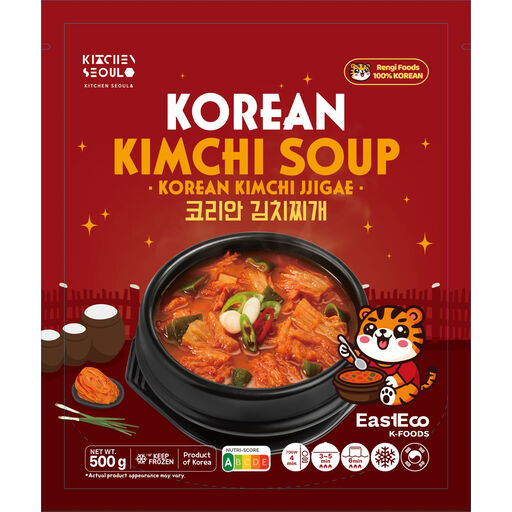 Image unavailable
Before choosing this frozen soup, make sure there’ll be a working freezer at your holiday rental as soon as you arrive.
Pack size shown: 500 g. Follow the storage and cooking instructions on the packaging.
Choose according to the equipment available and the number of portions you need to prepare. Carton soup is ready to heat; sachets need hot water and let you prepare portions separately.
Don’t assume you can: Auchan’s product information for its smooth vegetable soup says to pour the contents into a suitable container and not to put the carton directly in the microwave. Follow the instructions for the soup you’ve bought.
Follow the instructions for your specific product. For its smooth vegetable soup in 2 × 30 cl cartons, Auchan says to transfer any leftover soup to an airtight container, refrigerate it and eat it within two days of opening.
No: it doesn’t replace checking the ingredients, allergen information and nutritional details. Manger Bouger recommends using it to compare products in the same aisle, for example, or products eaten on the same occasion. To compare salt, check the amount listed for each soup.