Households serving several portions
If soup is part of a shared Easter meal, a 1 L carton lets you serve several portions from one container. Carrefour and Auchan feature this format in their ranges of liquid soups.


When serving several people at Easter, start by working out how much soup you’re likely to need. A 1 L carton is handy for sharing, while smaller cartons or sachets make it easy to prepare individual portions. Before choosing, check the number of portions, the recipe and the storage instructions. A larger pack is no good if you’re likely to leave some unused.
If soup is part of a shared Easter meal, a 1 L carton lets you serve several portions from one container. Carrefour and Auchan feature this format in their ranges of liquid soups.
If meals are eaten at different times or guests have different tastes, smaller cartons and individual sachets let you prepare only the portions you need. Carrefour, Auchan and E.Leclerc offer formats like these.
If you’re choosing between a carton and a sachet, consider how much soup each makes and how many portions it provides. The Marque Repère and Eco+ sachets featured by E.Leclerc can’t be compared with liquid soup by looking at pack weight alone.
First, work out how many portions you need for the meal. Then choose between a pack to share and individual portions prepared separately.
| What to consider | What to check | Who is it for? |
|---|---|---|
| Volume to share | Pack size and the number of portions stated. | I’m planning soup as an extra for several guests and want to avoid opening multiple packs. Around 42 % of consumers prioritise having portions to share. |
| Individual portions | Volume per portion, number of sachets and preparation method. | We don’t all eat at the same time, so I’d rather prepare each portion when it’s needed. This flexibility comes first for around 33 % of consumers. |
| A recipe to suit the meal | Recipe, ingredients list and allergens shown on the packaging. | If guests have different preferences, I first choose a recipe they’ll want to eat. This is the top priority for around 25 % of consumers. |
The DGCCRF distinguishes between a best-before date (DDM), which relates to how long a product retains its quality, and a use-by date (DLC), which must be followed. The condition of the packaging and the storage instructions also matter.
Before adding soup to your Easter shopping, check which type of date is shown on the packaging, make sure it’s intact and follow the storage instructions provided.
Carrefour offers Carrefour Classic' liquid soups in 1 L cartons and smaller cartons.
E.Leclerc offers dried soups in sachets, including Marque Repère and Eco+ varieties.
Auchan offers 1 L liquid soups and 2 x 30 cl packs, as well as sachet soups from other brands.
Royco offers instant soups in sachets, including varieties listed as 20 cl portions.
ALDI offers SIMPLEMENT BON & BIO soups, as well as a range of smooth soups.
Lidl has featured a Vitasia Asian soup in its range.
These products are prepared as needed. To choose between them, check the recipe and the number of portions stated on each pack. They’re not a substitute for a ready-to-serve carton of liquid soup.
 Image unavailable
Individual portions are handy if you’re serving soup at different times. The pack is listed as 3 x 20 cl, or around three portions. Check the preparation instructions and ingredients list before choosing.
 Image unavailable
This mushroom noodle soup is an option to prepare for a small shared meal. The product name lists 69 g and 0.70 L. Check the preparation instructions and pack information if the ingredients matter to your guests.
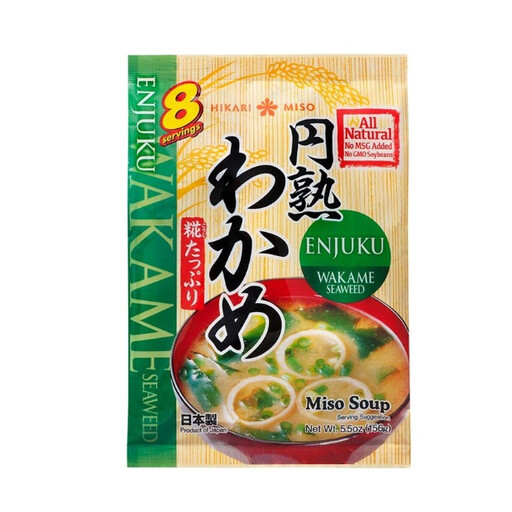 Image unavailable
This pack could suit a group of guests who’d like individual portions of miso soup. It’s labelled as 8 portions and weighs 156 g. Check the ingredients and product-specific instructions.
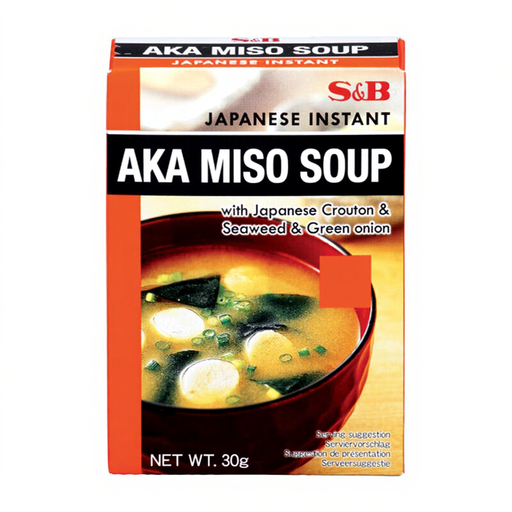 Image unavailable
This instant miso soup is worth considering as an accompaniment to prepare when needed. The pack is listed as 30 g. Check the number of portions, ingredients and preparation instructions before comparing it with other formats.
Compare the portions you plan to serve, not just the size of the packs. For dried soup in a sachet, follow the instructions to find out how much soup it makes before comparing it with the volume of a liquid soup carton.
According to the DGCCRF, soup with a best-before date may still be eaten after that date if its packaging is undamaged, although some of its qualities may change. Don’t confuse this with a use-by date, which must be followed, and always follow the product’s storage instructions.
Follow the temperature and any other storage instructions on the packaging, especially after opening. The Ministry of the Economy reminds consumers to follow the storage conditions stated for each product. Don’t assume that the instructions for a cupboard-stored soup also apply to fresh or frozen soup.