If you live with diabetes and want to buy soup in bulk, compare the nutritional information per 100 ml, then work out the carbohydrate and salt content for the amount you’ll actually serve. France’s national health insurance service points out that everyone’s diet should be tailored to them, with no universal list of banned foods. Then choose a format to suit how you want to prepare it and the storage instructions: a carton, a bottle and a tin of vegetables are all suited to different uses.
Who are these options for?
People keeping an eye on carbohydrates and portion sizes
You want to know the nutritional values for your bowl, not just those listed per 100 ml. France’s national health insurance service recommends using nutritional information to compare products.
Households looking to stock up on several portions
You’re looking for a larger format or several units, while comparing the salt content of different recipes. The French Agency for Food, Environmental and Occupational Health & Safety (ANSES) lists soups and broths among the sources of salt in the diet.
People who prefer to make their own soup
You’re considering tinned or jarred vegetables so you can choose the other ingredients and seasoning yourself. This option requires preparation, unlike ready-to-eat soup.
What should you check before buying in bulk?
First decide whether you want soup that’s ready to heat, an instant portion or vegetables to cook. Then compare the labels and the amount you’ll actually serve.
Ready-to-eat liquid soup
Consider this: if you want to serve several portions without making the recipe yourself.
Bear in mind: a carton or bottle isn’t necessarily a tin; check the storage instructions and how to use the product after opening.
Instant soup sachets
Consider this: if a small format that you prepare when serving suits you.
Bear in mind: the amount of soup you get after preparation may matter more than the sachet size when working out a portion.
Tinned or jarred vegetables
Consider this: if you want to make your own soup using vegetables stored in the cupboard.
Bear in mind: these are ingredients to cook, not ready-to-eat soup.
| What to check |
Checks |
Who it matters to |
| Carbohydrates and portion size |
Compare carbohydrates and sugars per 100 ml, then work out the values for the volume in your bowl. |
I want to know how many carbohydrates are in the soup I serve, rather than relying on a figure per 100 ml. Around 31% of consumers prioritise calculating the amount per portion. |
| Salt |
Compare salt per 100 ml and per portion served; check the figure even if the recipe makes a claim about salt. |
If salt is my main concern, I want to be able to compare two recipes using the same volume. Around 31% of consumers prioritise salt. |
| Format and storage |
Check the container, volume, date shown and storage instructions before and after opening. |
To stock up in a way that suits my household’s routine, I need to distinguish cupboard-stable products from chilled soup. Around 23% of consumers put format and storage at the top of their list. |
| Recipe and allergens |
Read the ingredients list and any highlighted allergens; if you’re making the soup, check the ingredients in the tinned vegetables too. |
I prefer to know what goes into the recipe, or choose the ingredients myself when I make soup. Around 15% of consumers prioritise having this control over the ingredients. |
Mistakes to avoid
-
Relying only on the description ‘vegetable soup’
Two vegetable soup recipes can contain different ingredients. The product information for the Liebig 12-vegetable soup sold by Carrefour lists, among other things, potato, corn starch, celery, milk and butter.
Compare nutritional information for the same quantity, and read the ingredients and allergen information for the product you choose.
-
Ordering a multipack without checking the packaging
A chilled bottle, a carton and instant sachets don’t have the same storage or preparation requirements.
Check the volume of each unit, its date and storage instructions before deciding how many to buy.
A format that’s too large for how quickly you use it could leave you with unused portions after opening.
-
Confusing best-before and use-by dates
These dates don’t mean the same thing. France’s Directorate-General for Competition, Consumer Affairs and Fraud Control also stresses the importance of following the storage instructions on the packaging.
Check the exact date shown on each product in the multipack and follow the instructions for use after opening.
-
Replacing salt with a potassium-based alternative without advice
ANSES warns that potassium-based salt substitutes can pose risks, particularly for people living with diabetes.
When comparing soups, start with their salt content. If this applies to you, ask a healthcare professional for advice before using a salt substitute.
Brands to know, by format
Royco
Auchan stocks instant Royco soups in sachets, including a 12-vegetable recipe in 4 × 20 cl sachets.
- An individual sachet could suit you if you want to prepare one portion at a time.
- Check the nutritional values and the volume once prepared for the specific recipe before buying several packs.
Liebig
Carrefour stocks Liebig 12-vegetable soup in a 1 L carton.
- The litre format could suit you if you need several portions ready to serve.
- Ingredients vary by recipe: check the carbohydrates, salt, ingredients and allergens on the carton you choose.
Ferme d’Anchin
Carrefour stocks organic 8-vegetable soup in a 98,5 cl bottle.
- The packaging makes it easy to identify a larger format and compare it with your household’s needs.
- This product is chilled, not suitable for cupboard storage; its ingredients include celery and fresh cream.
AUCHAN
The Auchan range of liquid soups includes 1 L and 2 × 30 cl formats, depending on the recipe.
- These sizes let you compare a family format with smaller units.
- The volume doesn’t tell you what’s in the soup: check the label of each product you’re considering.
SIMPLMENT BON & BIO
ALDI stocks a puréed 7-vegetable soup and a vegetable and red lentil soup, both in a 1 L format.
- The two recipes give you a choice of ingredients to check more closely.
- Compare their nutritional information and allergens separately before buying.
Joybuy products for different needs
These products offer two different ways to plan for soup: sachets to prepare one portion at a time, or tinned vegetables to cook. Compare their ingredients and the amount you’ll use in your bowl before choosing.
 Image unavailable
Royco, dried noodle soup with carrot and mushroom, 3 × 20 cl
Prepare one portion at a time instead of opening a large container. This pack contains three 20 cl sachets; it’s an instant soup, not a tin. As it contains noodles, it’s particularly useful to check the carbohydrate content for the prepared portion. Also check the salt, ingredients and allergens listed on the packaging.
View on Joybuy
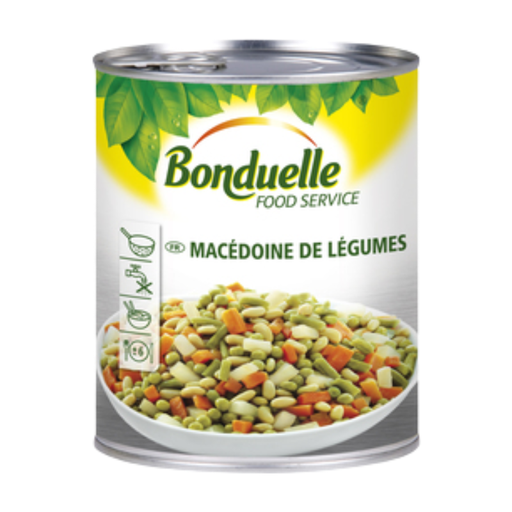 Image unavailable
Bonduelle, mixed vegetables, 530 g
Make your own soup with tinned vegetables instead of buying ready-to-eat soup. The stated pack size is 530 g: match the nutritional information to the amount of vegetables you’ll actually use, and check the ingredients, including the salt, before seasoning your soup.
View on Joybuy
Frequently asked questions
Is tinned soup automatically suitable if you live with diabetes?
No: the container alone doesn’t tell you about the ingredients or the portion you’ll serve. France’s national health insurance service points out that everyone’s diet should be tailored to them. Check the carbohydrates and other nutritional information for the product you choose, then consider how much you’ll eat.
Is a claim about reduced salt enough to help you choose a soup?
No: also compare the salt content per 100 ml and per portion. A stated reduction is based on a comparison and, on its own, doesn’t tell you how much salt is in your bowl.
How should you store several soups bought together?
Follow the instructions on each pack: distinguish products that can be stored in the cupboard from those that need to be kept chilled. Check the date shown and the instructions for after opening. France’s Ministry of the Economy points out that best-before and use-by dates have different meanings.
Is a metal tin necessarily safer than home-preserved food?
The material of the container alone isn’t enough to establish which is safer. ANSES says that home-made or artisanal preserves and cured foods are among the foods most often linked to human cases of botulism. For every product, follow the storage instructions and don’t use packaging that looks damaged or suspicious.


