If you’re stocking up on soups to keep in the cupboard during the week, choose a format that suits how much you’ll eat: a 1 L carton for several bowls, smaller cartons to avoid leftovers, or a dried soup mix if you can make it with hot water. Then check how it should be stored, how much soup it makes, the ingredients, allergens and salt content. Frozen soup won’t meet the same storage needs.
Who are these formats for?
Households planning to have several bowls during the week
A 1 L carton can provide several servings. Before choosing one, consider whether you’ll use it within the time recommended after opening. If not, smaller containers are easier to spread across different meals.
People who plan their shopping around their meals
A 1 L carton, two 30 cl cartons and a dried soup mix that needs rehydrating won’t necessarily make the same amount of soup. Work out how many bowls you want and check the prepared volume before choosing a format.
People who pay close attention to ingredients and allergens
The recipe matters just as much as the format. Anses lists soups and broths among the sources of salt in our diets, so check the nutritional information and ingredients for each product. DGCCRF advises that allergens must be clearly highlighted in the ingredients list of prepacked food.
What should you check first?
First, check that the soup can be stored in the cupboard, then decide between a ready-to-heat liquid soup and a dried mix that you need to reconstitute. The format and packaging details will help you match the quantity to your planned meals.
Liquid soups in cartons
Worth considering: if you want to heat the soup without adding water. Carrefour and E.Leclerc offer formats including 1 L cartons and packs of 2 × 30 cl.
Bear in mind: opening a large carton may leave you with leftovers. Follow the manufacturer’s storage instructions once it’s open.
Dried soups
Worth considering: if you have hot water to hand and would rather store a dry mix in the cupboard. For the preparation shown on its website, Royco advises adding 200 ml of boiling water.
Bear in mind: the weight of the powder isn’t the same as the volume of soup you’ll serve. Check the instructions and yield for the product you choose.
| What to check |
Things to look for |
Who it matters to |
| Format and storage |
Check whether the product can be stored in the cupboard, its volume and the instructions for storing it after opening. |
If I’m planning several bowls during the week, I want a container my household can finish without leaving soup open for too long. Around 30% of consumers put format and storage first. |
| Amount you get |
Compare the volume of liquid soups. For a dried mix, also check the number of servings and the volume once prepared. |
To plan my shopping around different meals, I need to know how many bowls each product will make. This is the main priority for around 30% of consumers. |
| Recipe and label |
Check the ingredients, highlighted allergens and salt content, comparing them on the same basis, such as per 100 ml. |
If I’m buying for someone who needs to avoid an ingredient, I check the exact recipe rather than relying on the soup’s name. Ingredients and nutritional information come first for around 30% of consumers. |
| Preparation and portions |
Check whether the soup just needs heating or whether you need to add water and cook it. |
If I’m having lunch on my own, I prefer to make the amount I need without opening a large container. Around 10% of consumers prioritise preparation and portion control. |
Mistakes to avoid
-
Putting frozen soup with your cupboard staples
The word ‘soup’ doesn’t tell you how a product should be stored. The frozen vegetable soup shown by Auchan needs to be kept at −18 °C, so it isn’t suitable for cupboard storage.
Check the storage instructions for the product you’re considering before adding it to your weekly provisions.
-
Comparing powder and cartons by weight alone
Dried soup needs water, so the weight of the sachet alone doesn’t tell you how much soup you’ll serve. Cartons, on the other hand, show the volume of liquid soup.
To compare the quantities you’ll get for your meals, check the number of servings and the prepared volume stated on each pack.
-
Choosing by the front of the pack without checking the recipe
A recipe name or Nutri-Score isn’t a substitute for the ingredients list. Santé publique France explains that displaying the Nutri-Score is voluntary; on its own, it doesn’t tell you which allergens a soup contains.
Check the ‘salt’ line in the nutritional information and the highlighted allergens for each recipe.
-
Assuming a large carton will keep for just as long after opening
Storage conditions change once the pack is open. The Ministry of the Economy advises following the manufacturer’s instructions on temperature and how long the product can be kept after opening.
If you only plan to have one bowl, check these instructions before choosing 1 L; a smaller format may be a better fit for your meals.
A container that’s too large for your planned meals could leave some soup unused.
Brands and retailers to know
These ranges show the different formats available, but that doesn’t guarantee a particular product will suit your cupboard. Always check the packaging.
Royco
Royco offers dried soups to prepare with hot water.
- For the preparation described by Royco, add 200 ml of boiling water, stir and leave to stand for two minutes.
- This isn’t a liquid soup that just needs heating, so check the instructions for the recipe you choose.
Carrefour / Carrefour Classic'
Carrefour’s range of liquid soups includes 1 L cartons and packs of 2 × 30 cl.
- These two formats make it easier to match the amount you open to the number of bowls you’re planning.
- Check the ingredients and allergens for each recipe.
Marque Repère / Régal Soupe (E.Leclerc)
E.Leclerc offers Régal Soupe in cartons, including 1 L and 2 × 30 cl velouté soups.
- Choosing between these formats can help you plan for several bowls or smaller portions.
- Check the exact recipe and format before planning your meals for the week.
Les Printanières / Simplement Bon & Bio (ALDI)
ALDI’s range includes 1 L cartons of soup as well as instant soups.
- Liquid and instant formats suit different ways of preparing soup.
- Check the storage instructions and preparation directions for the product you choose.
Auchan
Auchan’s five-vegetable soup is a 1 kg frozen product.
- The packaging explains how this product needs to be stored.
- It must be kept at −18 °C, so it isn’t suitable for stocking up the cupboard.
Lidl
The Asian soup featured by Lidl France is a frozen product.
- Its product details make it clear that it needs different storage from a soup that can be kept at room temperature.
- This product needs to be kept in the freezer, not the cupboard.
Soups to consider on Joybuy
This selection includes a liquid soup in smaller cartons and dried mixes that need water added. Choose according to how much you want to serve, how the soup is prepared and the information on the packaging.
 Image unavailable
Maggi Chorba Soup, 85 g
Worth considering if you’re looking for a soup to make from a dry mix. Check the pack for the amount of water needed, how much soup it makes and any allergens before planning your portions.
View on Joybuy
 Image unavailable
Liebig 12-vegetable soup, 2 × 30 cl
The two 30 cl cartons let you open one at a time if you only need a small amount. Check the ingredients for this recipe and follow the storage instructions after opening.
View on Joybuy
 Image unavailable
Royco carrot and mushroom noodle soup, 3 × 20 cl
Individual sachets may suit you if you want to prepare portions at different times. Before preparing the soup, follow the pack instructions for the amount of water and cooking method for this product.
View on Joybuy
 Image unavailable
Knorr Thai mushroom noodle soup, 2 Assorted, 69 g, 0,70 L
Worth considering if you’re planning to make noodle soup rather than heat up a carton. Check the cooking instructions and how much water to add before choosing this variety.
View on Joybuy
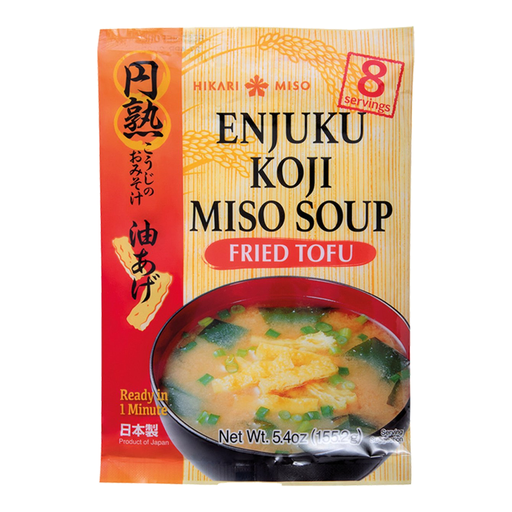 Image unavailable
Hikari Miso Enjuku Miso Soup Aburaage, 155,2 g
Worth considering if you’d like a miso soup to make with hot water. For this variety, check the packaging for ingredients, allergens and the number of servings before you buy.
View on Joybuy
Frequently asked questions
Can all packaged soup be stored in the cupboard?
No. The storage instructions on the product tell you where it should be kept. For example, the vegetable soup featured by Auchan is frozen and must be stored at −18 °C, unlike soup designed to be kept at room temperature.
What should I check about a soup’s date and storage?
Check the date on the pack as well as the storage instructions, especially once it’s open. The Ministry of the Economy distinguishes between the use-by date (DLC) and the best-before date (DDM). In either case, follow the temperature and storage-time instructions on the product packaging.
Is the Nutri-Score enough to choose between two soups?
No. If it’s displayed, the Nutri-Score can help you compare products, but it doesn’t replace the nutritional information or ingredients list. Santé publique France explains that displaying it is voluntary, so check the salt content and allergens for each recipe separately.
How can I check for allergens in prepacked soup?
Check the ingredients list on the exact product you’re buying: DGCCRF says that allergens in prepacked food must be clearly highlighted there. Don’t assume you know what a soup contains from the brand name or the vegetables shown on the front of the pack.


