Anyone who checks the fat content first
You’re looking for a frozen dessert to serve at a Christmas market, want to compare the fat content per 100 g and are happy to consider a fruit sorbet instead of ice cream.


If keeping fat intake down matters more to you than a creamy texture, start by comparing sorbet tubs. Carrefour lists its EXTRA lemon sorbet as “0% fat”, while E.Leclerc states that its ESKISS raspberry sorbet contains 0.1 g of fat per 100 g. That doesn’t tell you about the sugar or allergens, and it won’t necessarily give you the texture you’d expect from ice cream. If you’re serving it at a Christmas market, also check the tub size and whether your chosen flavour is available.
You’re looking for a frozen dessert to serve at a Christmas market, want to compare the fat content per 100 g and are happy to consider a fruit sorbet instead of ice cream.
Before choosing a tub, you need to check the sugars, ingredients and precautionary allergen information. A low fat content on its own doesn’t answer these questions.
You prefer the mouthfeel of ice cream and want to understand the trade-off on fat before choosing a dessert.
When choosing a frozen dessert to share, start by comparing fat content per 100 g on a like-for-like basis, then check the sugars and allergen information. If a creamy texture matters more to you, make that choice by checking the figures for the specific product rather than relying on its name alone.
| Factor | What to check | Who is it for? |
|---|---|---|
| Fat | Compare the figures per 100 g for the flavour and size you’re considering. | If my main aim is to reduce the fat in the dessert, the figures for the tub matter more than its fruity name. Around 50% of consumers are said to put this first. |
| Sugars and allergens | Check the sugars per 100 g, the ingredients and any precautionary allergen information. | When I’m serving several guests, I want to be able to check the ingredients before choosing a flavour. This is said to be a priority for around 30% of consumers. |
| Texture | Know the difference between sorbet and ice cream, then check the fat per 100 g. | For a festive dessert, I might prefer a creamy texture while still wanting to understand the nutritional trade-off. Texture is said to be the top factor for around 20% of consumers. |
The two sorbets mentioned show why you need to check more than one line on the nutrition table. Carrefour lists 24.1187 g of added sugars per 100 g for its EXTRA lemon sorbet, while E.Leclerc lists 25.0 g of sugars per 100 g for ESKISS raspberry. “Added sugars” and “sugars” aren’t the same measure, so these figures can’t be used to directly compare the products’ total sugar content.
A sorbet can be low in fat but still contain sugars. The information from Carrefour and E.Leclerc about their sorbets shows why you need to check both figures separately.
Compare the fat and sugars per 100 g; don’t use the added sugars figure in place of total sugars.
Suggestive wording isn’t a substitute for a regulated nutrition claim. Under European Regulation (EC) No 1924/2006, the claim “low fat” requires a maximum of 3 g of fat per 100 g for solid foods.
If this threshold guides your choice, check the fat per 100 g on the label for the specific product and size.
Carrefour’s product page for EXTRA lemon sorbet mentions that it may contain traces of milk, eggs, soya, peanuts and nuts, among other allergens. The word “sorbet” alone isn’t enough to tell you whether a product is suitable for a guest.
Before serving, check the ingredients and precautionary allergen information on the tub you’ve bought, and keep the label to hand.
For ESKISS raspberry sorbet, E.Leclerc advises customers to check availability with their local store or online collection service. So if you’ve spotted a flavour for your Christmas market, make sure it’s available before you plan your service.
Check with the retailer that the product and size you want are available.
These examples show a range of recipes and sizes. A retailer’s name alone doesn’t tell you the fat content of all its products.
Carrefour offers EXTRA lemon sorbet in a 606 g tub with a “0% fat” claim.
ESKISS raspberry sorbet comes in a 650 g tub.
Auchan’s frozen dessert aisle separates tub sorbets from ice creams, making it easier to identify the type of recipe before comparing flavours.
The Vanilla tub is a useful comparison for a recipe made with ice cream, rather than tub sorbet.
Vanilla Pecan Blondie is a tub of ice cream with salted caramel sauce, caramelised pecans and chunks of cake.
Lidl’s advice on making ice cream at home explains how fat affects texture, but doesn’t describe any particular tub.
These sorbets are worth considering if you’re looking for a fruity frozen dessert and fat content is one of your selection criteria. Before choosing one to serve from a tub at a Christmas market, check the type of packaging, the nutrition label and the allergen information.
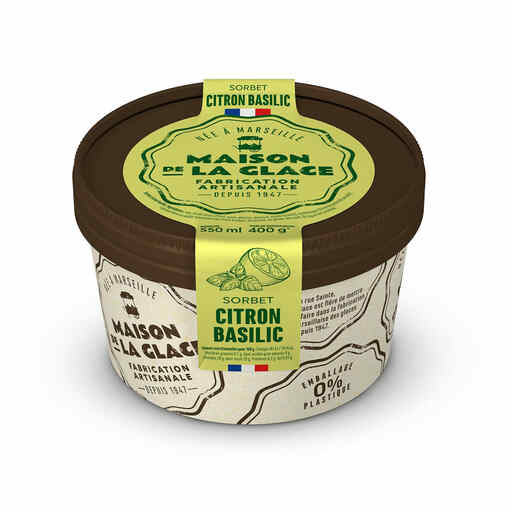 Image unavailable
Worth considering if you’re looking for lemon and basil sorbet and comparing fat content for your Christmas dessert.
Check that the packaging is suitable for serving from a tub, then look at the sugars and allergen information on the product you buy.
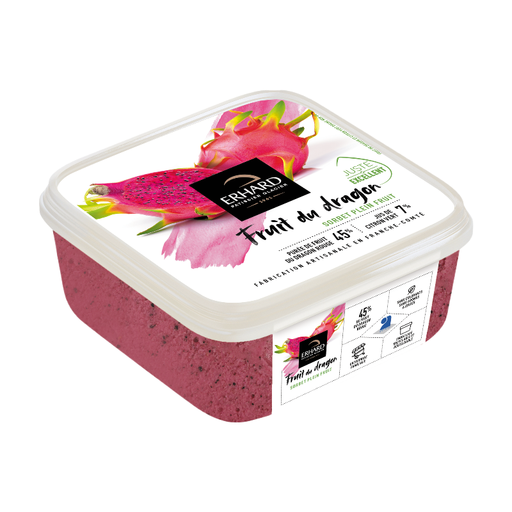 Image unavailable
Worth considering if you’re thinking of serving pitaya and lime sorbet as a dessert to share.
Check the packaging before planning to serve it from a tub, and read the sugars and precautionary allergen information on the label.
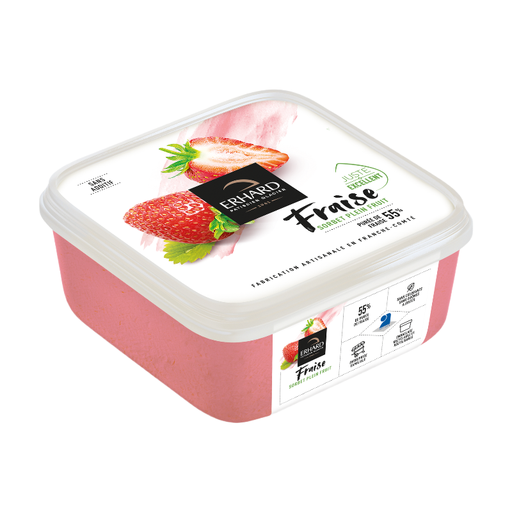 Image unavailable
This strawberry flavour could be one to compare when choosing a sorbet for a Christmas dessert.
Before choosing it to serve from a tub, check the packaging, sugars and allergen information for the product.
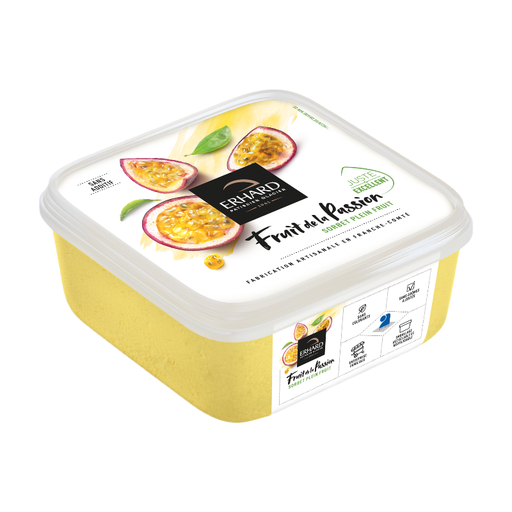 Image unavailable
Worth considering if passion fruit is the flavour your guests would enjoy.
Check the packaging is suitable for serving from a tub, and compare the sugars and precautionary allergen information before you buy.
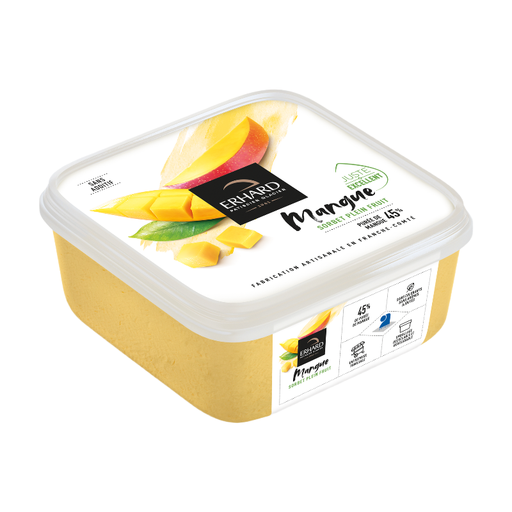 Image unavailable
This mango sorbet is another fruity flavour to compare for a Christmas dessert.
If you need a tub for serving, check the packaging, then read the sugars and allergen information on the product you buy.
For a solid food, this claim requires a maximum of 3 g of fat per 100 g under European Regulation (EC) No 1924/2006. Check the figure per 100 g for the flavour and size you plan to buy: a recipe name or “light” presentation is no substitute for checking the label.
No. These claims relate to different nutrients. Carrefour lists its EXTRA lemon sorbet as “0% fat”, but also states that it contains 24.1187 g of added sugars per 100 g. If you’re comparing the total sugar content of several products, check the “sugars” line.
No. The word “sorbet” doesn’t guarantee that a product is free from allergens or traces. Carrefour’s product page for EXTRA lemon sorbet mentions that it may contain traces of milk and nuts, among other allergens. If you’re serving it to a group, check the label on the product you’ve actually bought.
Ice cream may suit you if you prefer a creamier texture. In its preparation advice, Lidl explains that fat can help limit the formation of ice crystals. However, you can’t tell the texture or fat content of a particular tub without checking its recipe and label.