People keeping an eye on fat
You’re looking for an ice cream dessert to share and comparing the fat content per 100 g, rather than assuming what’s in it from the word ‘sorbet’ alone.


To choose an ice cream dessert to share while keeping fat intake down, compare the fat content per 100 g for the specific flavour. E.Leclerc and Carrefour product listings show 0 g for ESKISS lime sorbet and 0.1 g for Histoire de Glaces raspberry sorbet, respectively. Low fat content tells you nothing about the sugar content or allergens, so check these details and the pack size before choosing.
You’re looking for an ice cream dessert to share and comparing the fat content per 100 g, rather than assuming what’s in it from the word ‘sorbet’ alone.
You want to consider fat without overlooking sugar, energy and the amount served to each person.
You need to check the ingredients list and allergen information for your chosen flavour, even when it’s a fruit sorbet.
For an ice cream dessert to share, start with the ‘fat’ value per 100 g. Then check the other nutritional information, ingredients and pack size to suit your needs.
| Criteria | What to check | Who it’s for |
|---|---|---|
| Fat | Compare the fat content per 100 g for the exact flavour, using the same unit for each product. | I want to keep my fat intake down without assuming all sorbets have the same ingredients; around 39% of consumers would put this first. |
| Sugar and energy | Check the sugar and energy per 100 g, then consider how much you plan to serve. | If I choose a low-fat sorbet, I also want to know how much sugar and energy are in my portion; nearly 31% of consumers would favour this broader view. |
| Ingredients and allergens | Check the ingredients list and any ‘may contain’ statements for your chosen product. | A fruity flavour alone doesn’t rule out ingredients or traces I need to avoid; around 15% of consumers would make this compatibility their first check. |
| Pack size and availability | Check the net weight or volume of the pack and whether it’s available at your chosen retailer. | When sharing dessert, I need a suitable quantity and a product I can get when I need it; around 15% of consumers would put these practical considerations first. |
ESKISS lime sorbet contains 0 g of fat, but its E.Leclerc product listing also shows 22 g of sugar per 100 g. These two figures tell you different things.
Compare fat first if that’s your main concern, then check sugar and energy per 100 g separately.
Weight in grams and volume in litres don’t describe the amount inside in the same way. Pack size matters, especially if several people will be serving themselves.
Check the net weight or volume, then work out how much you’ll need to share before choosing.
Ingredients and declared traces vary by product. A sorbet’s low fat content doesn’t guarantee it’s suitable for someone with an ingredient restriction.
Check the allergen information on the pack you’re buying. If you have an allergy, don’t choose a product if its allergen information isn’t compatible with your needs.
The Carrefour product listings we checked say to store the products at −18 °C and not to refreeze them after defrosting.
Check the instructions on the tub you buy and plan how you’ll transport it and store it in the freezer.
Carrefour Extra offers raspberry sorbet in a tub, among other products.
The brand offers lime sorbet in a 650 g tub at E.Leclerc, among other products.
Auchan includes tub sorbets in its range of frozen desserts.
MUCCI is ALDI’s ice cream and sorbet brand. Its brand page includes a 500 g tub of Madagascar vanilla ice cream.
Magnum Classic x4 is included here as a comparison with ice cream sticks, not as a tub of sorbet.
These products offer a chance to compare fruit-based frozen desserts for sharing. The Carte D’Or product comes in a tub; for the other sorbets, check that the container is suitable for how you plan to serve them before choosing.
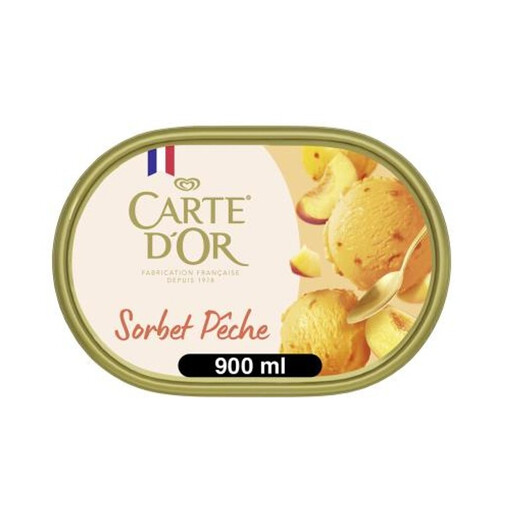 Image unavailable
The 900 mL tub is a good match if you’re looking for a frozen dessert to share. Joybuy’s product listing shows 0.5 g of fat and 26 g of sugar per 100 g; check the ingredients and allergen information too.
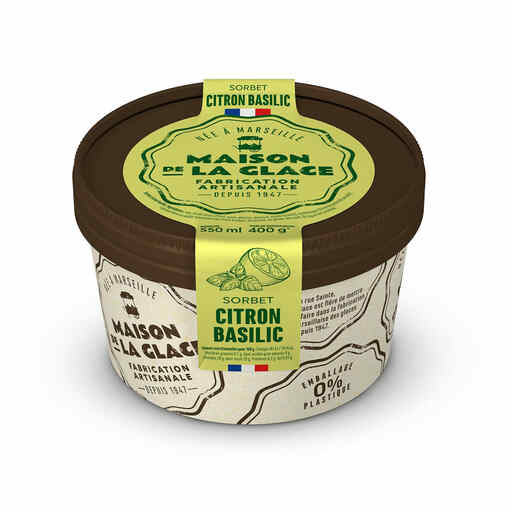 Image unavailable
This 380 g lemon and basil sorbet could be an option if the pack suits how many people you’re planning to serve. Check the pack size, then compare the nutritional information and allergen details for the product.
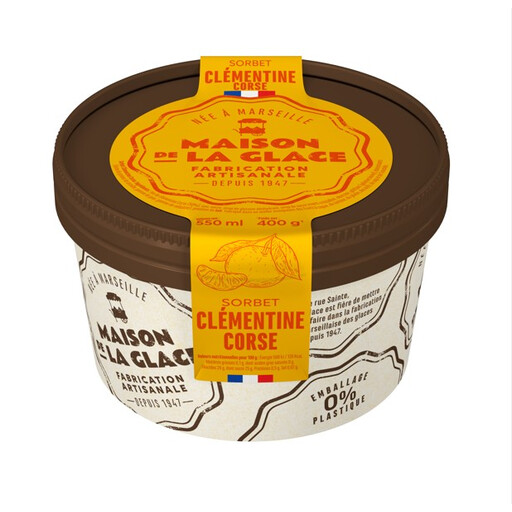 Image unavailable
This 380 g clementine sorbet could be included in a comparison of fruit-based frozen desserts. Check the container is suitable for sharing, and read the nutritional information and allergen warnings.
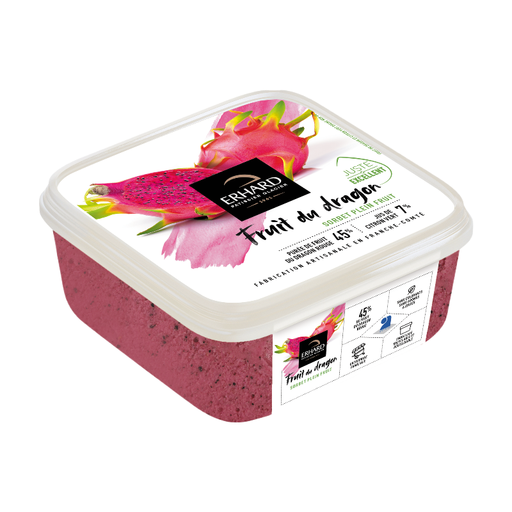 Image unavailable
This 488 g dragon fruit and lime sorbet can be compared with other flavours if you’re looking for enough to share. Check the container and the ingredient and allergen information before buying.
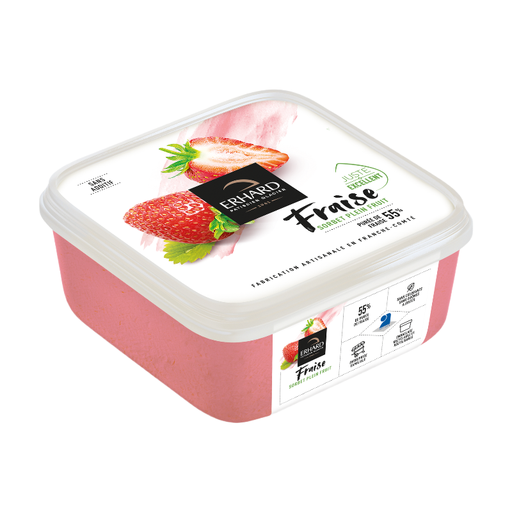 Image unavailable
This 488 g strawberry sorbet could be a useful option when comparing sharing sizes, if the container suits your needs. Check the fat and sugar content, along with the allergen information for the product you choose.
Start by comparing the ‘fat’ value per 100 g for each flavour. The DGCCRF notes that showing nutritional values per 100 g or 100 ml makes products easier to compare. Then check sugar, energy and ingredients in line with your other priorities.
No. It refers to fat, not the overall ingredients. The Carrefour Extra raspberry sorbet listing pairs this claim with a maximum of 0.5 g of fat per 100 g or 100 ml. Check sugar, ingredients and how much you plan to serve separately.
Yes. The E.Leclerc listing for ESKISS lime sorbet flags possible traces of peanuts, gluten, tree nuts, milk, egg and soya. Check the allergen information on the packaging of the product you’re buying.
Not if the label says you shouldn’t. The Carrefour product listings we checked say to store the products concerned at −18 °C and not to refreeze them after defrosting. Follow the instructions on the tub you buy.