Hosts keeping an eye on fat
For an ice-cold dessert to share at Christmas, you want to compare the fat content per 100 g rather than choose based on how light it seems.


To keep fat to a minimum in an ice-cold dessert to share at Christmas, compare the nutritional information for the specific flavour rather than relying on the word ‘light’: some sorbets in tubs have a very low fat content, unlike the ice creams considered here. Check the sugar content, allergens and tub size too; a low-fat sorbet may not meet these other needs.
For an ice-cold dessert to share at Christmas, you want to compare the fat content per 100 g rather than choose based on how light it seems.
You’re considering a tub of sorbet, but also want to check its sugar content separately from its fat content.
You need to take account of the ingredients and any ‘may contain’ warnings for the flavour you’re serving: the ‘sorbet’ label alone doesn’t confirm whether it’s suitable for your guests’ needs.
When choosing between a tub of sorbet and a tub of ice cream, start with what matters most for your meal, then compare the figures on the same basis: per 100 g or per 100 ml, depending on the label. A sorbet labelled ‘0% fat’ may suit you if you’re focusing on fat, but you’ll still need to read the rest of the nutritional information.
| Criteria | What to check | Who is this for? |
|---|---|---|
| Fat | Compare the amount per 100 g and check the exact wording of any claim on the packaging. | If my main priority is limiting the fat in my Christmas dessert, the figure on the label matters more than the word ‘light’. Around 42% of consumers put this need first. |
| Sugars and energy | Check the sugars and energy using the same measure as for the fat content. | I might choose a low-fat sorbet, but I also want to know how much sugar and energy it contains. This overall nutritional picture is the priority for around 25% of consumers. |
| Ingredients and allergens | Check the ingredients list and any ‘may contain’ warnings for the flavour you’re buying. | If a guest has a dietary restriction, I need to check the exact recipe before serving dessert. Around 17% of consumers prioritise this suitability. |
| Size and storage | Check the tub’s weight or volume, then read the storage instructions. | When serving several people, I need to plan the right quantity and make sure I can keep the tub in the freezer until the meal. This is the top priority for around 16% of consumers. |
These terms aren’t interchangeable: under the European regulation published on EUR-Lex, the claim ‘low fat’ is limited to 3 g of fat per 100 g for solid foods. Carrefour’s listing for Carrefour Extra vanilla ice cream in a tub gives 8.7 g per 100 g.
Check the amount per 100 g before choosing an ice cream on this basis.
Carrefour Extra Williams pear sorbet is described as ‘0% fat’, but Carrefour’s product listing also gives 29 g of carbohydrates per 100 g and mentions added sugars.
Check the sugar and energy content too, and don’t confuse low fat with low sugar.
A recipe without cream may still carry ‘may contain’ allergen warnings. Carrefour Extra Williams pear sorbet and Carte d’Or Sicilian lemon sorbet, as listed by Carrefour, both include such warnings.
Check the ingredients and ‘may contain’ information on the packaging of the flavour you’re actually serving.
A tub intended for Christmas should be stored according to the instructions on its packaging until it’s time to serve.
Pick up frozen products at the end of your shop, plan suitable transport and check you have enough room in the freezer. Don’t refreeze a product once it has thawed.
Carrefour’s listing for its Williams pear sorbet in a tub, described as ‘0% fat’, is a good starting point for checking the label on a fruity flavour.
Carrefour’s Sicilian lemon sorbet comes in a 900 ml tub. It’s worth considering if the size and fruity flavour are important for serving.
The products listed by Carrefour come in pots, so they’re different from the tubs you might be looking for to share at dessert time.
Carrefour’s vanilla ice cream in a tub could be an option if vanilla ice cream is more important to you than choosing a low-fat product.
These three 488 g tubs of sorbet offer fruity flavours for Christmas dessert. To choose between them, check the nutritional information and ingredients for the specific flavour, then work out how much you’ll need for your guests.
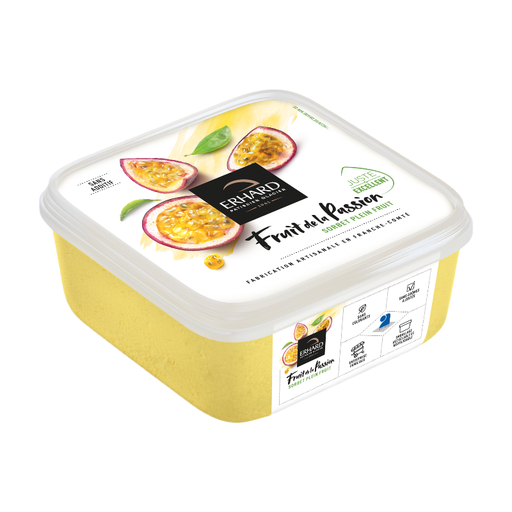 Image unavailable
A passion fruit flavour to consider for an ice-cold dessert to share.
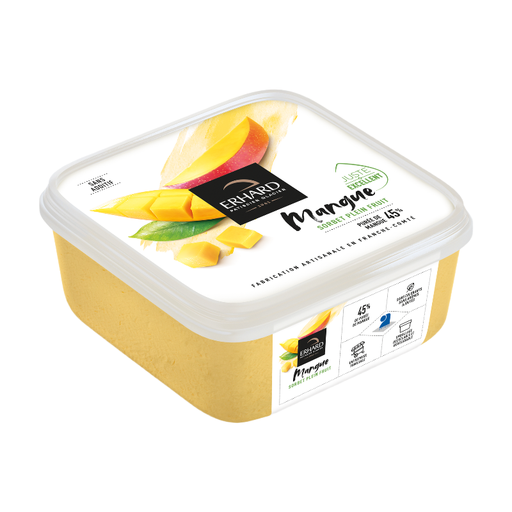 Image unavailable
A mango flavour to consider if you’d like to serve a fruity sorbet at Christmas.
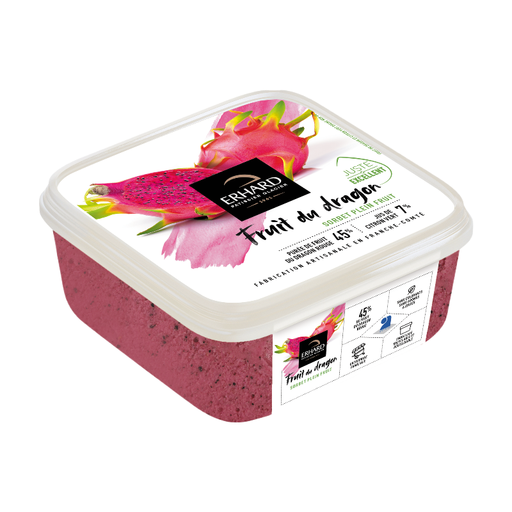 Image unavailable
A dragon fruit and lime flavour to add variety to the sorbets served after your meal.
For solid foods, the European regulation published on EUR-Lex reserves this claim, or wording with the same meaning, for products containing no more than 3 g of fat per 100 g. Check the unit and figure for the specific flavour: how light it seems is no substitute for this information.
Not necessarily: Carrefour Extra Williams pear sorbet, described as ‘0% fat’, contains 29 g of carbohydrates per 100 g and its Carrefour listing mentions added sugars. Check the ‘fat’, ‘sugars’ and ‘energy’ figures separately.
No: Carrefour Extra Williams pear sorbet and Carte d’Or Sicilian lemon sorbet, as listed by Carrefour, carry warnings that they may contain traces of allergens. Check the label on the tub you’re serving rather than relying on the word ‘sorbet’ alone.
Choose a size that suits the number of guests and make sure you can store it in the freezer until it’s time to serve. Pick up frozen products at the end of your shop, follow the transport and storage instructions on the packaging, and don’t refreeze a product once it has thawed.