
Livraison le jour même ou le lendemain

Qualité garantie
Téléchargez l'application
Catégories
With an ever-expanding market, selecting a sonic electric toothbrush can quickly become overwhelming. As savvy consumers, we primarily look for a product that is reliable, durable, and tailored to our specific needs—far from the often over-the-top marketing promises. The goal of this guide is to provide you with clear benchmarks to make an informed decision, focusing on objective specifications and the relevance of the features on offer.
Before diving into our selection, here are a few essential criteria to consider to guide your decision.
A good electric toothbrush for adults is about more than just power. The inclusion of multiple modes (e.g., Clean, Gentle, Gum Care) allows you to tailor your brushing to your sensitivity and goals. A dedicated mode for sensitive teeth is a major plus for many users.
Furthermore, the pressure sensor is a key feature. It alerts you (with a light or vibration) if you apply excessive force, thereby protecting your gums from premature recession and your tooth enamel from unnecessary wear.
For hassle-free daily use, a rechargeable sonic toothbrush must offer long-lasting battery life. A battery that lasts for several weeks on a single charge is now a welcome standard.
If you travel frequently, a hard travel case and a convenient charging method (such as USB) are deciding factors. A travel electric toothbrush needs to be both high-performance and easy to pack.
Most dentists recommend brushing for two minutes. A toothbrush with a timer is therefore essential. The most common models vibrate every 30 seconds to signal that it's time to switch quadrants (quarters of your mouth), ensuring a complete and even clean for all your teeth.
Here are a few options that stand out for their technical specifications and their suitability for a variety of user needs.
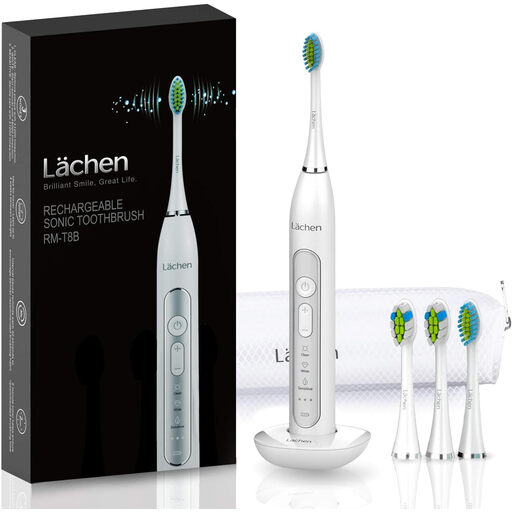
Why We Recommend It
This Lächen model stands out as a comprehensive out-of-the-box solution. With 6 included brush heads, it covers nearly a year and a half of use without requiring additional purchases. Its advertised battery life of up to 60 days and fast 3-hour charging make it a reliable companion for both daily use and travel, especially since it comes with a storage bag and a USB induction charger compatible with international voltages. The 9 customisable settings (3 modes x 3 intensities) offer great flexibility to adapt to all sensitivities.
Pros
Who Is This Product For? Ideal for pragmatic users, families, or frequent travellers looking for an all-in-one, high-performance, and cost-effective long-term solution.
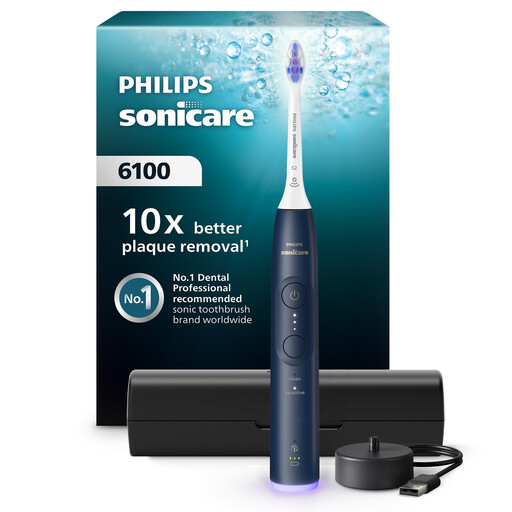
Why We Recommend It
Philips has a well-established reputation in oral hygiene, and this Sonicare 6100 model is a perfect example of its expertise. It focuses on gum protection with a highly visible pressure sensor (a purple light ring) and an ultra-soft S2 Sensitive brush head. The BrushSync technology is another highlight: it tracks brush head wear and tells you exactly when to replace it to maintain optimal effectiveness. According to information provided by Philips, its sonic technology generates 62,000 movements per minute for a deep clean.
Pros
Who Is This Product For? Perfect for individuals with sensitive teeth or gums who are looking for a guided and safe brushing experience, backed by a trusted brand.
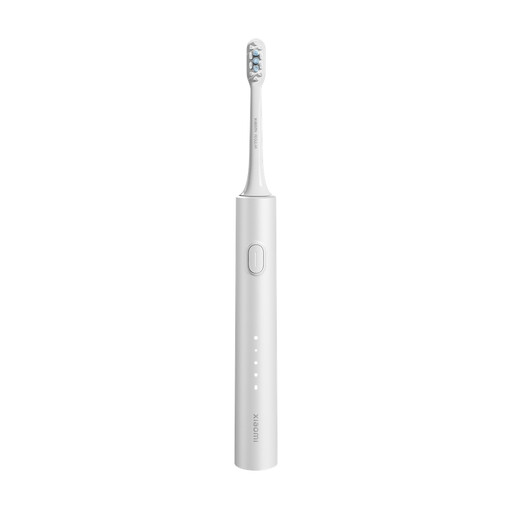
Why We Recommend It
Xiaomi stands out with its design-centric and practical technology approach. The T302 model is no exception, featuring a 360° wireless charging base that eliminates the need to plug a cable directly into the toothbrush. Its battery life is remarkable, lasting up to 65 days in standard mode and 150 days in gentle mode. The package includes 4 brush heads, providing a full year of peace of mind. The four modes, including one for gum massage and another for polishing, cater to a variety of needs.
Pros
Who Is This Product For? Aimed at tech and design enthusiasts who appreciate smart, hassle-free solutions while enjoying record-breaking battery life.
This selection highlights models with distinct profiles, but the market offers a wide variety of products. If you have different needs or simply want to explore other possibilities, we invite you to browse our catalogue.
To discover a wider range, feel free to check out our complete category of the best electric toothbrush.
The main difference lies in the motion. An oscillating-rotating toothbrush has a round head that performs rotations and pulsations. A sonic electric toothbrush, on the other hand, has a more traditional-shaped brush head that vibrates at a very high frequency (tens of thousands of movements per minute). This rapid vibration agitates the fluids in your mouth (saliva, water, toothpaste) to help dislodge plaque even in areas the bristles don't directly touch. The choice often comes down to personal preference in terms of feel.
Yes, sonic technology is often recommended for sensitive teeth and gums. Unlike the mechanical motion of rotating brushes, the vibrations are perceived as gentler. Many models offer a "Gentle" or "Sensitive" mode with reduced intensity. Paired with a pressure sensor, a sonic brush provides an effective clean while minimising the risk of irritation.
The general recommendation, shared by manufacturers and dental health professionals, is to replace the brush head every three months. Over time, the bristles wear out, lose their effectiveness, and can harbour bacteria. Some models, like the Philips Sonicare with its BrushSync technology, automatically remind you when it's time for a replacement.