Students and people living in small homes without an oven
If you mainly reheat leftovers and defrost food, first consider whether you’ll really use a grill or convection cooking. Measure the available space before choosing your appliance, too.


A solo microwave is enough if you mainly reheat and defrost ready-made meals; choose a grill model if you’d also like to brown and crisp food. In a kitchen without an oven, a combination microwave with convection can handle some oven-style cooking, but it won’t necessarily deliver the same results or capacity as a traditional oven. Check the cooking modes, space requirements and installation instructions for the specific model.
If you mainly reheat leftovers and defrost food, first consider whether you’ll really use a grill or convection cooking. Measure the available space before choosing your appliance, too.
If you only stay there occasionally, consider whether you’ll use the appliance just for reheating and defrosting, or also for browning and cooking some dishes without another oven.
If you regularly make gratins, pizzas or simple bakes, consider combination microwaves with convection. Compare how they perform with your recipes, their usable capacity and their installation requirements.
Start by deciding which modes you’ll use, then check the cooking performance, dimensions and installation requirements for each model.
Choose this: if you mainly want to reheat and defrost, and don’t regularly need to brown or crisp food.
The trade-off: it won’t brown food like a grill or offer convection for oven-style cooking.
Choose this: if you’d also like to toast or brown and crisp individual portions.
The trade-off: a grill on its own can’t replace convection for recipes that need an oven-style setting.
Choose this: if you need the appliance to handle some oven-style cooking in a kitchen without an oven.
The trade-off: capacity, size and results vary by model. Having an oven mode doesn’t guarantee performance equivalent to a traditional oven.
| Priority | What to check | Your needs |
|---|---|---|
| Cooking modes | Check which modes are actually available: microwave, grill and convection. Look for programmes that suit your cooking rather than focusing only on the number of programmes. | I mainly reheat meals; or I’d also like to brown and crisp food and cook recipes that need an oven-style setting. |
| Cooking performance | For the tasks that matter to you, look for test results covering defrosting, even reheating, grilling and, for a combination model, preheating and temperature stability. Que Choisir assesses these separately in its July 2026 test protocol. | For leftovers, I’m mainly interested in reheating; if I’m planning to make pizzas or bakes, oven-mode results matter too. |
| Space and installation | Measure the width, height and depth, and check that the door can open fully. Consult the model’s instructions for clearance, ventilation and permitted installation types. | In a small kitchen, I need to be able to position and open the appliance without blocking its ventilation. |
| Power supply and containers | Check the voltage and total electrical power stated for the model you’re considering, and don’t confuse these with the microwave output power. Make sure the container and packaging are suitable for the mode you’re using. | I want to be able to connect the appliance to the available power supply and reheat my meals according to the instructions on their packaging. |
The presence of a grill or convection mode alone doesn’t tell you how well an appliance defrosts, browns food or maintains its temperature. Que Choisir assesses these results separately in its July 2026 test protocol.
Think about the recipes you’ll actually make and look for test results covering those specific cooking tasks.
Depth can affect your choice: Whirlpool France lists the MCP349WH as 49,4 cm deep, while Panasonic France lists the NN-C69KSM at 520 mm deep, before taking each appliance’s ventilation requirements into account.
Measure the depth and height as well as the space needed to open the door, then check the instructions for the required clearances.
Blocked vents can compromise ventilation. Bosch’s instructions for the freestanding FEL023M and FEL053M models state that they are not intended to be installed or used in a built-in cupboard.
Keep the vents clear and follow the instructions for the model you buy. If you’re planning to fit it into a recess, choose an appliance designed for that type of installation.
Anses says that reheating food in a microwave at too high a power setting increases the risk of substances from some types of packaging migrating into food.
Follow the packaging instructions. If it isn’t suitable for microwave use, transfer the food to a suitable container.
These examples highlight features of specific models. They don’t necessarily represent an entire product range, and the models mentioned may not always be available.
The range includes freestanding combination models worth considering if you’d like more cooking options in addition to reheating.
The NN-C69KSM is an example of a combination model to consider if you’re looking for a grill and convection cooking.
The brand offers combination models with different features and power requirements, depending on the model.
This selection includes solo models for reheating, a grill model for browning and crisping, and combination models to consider for some types of cooking in a kitchen without an oven. Compare their features and installation requirements against your recipes and available space.
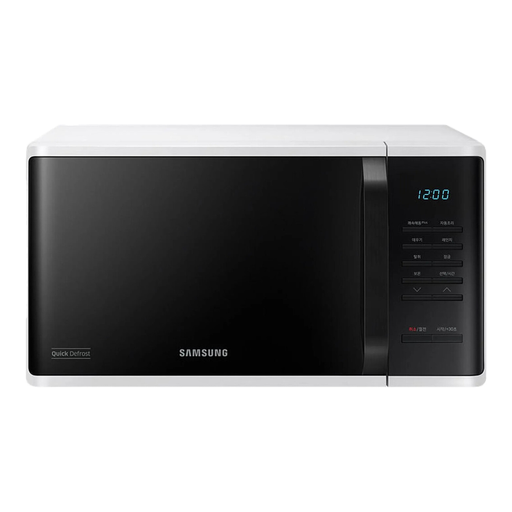 Image unavailable
Worth considering if you mainly reheat and defrost food. If you’re planning to brown and crisp food or use convection, this solo model won’t meet those needs. Check the instructions for the ventilation space it requires, too.
 Image unavailable
The grill is useful if you’d like to brown and crisp food as well as reheat it. The model is listed with a 20 L capacity and 700 W power in its name. If you need convection for your recipes, check the exact cooking modes before choosing.
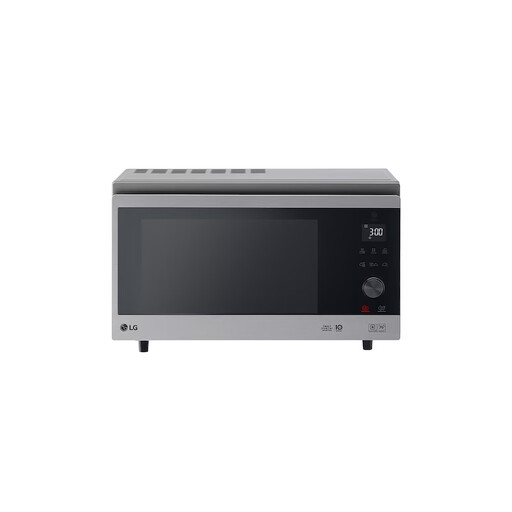 Image unavailable
This combination model is worth considering if you’d like more cooking options without a traditional oven. Its listed capacity is 39 L. Before setting aside space for it, check the dimensions, required clearances and total electrical power in the instructions, as well as how it performs in the modes you’re interested in.
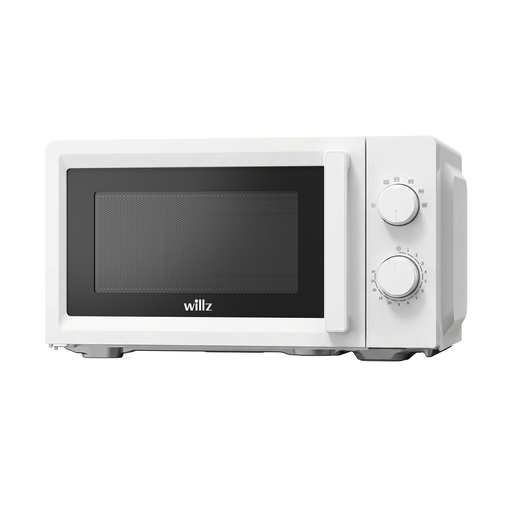 Image unavailable
This 20 L option is mainly suited to reheating in a small space. If defrosting is important to you, check that it has this function. Measure the appliance and check the plug type and electrical compatibility before buying.
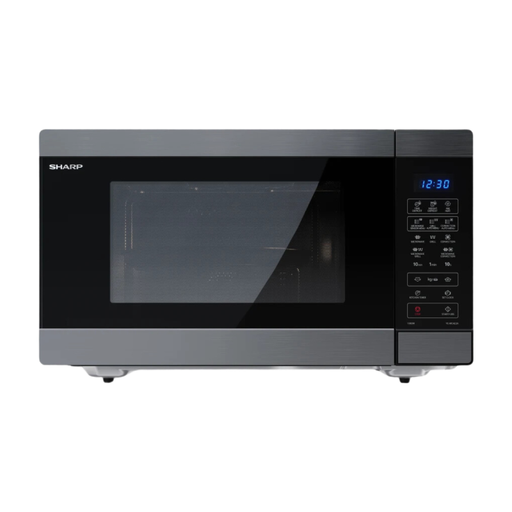 Image unavailable
This 42 L combination model is worth comparing if you’re looking for an appliance with several cooking options. Check how it performs with the recipes you have in mind, whether it has a defrost function if that matters to you, and the clearances and electrical requirements in the instructions.
No. It can replace an oven for some dishes if its modes and capacity suit your recipes, but a convection setting doesn’t guarantee equivalent results. To help you choose, look at relevant test results: in its July 2026 test protocol, Que Choisir assesses the grill, combination cooking, preheating and temperature stability separately.
Only after checking the instructions for the exact model and its ventilation requirements. Bosch’s instructions for the freestanding FEL023M and FEL053M models state that they are not intended to be installed or used in a built-in cupboard. A model designed for built-in installation will have its own installation instructions.
Allow for the model’s dimensions, the space needed to open its door and the clearances specified in its instructions. Check its voltage and total electrical power, rather than relying on the microwave output power alone. For example, Samsung Professionnels France lists a maximum power consumption of 2 900 W for the MC32J7035AK; this figure doesn’t apply to other appliances.
Yes, if the packaging is suitable for microwave use and you follow its power instructions. Anses says that reheating at too high a power setting increases the risk of substances from some types of packaging migrating into food. If the packaging isn’t suitable, use an appropriate container instead.