Everyday reheating and defrosting
You mainly reheat leftovers or individual meals and defrost food, without expecting your microwave to replace an oven. A solo model suits these uses, as described by UFC-Que Choisir.


For heating and defrosting in a small kitchen, a solo microwave does the job without adding cooking modes you may never use. Choose a grill model if you also want to brown food from time to time, or consider a combi microwave with convection if you need it to take on some of the cooking you would normally do in an oven. In every case, check the dimensions, ventilation clearances and electrical requirements for the exact model.
UFC-Que Choisir distinguishes between solo, grill and combi microwaves by the types of cooking they offer. So the best place to start is by considering the role the appliance will play in your meals, not just how much worktop space it will take up.
You mainly reheat leftovers or individual meals and defrost food, without expecting your microwave to replace an oven. A solo model suits these uses, as described by UFC-Que Choisir.
You mainly use your microwave but would also like to brown a pizza, quiche or gratin from time to time. A grill function meets this need; on its own, it does not mean the appliance has convection.
You want to be able to cook some dishes in the same appliance you use for reheating. In that case, a combi microwave with convection is worth considering, provided its dimensions and required ventilation clearances work for your kitchen.
First decide whether you need to reheat, brown food or cook as you would in a small oven. Then measure the space available: an appliance that fits on your worktop must also be installed in accordance with its instructions.
| What you need | What to check | Who it’s for |
|---|---|---|
| Reheating and defrosting | Solo microwave type, a capacity suited to your dishes and a defrost setting. | If I mainly prepare quick meals, I want to reheat and defrost without having to choose between oven modes; around 36% of consumers would make this their priority. |
| Occasional browning | A grill function and the accessories approved for each mode. | When I reheat a pizza or gratin, I sometimes want to brown the top without expecting the appliance to cook like an oven; this would be the priority for around 21% of consumers. |
| Cooking without an oven | Explicit mention of convection or fan-assisted cooking, the available modes and the size of dishes that will fit. | Without a separate oven, I need to be able to cook some dishes rather than just reheat them; around 29% of consumers would make this their top criterion. |
| Fitting it into a kitchenette | External dimensions, ventilation clearances and the electrical requirements in the model’s instructions. | If space is very limited, I need to be able to position and connect the appliance in accordance with its instructions; around 14% of consumers would put this ahead of the functions. |
These considerations are especially relevant to student accommodation and kitchens with limited equipment. For ventilation, Samsung France gives average guidelines of 10 cm at the back and sides and 20 cm above its microwaves, while also referring users to the requirements for each model. Don’t apply these clearances to another appliance: check its instructions and keep its vents unobstructed.
A grill can brown the surface of a dish, but that function alone doesn’t mean the appliance is suitable for oven-style cooking. UFC-Que Choisir makes a clear distinction between a grill and a combi microwave with convection.
If you plan to bake or roast, look for an explicit mention of convection or fan-assisted cooking, and check the modes listed in the instructions.
A microwave may fit into an alcove without leaving enough space around its vents. Whirlpool France advises against blocking the ventilation grilles.
Measure the width, height and depth of the space, then compare these with the appliance’s dimensions and the clearances specified in its own instructions.
Anses warns that heating food too intensely can increase the transfer of substances from some packaging into food. DGCCRF advises that single-use containers should not be reused.
Use a container suitable for the mode you’ve selected and follow the time and power instructions on the packaging.
These examples give you an idea of the different types of appliance available. The features and dimensions mentioned apply to the models listed, not to every product from each brand.
Samsung France features the 23 L solo MS23K3515AK/EF microwave and the 32 L MC32DG7646CKE1 combi model.
The MCP349WH is a 25 L freestanding combi microwave that Whirlpool France lists with a grill and fan-assisted cooking.
LG France describes the MH7235GIB as a 32 L NeoChef grill microwave with a defrost function.
Panasonic France lists the NN-GD39 with a grill and the NN-CT57RM as a combi model offering convection and a grill, among other features.
These appliances let you compare everyday reheating, occasional browning and cooking with a combi model. Product titles don’t always tell you all the modes available, so check the instructions for your chosen model, particularly if you want to cook without a separate oven.
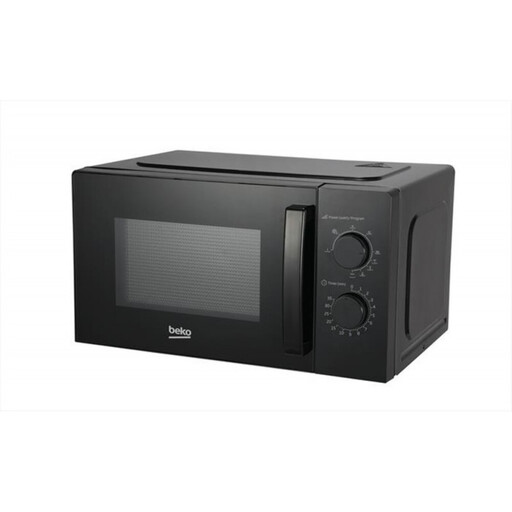 Image unavailable
Worth considering if you reheat meals and also want to brown food from time to time. The product title gives a power rating of 700 W; check the available modes separately if you want to cook as you would in an oven.
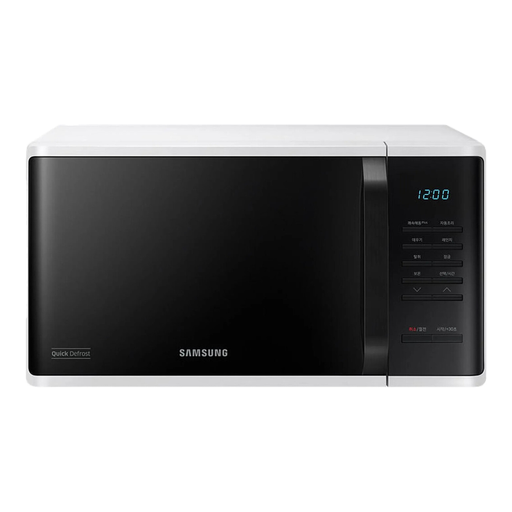 Image unavailable
Consider this if reheating and defrosting matter more to you than browning food. The product title mentions Quick Defrost and 1150 W, but doesn’t say what the power rating refers to; check the detailed specifications if it will affect your choice.
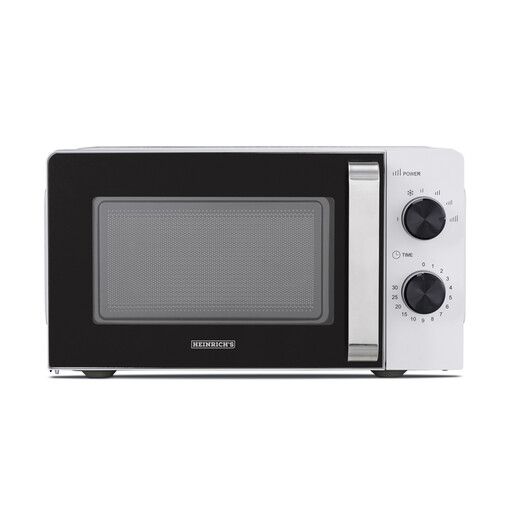 Image unavailable
For reheating and defrosting with dedicated controls, rather than looking for an oven mode. The product title lists six power levels, a defrost function and a 30-minute timer.
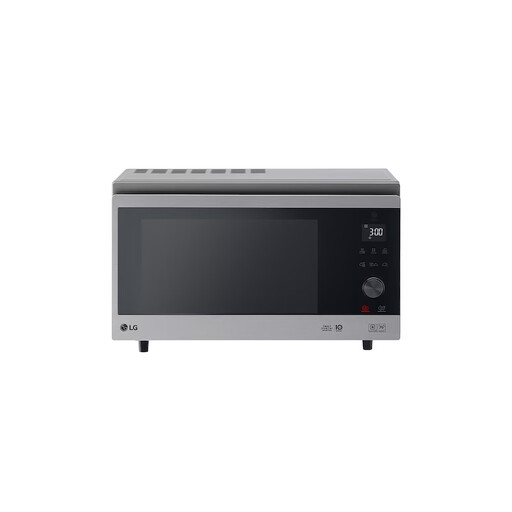 Image unavailable
Worth considering if you want several types of cooking in one appliance and have room for a 39 L model. Before relying on it as a replacement for a separate oven, check the cooking modes, dimensions and ventilation clearances in its documentation.
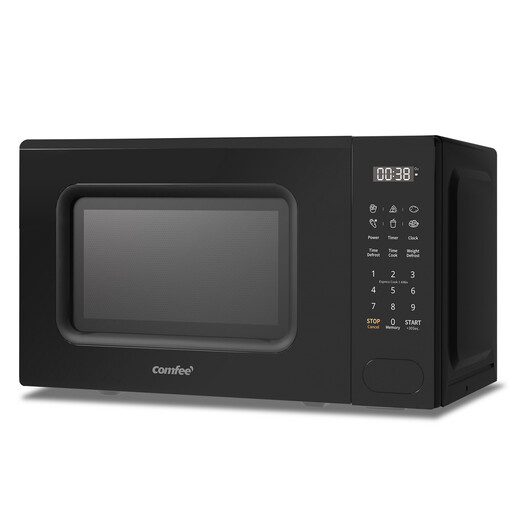 Image unavailable
Compare this model for reheating and defrosting in a kitchen with limited equipment. The product title lists 700 W, six preset menus and eleven power levels; check the exact modes before relying on it for grilling or oven-style cooking.
Leave the clearances specified in the model’s instructions and don’t block any vents. For its appliances, Samsung France gives average guidelines of 10 cm at the back and sides and 20 cm above; these figures don’t replace the instructions for the microwave you’re installing.
Don’t reuse a single-use tray. DGCCRF advises following the instructions for containers, while Anses warns that heating food too intensely can increase the transfer of substances from some packaging. Follow the stated time and power settings.
No, having a rack doesn’t mean it can be used in every mode. Check the instructions to see when it’s safe to use, particularly before starting microwave or combi mode.
Compare the voltage and plug type shown on the appliance or in its instructions with your electrical installation. For example, Whirlpool’s specifications for the MWSC833W list 220–230 V and a Schuko plug; these details shouldn’t be assumed to apply to other models.