People who enjoy coffee on their own
If you’d rather open a single portion than a 100 g bar, 25 g, 35 g and 45 g formats offer a set amount. Check the packaging, though: a small bar isn’t necessarily individually wrapped.


To enjoy with a coffee when you’re on your own, a 25–45 g bar or mini bar gives you a set amount without having to break off a piece from a large bar. Then choose according to whether you prefer dark or milk chocolate, compare the sugars per 100 g and check the allergens for the specific recipe. An individual format alone tells you nothing about its nutritional values.
If you’d rather open a single portion than a 100 g bar, 25 g, 35 g and 45 g formats offer a set amount. Check the packaging, though: a small bar isn’t necessarily individually wrapped.
The cocoa percentage helps you find the intensity you’re after. The ranges offered by Lindt, Carrefour and E.Leclerc include products with 70%, 72%, 80%, 85% or 90% cocoa, depending on the brand and product.
To compare recipes, check the nutritional values per 100 g, then read the ingredients list and allergens for the product you’ve chosen. The DGCCRF states that nutrition labelling is compulsory for prepacked foods, while Nutri-Score is voluntary.
If you’re having coffee on your own, start with how much chocolate you plan to eat, then compare the type of chocolate and the label for each recipe.
| Criterion | What to check | Who is it for? |
|---|---|---|
| Individual portion | The net weight of the portion and whether it’s individually wrapped; a bar that you break into squares isn’t individually wrapped. | If I want to open just the amount I’ve planned to have with my coffee, the packaging matters as much as the weight. Around 42% of consumers put individual portions at the top of their list of needs. |
| Chocolate flavour | The type of chocolate and, for dark chocolate, the minimum cocoa content stated for the product. | If I want a more cocoa-rich chocolate to go with my coffee, I check the cocoa percentage first. This is the main priority for around 33% of consumers. |
| Label and allergens | The ‘of which sugars’ figure per 100 g, the amount in the portion you’ll eat and the allergens in the specific recipe. | If I’m comparing two recipes or need to avoid an allergen, the label comes before the format and flavour. Around 25% of consumers prioritise this nutritional information and allergen details. |
The Ministry of the Economy describes this levy as applying to sugary drinks, not as a tax specifically on chocolate bars. So it won’t help you choose between chocolates to have with your coffee.
To compare recipes, check the sugars declared per 100 g and work out how much that means for the amount you’ll eat.
According to Santé publique France, displaying the Nutri-Score is voluntary. The DGCCRF states that nutrition labelling is compulsory for most prepacked foods.
Check the nutrition table and ingredients list, whether or not the packaging displays a Nutri-Score.
Depending on the product, ingredients or ‘may contain’ warnings may include milk, soya, hazelnuts and other nuts. Two chocolates from the same brand won’t necessarily carry the same warnings.
If you need to avoid an allergen, check the information on the packaging of the product you buy.
The Excellence range includes a 35 g Noir 70% mini bar, giving you a set portion to enjoy with your coffee.
Carrefour stocks a 25 g Milka milk chocolate bar, worth considering if you prefer this type of chocolate in a smaller amount.
The 70% dark Les Recettes de l’Atelier bar is a 100 g format that you can break into squares.
A 45 g dark chocolate and hazelnut bar gives you a set amount for a solo break.
The Carrefour dark chocolate bar range includes several cocoa percentages, including 60%, 72%, 80% and 90%.
The E.Leclerc catalogue includes Marque Repère dark chocolate bars, including varieties with 72%, 85% and 99% cocoa.
These products include two small bars to consider for a solo coffee break, plus a 100 g dark chocolate bar if you’d rather decide the amount yourself.
 Image unavailable
Worth considering if you’d like an individual dark chocolate bar to open with your coffee. This 35 g mini bar contains at least 70% cocoa; its product information lists 30 g of sugars per 100 g. It may contain milk, soya and nuts, so check the packaging if these allergens are relevant to you.
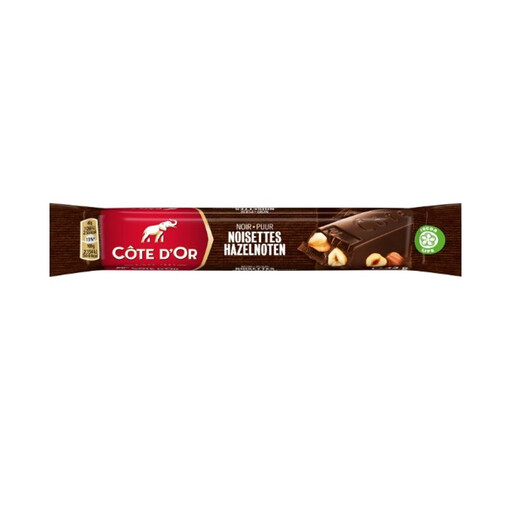 Image unavailable
The 45 g format is a good option if you’re looking for a set amount of dark chocolate with hazelnuts. Check the packaging if you want an individually wrapped portion, and check the sugar content on the label. The recipe contains hazelnuts, milk and soya, and may contain other nuts.
 Image unavailable
Worth considering if you’re looking for 70% dark chocolate and want to decide how much to have with your coffee. Its 100 g format isn’t a single portion in itself. The product information lists maltitol and soya, and warns that excessive maltitol consumption may have a laxative effect.
No. Santé publique France says that displaying it is voluntary. To compare prepacked chocolates, check their nutrition labelling: the DGCCRF states that this is compulsory for most prepacked foods.
Compare their nutritional values on the same per-100 g basis, then work out how much sugar you’ll get from the amount you plan to eat. Also check the ingredients, allergens and, for dark chocolate, the minimum cocoa content.
Not necessarily per 100 g: the size mainly determines how much chocolate you’re having. Check the ‘of which sugars’ figure for each recipe and take into account the weight you actually eat.
No. The Ministry of the Economy describes the so-called ‘sugar tax’ as a levy on sugary drinks, not as a tax specifically on chocolate bars. When choosing a bar, it’s better to look at its format and label.
Follow the storage instructions on the packaging and close it again after taking your portion. The instructions for the Lindt and Milka products featured recommend storing chocolate in a cool, dry place, away from heat.