What should you look for before buying?
First decide whether you want a spread to put on toast or a ready-to-eat product. That will help you choose the format, work out what to compare and find a quantity that suits your breakfast.
Jar of spread
Choose this: if you want to spread it yourself on bread, brioche or pancakes.
Bear in mind: even a small jar isn’t necessarily a separately packaged portion.
Spread with breadsticks
Choose this: if a ready-to-dip portion is what you’re looking for at breakfast.
Bear in mind: the breadsticks included take the place of the bread you would have chosen yourself.
Crunchy snack
Choose this: if you’d rather eat an individual product straight away.
Bear in mind: a filled wafer isn’t suitable for spreading on toast.
| What to consider |
What to check |
Who is it for? |
| Product to spread |
Check the product description and packaging: is it spread in a jar or a portion to spread, rather than a filled wafer? |
I’m planning to make my own toast and want to choose how much spread to put on it. Around 29% of consumers would prioritise this use for spreading. |
| Ready-to-eat portion |
Look for separately packaged portions and check what comes with them, such as breadsticks. Don’t assume a jar contains portions just from its weight. |
I’m looking for something I can eat straight away, without preparing bread or getting out cutlery. For around 36% of consumers, this convenience would be the priority. |
| Ingredients and labelling |
Compare the ingredients and nutritional values per 100 g of products intended for the same use, and check the allergens listed. |
Before choosing a recipe, I want to compare its sugar content and check the ingredients that matter to me. This would be the priority for around 21% of consumers. |
| Suitable quantity |
Check the net weight, the number of portions and whether the product is available from your retailer. |
For the occasional solo breakfast, I prefer a quantity that matches what I plan to use. This would be the main consideration for around 14% of consumers. |
Brands to know when comparing formats
These products illustrate different ways to enjoy a spread: in a jar, as a portion with accompaniments or as a snack. A feature mentioned for one product won’t necessarily apply to other products from the same brand.
Nutella
Nutella France’s range includes spread as well as Nutella & Go! and B-ready, which are designed for different ways of eating.
- The jar is for spreading; Nutella & Go! pairs spread with breadsticks.
- B-ready is a crunchy snack, not a bar of spread.
Carrefour Classic'
Carrefour France lists spreads in jars in its breakfast range.
- The jar format is suitable for making toast.
- If you want a separate portion, check the packaging for the product you choose: a jar doesn’t confirm that it’s portioned.
Bio Village
E.Leclerc lists a 350 g jar of Bio Village organic hazelnut spread.
- The product listing lets you check the ingredients and nutritional values for this product.
- E.Leclerc says this product isn’t sold on its website and advises checking with the relevant store. It isn’t presented as an individual bar.
Nocciolata
Auchan France lists a 270 g jar of Nocciolata organic cocoa and hazelnut spread.
- The listing states that this product is palm oil-free and contains 51 g of sugars per 100 g.
- These features don’t turn the jar into an individual portion, nor do they tell you everything about its nutritional profile.
Pouce
Auchan France describes Pouce cocoa and hazelnut spread, sold in a 750 g jar.
- It’s spread in a jar, so you can measure out the amount you want.
- The listing says ‘Individual sachets: No’, so this product won’t suit you if you’re looking for separately packaged portions.
Three formats to consider on Joybuy
These products offer three different ways to enjoy breakfast on your own: spread a small portion of spread, dip breadsticks into spread supplied with them, or eat a filled wafer. Choose the format first, then compare the details of each product.
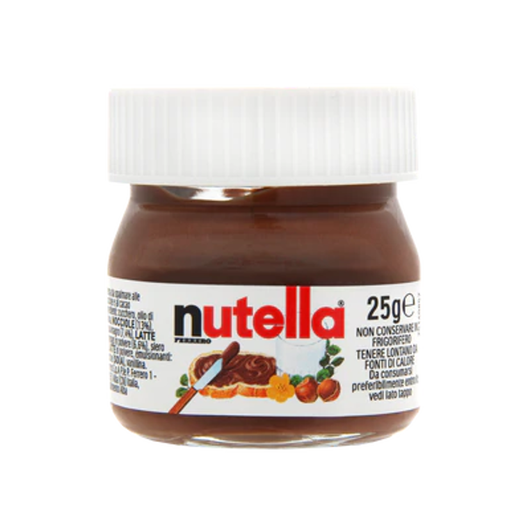 Image unavailable
Nutella hazelnut and chocolate spread, 25 g
Consider this if you want to spread a portion on bread, toast or pancakes yourself. The 25 g single-serving format is presented as a small jar, not a bar. To compare the ingredients or check for allergens, read the ingredients list and nutritional information on the packaging.
View on Joybuy
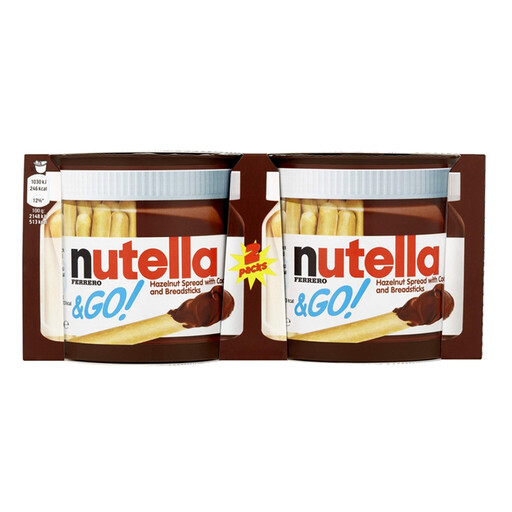 Image unavailable
Nutella & Go! with breadsticks, 78 g
Consider this if you want a portion for dipping without having to prepare bread separately. The 78 g pack pairs spread with breadsticks, so it isn’t a standalone jar for making your own toast. The product information lists hazelnuts, milk, soya, wheat and barley; check the labelling if any of these ingredients are relevant to you.
View on Joybuy
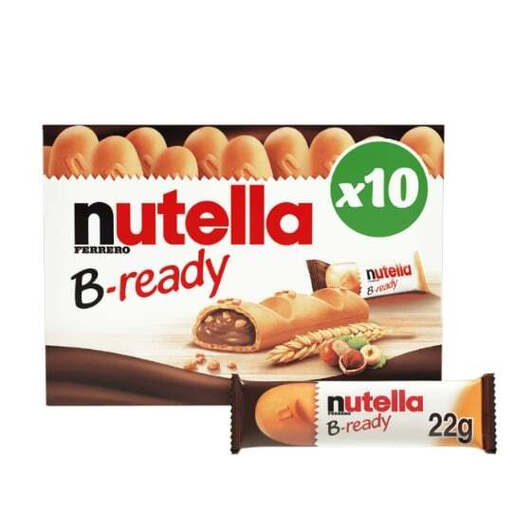 Image unavailable
Nutella B-ready, 10 wafers of 22 g each
Consider this if you’d rather eat an individual snack straight away than make toast. The pack contains 10 filled wafers, weighing 220 g in total; they aren’t a substitute for spread. The product information lists hazelnuts, milk, soya, wheat and barley. Check the label to make sure it suits your needs.
View on Joybuy
Frequently asked questions
Is Nutri-Score compulsory on spreads in France?
No. Santé publique France says producers display Nutri-Score voluntarily, and the European Commission explains that front-of-pack nutrition information isn’t mandatory under current EU rules. A nutritional declaration is generally required for pre-packed foods, so check it alongside the ingredients list, whether or not the logo is present.
Can a chocolate and hazelnut bar replace a spread?
Not if you want to spread it on your own bread. Nutella France presents B-ready as a crunchy, ready-to-eat product and Nutella & Go! as spread served with breadsticks. These formats are designed for a different way of eating than a jar that you measure out to make toast.
How can you recognise a proper individual portion?
Check whether the product comes in a single-portion pack or is divided into sachets, rather than relying on the size of the container alone. A small jar can be a portion to measure out without being a bar or containing several sachets. For example, Auchan France’s listing for its 750 g Pouce jar explicitly states that it doesn’t contain individual sachets.
What should you compare on the label before choosing?
For products intended for the same use, compare the ingredients and nutritional values per 100 g, particularly the sugars and fats, then check the allergens for each product. If Nutri-Score appears on the packaging, you can also use it as a guide, but don’t assume on that basis alone that the product is right for your needs.


