
Livraison le jour même ou le lendemain

Qualité garantie

Débloquez vos offres de bienvenue: Livraison GRATUITE | Jusqu'à -80 % | 30 jours d'essai gratuits à JoyPlus
Téléchargez l'application
A well-organised wardrobe starts with good hangers. But the elegant look of wood doesn’t guarantee sturdiness or suitability for your clothes. A heavy coat can bend a hanger that’s too thin, while a poorly designed trouser bar lets trousers slide to the bottom of the wardrobe.
Before you buy solid wooden hangers, take the time to compare the material, dimensions, weight capacity and the details that really make a difference day to day.
Some models only have a wood-effect finish, while their structure is made from a composite material or is hollow. This might be fine for lightweight shirts, but it’s far less suitable for jackets, suits or coats.
Look for the term solid wood, the type of wood used if it’s stated, and the thickness of the hanger. A varnished or lacquered finish also protects the wood from snags, provided you keep the hangers in a dry indoor environment.
A hanger that’s too narrow can create creases or marks on the shoulders of a jacket. Conversely, a model that’s too wide takes up unnecessary space and may not suit smaller garments.
Wide-shoulder hangers, typically between 40 and 44.5 cm in this selection, are better suited to jackets, blazers and coats. For fine shirts or children’s clothing, a narrower width is often preferable.
A pack of 20 hangers might seem particularly good value, but its price needs to be weighed against its design and intended use. A non-slip trouser bar, a fragile hook or a rough finish can quickly spoil the appeal of a large pack.
Also check the exact contents of the pack. Some products presented as sets include a storage accessory, while the product description should clearly state the actual number of hangers supplied.
For suits or coats, choose a structure described as solid wood, with sufficient thickness. The models in this selection have thicknesses of 1.2 cm, 1.5 cm or 2 cm, depending on the reference.
The weight capacity stated by the manufacturer corresponds to a static load limit that is evenly distributed. It doesn’t mean the hanger will withstand every situation. Don’t exceed the stated value and avoid hanging wet clothes on them, as the weight can increase significantly.
A curved shape follows the natural line of the shoulders better than a simple straight bar. It’s particularly useful for wooden suit hangers, structured jackets and coats.
Side notches are used to hold the straps of dresses and tops. They’re practical, but make sure they are perfectly smooth so they don’t snag delicate fabrics.
Hangers with a trouser bar allow you to hang a complete outfit on a single support. A bar covered in silicone or a non-slip material holds trousers and skirts better than a perfectly smooth wooden bar.
Grooves on the shoulders play a similar role for straps. These details are invaluable for wardrobe organisation, especially if clothes are moved around frequently.
A 360° swivel hook makes it easier to access clothes when the rail is full. It can also simplify displaying outfits in a shop or hotel wardrobe. A corrosion-resistant metal finish is preferable, but the hanger should still be kept away from prolonged dampness.
To clean your hangers, use a dry or slightly damp cloth. Avoid abrasive products, washing machines, tumble dryers, direct heat and prolonged exposure to sunlight. These precautions help preserve the varnish and reduce the risk of the wood warping.
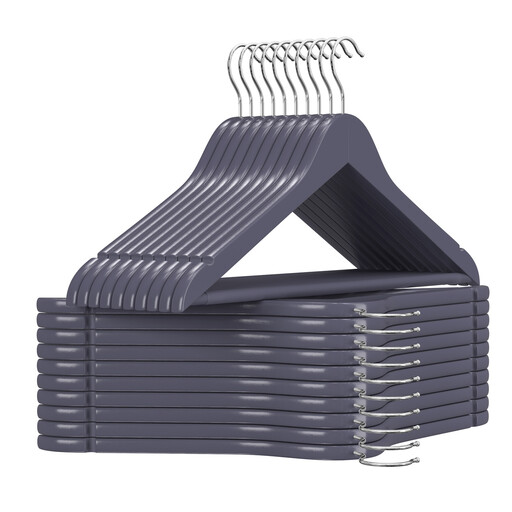
Why this choice suits this profile: This 20-piece pack provides a great foundation for organising a first wardrobe. Each hanger measures 44.5 × 23 cm and can support up to 5 kg of stated static load.
The product description mentions maple wood, shoulder grooves and a rubberised bar to reduce clothes slipping.
A pack of 20 hangers, a 360° swivel hook and a polished surface.
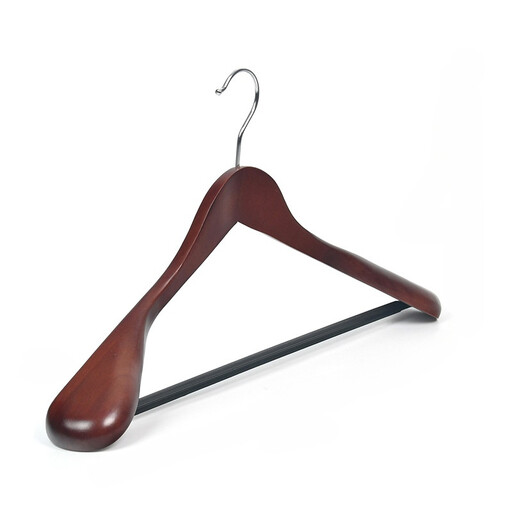
Why this choice suits this profile: Its six-piece format and claret finish fit perfectly into a wardrobe dedicated to suits, jackets and formal wear.
The solid wood structure, curved shoulders of approximately 40 cm and silicone-covered trouser bar are suitable for structured garments.
A stated thickness of 1.5 cm, a distributed load capacity of up to 12 kg and a one-piece construction.
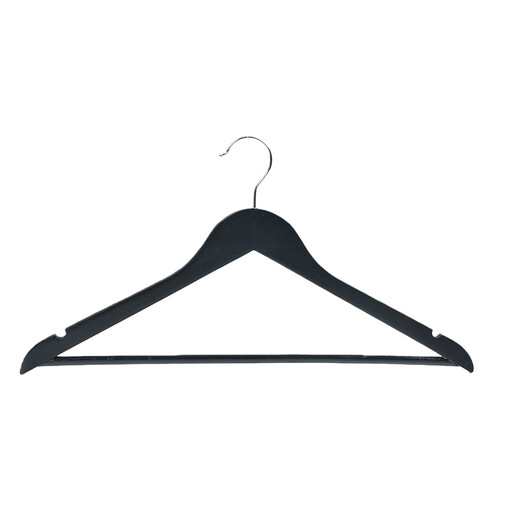
Why this choice suits this profile: This format is ideal for large wardrobes, shops, guest houses and people who regularly hang coats or jackets.
The width of approximately 42 cm limits pressure points on the shoulders, while the non-slip bar helps keep trousers in place.
A stated thickness of 2 cm, a 360° swivel hook and a maximum load capacity of 15 kg.
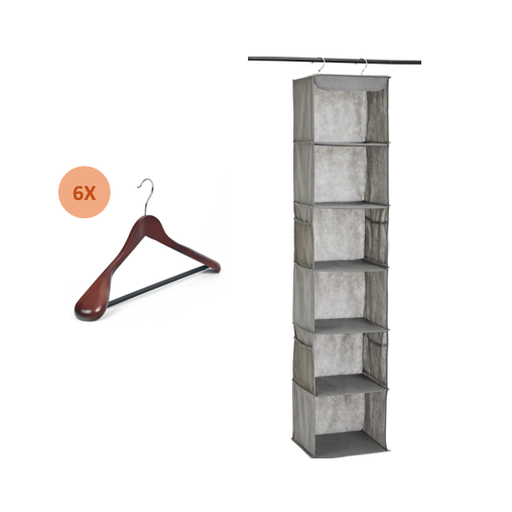
Why this choice suits this profile: The set combines six hangers for hanging clothes and a six-tier shelf for jumpers, accessories or shoes.
The kit avoids buying hangers and vertical storage separately, while clearly separating folded clothes from hanging items.
Six hangers with a stated capacity of up to 12 kg each and a hanging shelf with side pockets.
We’ve put together a comprehensive, real-time selection of products that meet these strict criteria as well as European safety requirements.
To make the best use of the available space, group your hangers by category: shirts, trousers, suits, dresses and coats. Reserve the models with the highest weight capacity for the heaviest garments.
Space-saving hangers aren’t necessarily fragile. A slim structure can still be strong if it’s properly reinforced. However, leave a little space between thicker items to avoid compressing the fabrics.
A width between 40 and 44.5 cm is generally suitable for adult jackets and suits. For a very slim fit or a smaller size, compare the actual width of the hanger with the shoulder width of the garment.
It all depends on the weight hung, the quality of the construction and the storage conditions. A hanger kept in a dry wardrobe, used within its load limits and cleaned with a soft cloth can remain functional for many years. Avoid dampness, wet clothes and sources of heat.
They can be slightly thicker, but their shape and stability often reduce the sagging of clothes. To save space, compare the stated thickness, organise the hangers by category and use a trouser bar to group a complete outfit together.