
Livraison le jour même ou le lendemain

Qualité garantie

Débloquez vos offres de bienvenue: Livraison GRATUITE | Jusqu'à -80 % | 30 jours d'essai gratuits à JoyPlus
Téléchargez l'application
Securing your home's perimeter while keeping electricity bills in check is a growing concern for many homeowners. The solar-powered floodlight camera has emerged as a compelling 2-in-1 solution, combining deterrent lighting with video surveillance. These standalone, solar-powered devices eliminate the need for complex wiring and, in many cases, monthly subscription fees.
With a rapidly expanding market, knowing how to decode technical specifications is essential to making an informed choice. As a Joybuy Product Recommendation Officer, my role is to walk you through the key factors to consider before you buy, helping you find the product that truly meets your needs.
Before diving into specific models, here are a few practical tips for evaluating a solar-powered floodlight camera.
One of the main advantages of these devices is their autonomy. To assess it, consider two elements:
A floodlight camera is only useful if its footage is clear and its alerts are reliable.
Outdoor equipment must be built to last. The IP (Ingress Protection) rating is a European standard that certifies this.
Based on the criteria above, here are some options that stand out for their technical specs and market positioning.
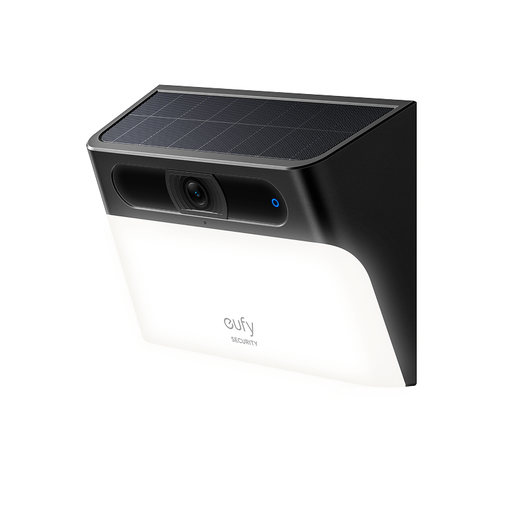
Why we recommend it: This model is the archetype of the modern wireless outdoor security camera. It integrates a 300-lumen light, a 2K camera, a solar panel, and AI detection into a single unit. Its main advantage is its subscription-free ecosystem with local event storage, which meets a strong demand from users who are conscious of their budget and data privacy.
Pros:
Who is this product for: Ideal for homeowners or apartment dwellers with a garden looking for a "set it and forget it" surveillance solution. Its simple, wire-free installation and lack of recurring costs make it a highly relevant choice for a first-time setup or for securing a specific area (entrance, garage, patio).
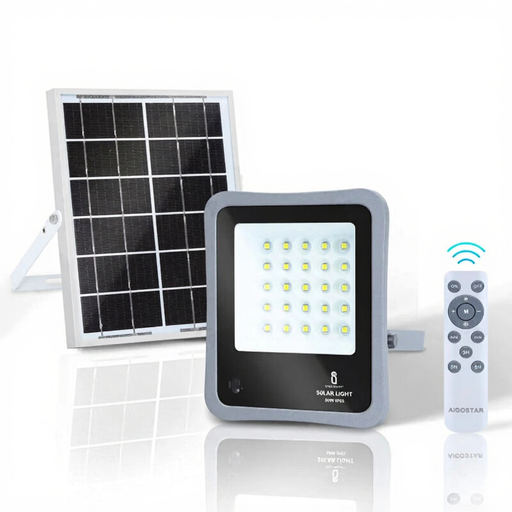
Why we recommend it: This product focuses on a single mission: to provide powerful and reliable solar outdoor lighting. Although it doesn't have a built-in camera, its 400-lumen light output and robust 5000 mAh battery make it a benchmark for security lighting. It is controllable via remote, allowing you to adjust brightness and set timers.
Pros:
Who is this product for: Perfect for users whose primary need is powerful, autonomous security lighting for a driveway, yard, or garden. It's also an excellent companion to an existing solar security camera system that may lack sufficient lighting.
If your needs are focused mainly on illuminating your outdoor spaces and you want to explore other models without cameras, our full range of outdoor solar lights offers a variety of solutions for every need and budget.
1. What is the real-world battery life of a solar security camera? The battery life depends on the battery's capacity, the solar panel's efficiency, and the frequency of detections. A good model, properly exposed to sunlight, can run continuously. In power-saving mode and with limited sunlight, the battery can last from several weeks to several months on a single full charge, as eufy states for its S120 model (up to 60 days).
2. Is a subscription required to use a solar floodlight camera? Not necessarily. More and more manufacturers are offering subscription-free solar security lighting. These models, like the eufy S120, use local storage (on the device or a base station connected to your home network) to save video clips. This saves you from monthly fees and gives you full control over your data. Always check this point before purchasing.
3. Is installing a solar light with an integrated camera complicated? No, one of its biggest advantages is the simplicity of installation. Since there are no power cables to run, installation usually just involves mounting the bracket to a wall with a few screws. You just need to ensure you pick a location that receives enough direct sunlight for the panel to recharge effectively. The setup is then completed via a mobile app, which is typically a quick, guided process.