
Livraison le jour même ou le lendemain

Qualité garantie

Débloquez vos offres de bienvenue: Livraison GRATUITE | Jusqu'à -80 % | 30 jours d'essai gratuits à JoyPlus
Téléchargez l'application
Securing your home with a solar-powered outdoor security camera? On paper, it sounds like the perfect solution: no cables to run, effortless installation, and 100% eco-friendly operation. In reality, however, the market is saturated with promises that don't always live up to the hype. Between disappointing battery life and "smart" features that hide behind subscriptions, the risk of making a poor investment is very real.
As the head of product selection at Joybuy, my mission is to help you get a clearer picture. Let's review the common pitfalls and the criteria that truly matter for choosing a model that fits your needs, with no nasty surprises.
Marketing is incredibly effective at highlighting appealing features that often mask deal-breaking flaws. Here are the red flags you should never overlook.
To make an informed decision, forget the marketing jargon and focus on these non-negotiable technical specifications. The performance and reliability of your setup depend on them.
A blurry image is useless. Resolution is the number one criterion for being able to identify a face or read a licence plate.
The field of view is just as crucial. A wide angle (over 130°) allows you to cover a larger area with a single camera. And for surveillance with zero blind spots, a motorised 360° outdoor camera (PTZ - Pan-Tilt-Zoom) is the ultimate option, as it lets you control the lens remotely.
How your camera communicates and stores video is a fundamental point.
A modern camera no longer just passively records. It must alert you appropriately and be able to actively deter intruders.
Rather than an endless list, we've selected models that meet specific needs, based on our performance and reliability criteria.
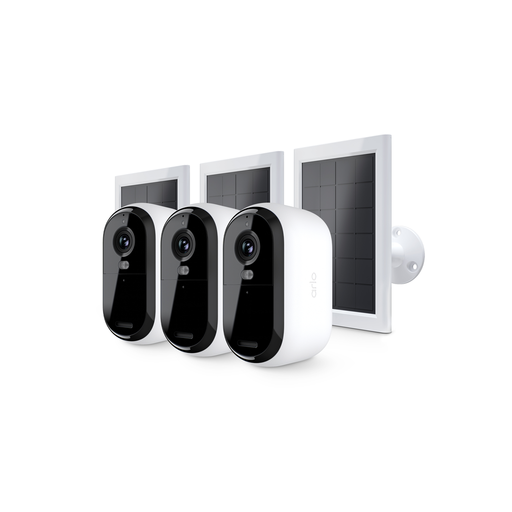
Why this model? Perfect for homeowners who want complete coverage of their property (front, garden, driveway). This solar surveillance kit allows you to build a cohesive security ecosystem and manage everything from a single app.
Unlike models with a tiny integrated panel, this kit provides a dedicated solar panel for each camera. This optimises charging, avoiding the disappointing battery life pitfall, even when sunshine is scarce.
2K resolution for sharp details, colour night vision via the integrated spotlight, and an 80 dB siren for active deterrence. The Arlo ecosystem is a benchmark for reliability.
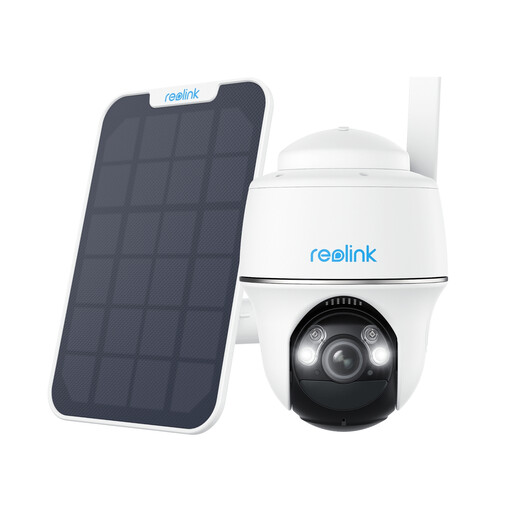
Why this model? The foolproof solution for monitoring a second home, warehouse, construction site, or horse stable where Wi-Fi can't reach. It offers complete independence thanks to its solar-powered 4G connection.
This model completely bypasses Wi-Fi dependency, the main hurdle for monitoring remote sites. All it needs is a SIM card with a data plan to be up and running.
Standalone 4G connectivity, motorisation (355° pan and 140° tilt) for panoramic coverage, and smart person/vehicle detection for truly relevant alerts.
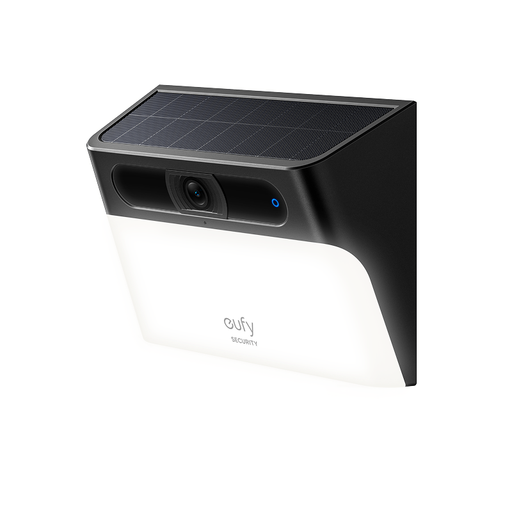
Why this model? Ideal for those looking to secure an entrance, porch, or pathway while adding a security light. This clever two-in-one device offers an excellent feature-to-price ratio.
Eufy is transparent about its business model: no hidden monthly fees. Local storage and AI features are included out of the box, which avoids the mandatory subscription trap required to get 100% value from the product.
A 2K camera and a 300-lumen wall light in a single device. The light is motion-activated, combining convenience with deterrence. The 105 dB siren completes the package for enhanced security.
We have compiled a complete and up-to-date selection of products that meet our demanding selection criteria and current security standards.
1. Does a solar camera work in winter or on cloudy days? Yes, but with logically reduced efficiency. A quality camera is designed to operate even with indirect light. It all comes down to the size and efficiency of the solar panel, as well as the battery capacity. Models with an external, adjustable solar panel perform much better in winter, as you can tilt it to best capture the low sun. During long periods without any sunlight, the battery takes over.
2. What is the real-world lifespan of a solar camera battery? The lifespan of a lithium-ion battery is typically between 3 and 5 years, or about 500 full charge cycles. The actual runtime between charges depends on many factors: the frequency of detections, the duration of recordings, the use of night vision or the spotlight, and of course, the outside temperature. A well-configured model with good sun exposure can last for several months without intervention, as the panel provides a continuous trickle charge.
3. Do I really need a subscription for my camera to work? Absolutely not. Many cameras, particularly from brands like Eufy or Reolink, are designed to be 100% standalone thanks to local storage on a microSD card. This allows you to enjoy essential features (live view, motion-triggered recording, notifications) with no monthly fees. Subscriptions are usually offered as an option for additional services, such as longer cloud storage or more advanced AI analysis (facial recognition, etc.). The golden rule: always read the product specifications carefully to ensure the features you need aren't hidden behind a paid subscription.