
Livraison le jour même ou le lendemain

Qualité garantie

Débloquez vos offres de bienvenue: Livraison GRATUITE | Jusqu'à -80 % | 30 jours d'essai gratuits à JoyPlus
Téléchargez l'application
Securing your property, whether it's your primary residence, a country house, or a remote plot of land, can often be a real headache. No power outlet nearby? A spotty Wi-Fi signal? Installing a surveillance system can quickly turn into a nightmare. Add to that the fear of a monthly subscription for video storage, and many people end up throwing in the towel.
This is where the solar-powered wireless outdoor security camera comes in. Completely self-sufficient thanks to its solar panel and connected via Wi-Fi or 4G, it stands out as the most flexible and cost-effective security solution available today. This guide breaks down the essential selection criteria and presents a curated list of the best models on the market—without the marketing fluff—to help you find the perfect gear for your needs.
Before you dive in, let's review the key technical features that will make all the difference in your day-to-day use.
The choice of connectivity is the first critical decision: it depends entirely on where you plan to place your camera.
A blurry image is useless. To clearly identify a person or a vehicle, sharpness is non-negotiable. And for that, it all comes down to resolution.
Local storage or the cloud? This question impacts both your wallet and the privacy of your data.
Let's get down to business with a few models that stand out from the crowd, each tailored to specific needs.
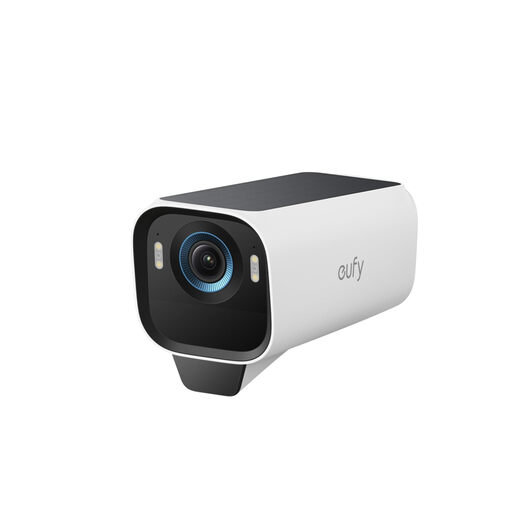
Why it stands out: This model goes all-in on exceptional image quality with its 4K resolution and MaxColor colour night vision technology. The eufy ecosystem, built around the HomeBase 3, offers expandable local storage and onboard AI that learns to recognise faces for smarter alerts.
Key Features:
Who is it for? Discerning homeowners with a Wi-Fi connection who are looking for a high-end, integrated, and subscription-free surveillance solution with impeccable image quality.
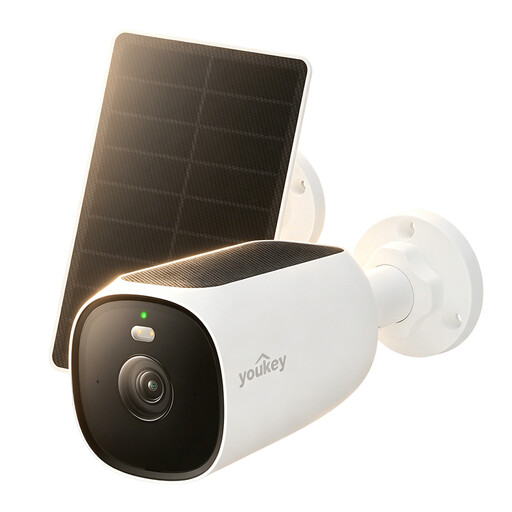
Why it stands out: The Youkey S420 sets itself apart with 24/7 continuous recording, a rarity for battery-powered models. Its 10,000 mAh battery, paired with a dual solar panel system (one integrated, one external), is built for rock-solid autonomy.
Key Features:
Who is it for? Those who want permanent recording, not just motion-triggered clips, while still enjoying the autonomy of a solar-powered solution and a high-performance Wi-Fi connection.
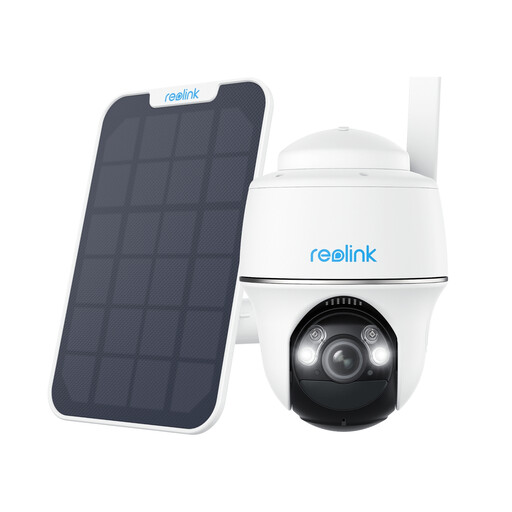
Why it stands out: The Reolink G430 is the queen of remote locations. Its 4G LTE connectivity completely frees you from Wi-Fi. Better yet, it's a motorised outdoor PTZ (Pan-Tilt-Zoom) camera: it can rotate horizontally (355°) and vertically (140°) to scan a very wide area and eliminate blind spots.
Key Features:
Who is it for? The perfect solution for owners of farmland, construction sites, second homes, or any other location without Wi-Fi and a power supply.
This selection is just a glimpse of what's possible, from ultra-high resolution to 4G connectivity. But because every situation is unique, we invite you to explore our dedicated category to discover a wider range of products, with different features or for any budget.
? Explore our full range of battery-powered infrared security cameras
1. What is the real-world battery life of a solar camera? The actual battery life depends on a trio of factors: the amount of sunlight, the battery capacity, and the number of motion detections. In practice, with just a few hours of direct sunlight per day, a well-positioned camera can run indefinitely without intervention. During long periods of overcast weather or unusually high activity, an occasional top-up via USB-C may be necessary.
2. Does a 4G camera use a lot of mobile data? It all depends on your usage. Live streaming is the most data-intensive activity. However, if you stick to alerts and the short clips sent during detections, consumption is minimal. A small data plan of 2 to 5 GB per month is more than enough for typical use.
3. Is local storage truly secure? Absolutely. Local storage (on a microSD card or a base station) is the best guarantee of privacy. Your videos never leave your home and are kept safe from a third-party company's servers. Furthermore, the data is usually encrypted, making it unreadable even if the camera or memory card is stolen. You remain in complete control.