
Livraison le jour même ou le lendemain

Qualité garantie

Débloquez vos offres de bienvenue: Livraison GRATUITE | Jusqu'à -80 % | 30 jours d'essai gratuits à JoyPlus
Téléchargez l'application
By day, a well-designed garden or patio is an invitation to relax. But when night falls, the charm fades as darkness takes over. The traditional solution? Wired lighting, which often means complex installation, digging trenches in your lawn, and a soaring electricity bill.
This is where the solar garden light comes in: a simple, cost-effective, and eco-friendly solution to transform your outdoor spaces. Easy to install and 100% self-sufficient, they turn a dark path into a warm and secure walkway. Follow our guide to make the right choice, featuring our key selection criteria and our picks for the best models available now.
To ensure you choose wisely, let's review the key technical points that make all the difference.
An outdoor solar light is, by its very nature, exposed to the whims of the weather. Rain, wind, dust... a low-end model won't last long. The first thing to do is check its Ingress Protection (IP) rating.
An IP65 rating, for example, guarantees the product is completely dust-tight (the first digit, 6) and can withstand water jets from any direction (the second digit, 5). For a weatherproof solar light that will stay outdoors through all seasons, an IP65 rating is the bare minimum to ensure good longevity.
Battery life is the crucial factor for a solar light. It depends on the battery and solar panel combination, and a good balance between the two is essential.
Pay attention to placement! A solar stake light in the shade will never charge properly. Aim for areas that get several hours of direct sunlight each day.
Far from being purely functional, solar lighting is a real asset for your garden decor. The styles are as varied as their uses:
Also consider the colour temperature (warm white for a welcoming feel, cool white for a modern look) and the brightness (in lumens) to craft an atmosphere that reflects your style.
To move from theory to practice, here is our selection of products that meet different needs, from a simple decorative piece to a connected smart solution.
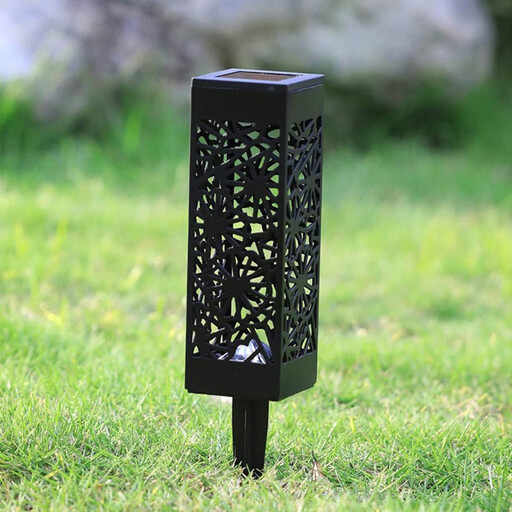
The standout feature: This set stands out from the crowd with its cut-out design that casts elegant floral patterns on the ground. More than just a light, it's a true decorative object that creates a magical atmosphere along a pathway or in the heart of a flowerbed.
What we like:
Who is it for? For those looking for pathway lighting that is primarily decorative and hassle-free, creating a warm ambiance with no technical fuss.
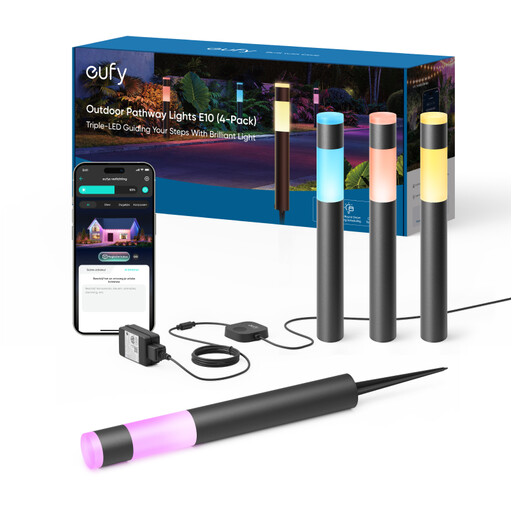
The standout feature: This kit is a step up in quality that will delight smart home enthusiasts. Note that this is not a solar model, but a low-voltage wired system. The advantage? Complete control from your smartphone (via the eufy app) or by voice (Alexa, Google Assistant), and millions of colours thanks to RGBWW technology.
What we like:
Who is it for? For tech enthusiasts who want garden lighting integrated into their smart home ecosystem. It's the perfect solution for those who demand deep customisation, whether for a party with friends or for everyday lighting.

The standout feature: A clever solution specifically designed to dress up and illuminate fence, deck, or gate posts. Its key strength is its versatility: the included bases fit most standard posts (from 10x10 cm to 15x15 cm).
What we like:
Who is it for? The ideal solution for homeowners who want to secure and enhance their fence or deck posts with integrated, elegant, and 100% self-sufficient lighting.
Our selection is just a glimpse of what's possible. Spotlights, string lights, floodlights... the world of garden lighting is vast. To explore further, feel free to browse our complete catalogue.
? Discover Our Entire Outdoor LED Garden Lighting Category
The lifespan depends on two components. On one hand, the LED, which is virtually indestructible (typically over 50,000 hours). On the other, the rechargeable battery, which is the main wear-and-tear component. You can expect a battery life of 2 to 3 years. The good news is that on many models, it can be easily replaced.
Yes, but with reduced performance. A solar panel will still charge on an overcast day, but it will naturally store less energy than in direct sunlight. In winter, the days are shorter and there is less sunlight, so the battery life of your lights will be shorter.
Maintenance is virtually non-existent. The only important step is to keep the solar panel clean. Wiping it with a damp cloth from time to time is enough to remove dust, pollen, or leaves that could block the sensor and reduce its efficiency.