
Livraison le jour même ou le lendemain

Qualité garantie

Débloquez vos offres de bienvenue: Livraison GRATUITE | Jusqu'à -80 % | 30 jours d'essai gratuits à JoyPlus
Téléchargez l'application
Securing your property without running cables or increasing your electricity bill is an appealing promise. The solar outdoor security camera is the perfect answer to this need for autonomy. However, the market is flooded with models featuring often-confusing specifications. It's easy to fall into certain traps that turn a seemingly attractive purchase into a real-world disappointment.
As a Product Expert at Joybuy, my role is to help you see things more clearly. Let's break down the mistakes to avoid and the essential criteria for making a choice that truly fits your needs.
For autonomous and reliable outdoor surveillance, three fundamental points demand your attention. The performance and suitability of your setup depend on them.
Autonomy is the heart of the matter. Don't just rely on the battery capacity (measured in mAh); the truly decisive element is the power of the solar panel (in Watts).
The choice is strategic and depends on the camera's location.
A high resolution (2K or 4K) allows you to zoom in on details without losing clarity, which is crucial for identifying a face or a license plate. Colour night vision is also a major advantage over traditional black-and-white infrared, as it provides richer visual information in the event of an incident.
Finally, smart motion detection (capable of distinguishing between humans, vehicles, and animals) significantly reduces false alerts triggered by wind or tree branches. This makes the system much more relevant and less disruptive on a daily basis.
Here are a few options that cater to distinct user profiles, taking into account the criteria we've just discussed.
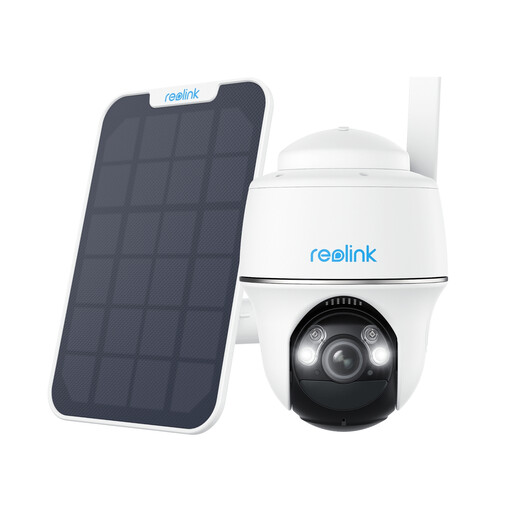
Why it's a great choice : Perfect for a second home, a farm, or a construction site. Its 4G LTE connectivity makes it completely independent of Wi-Fi, while its solar panel and rechargeable battery ensure continuous surveillance.
It bypasses the connectivity problem by relying on the mobile network, ensuring reliable operation where Wi-Fi is non-existent.
Complete Autonomy : 4G connectivity and solar power. Smart Detection : Distinguishes between people, vehicles, and animals for relevant alerts.
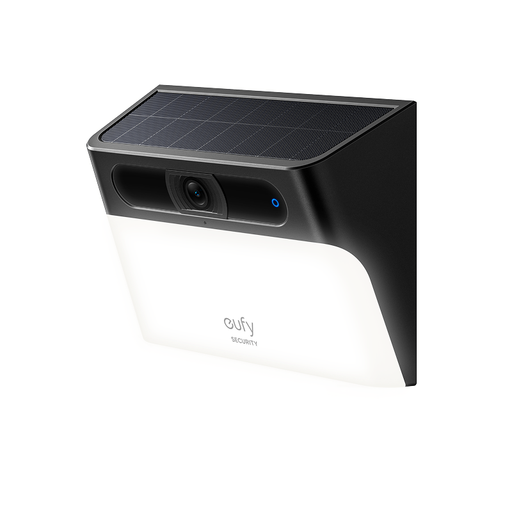
Why it's a great choice : For those seeking a 2-in-1 solution. It combines a security camera and a wall light, all powered by an integrated solar panel. It blends seamlessly into a home's facade, providing both lighting and surveillance without drawing attention.
It avoids the hidden fees trap by offering local storage for events with no monthly fees, making it a truly cost-effective solution in the long run.
All-in-One Design : 2K camera and 300-lumen light. "Forever" Power : The integrated solar panel ensures continuous charging with just 2 hours of sunlight per day.
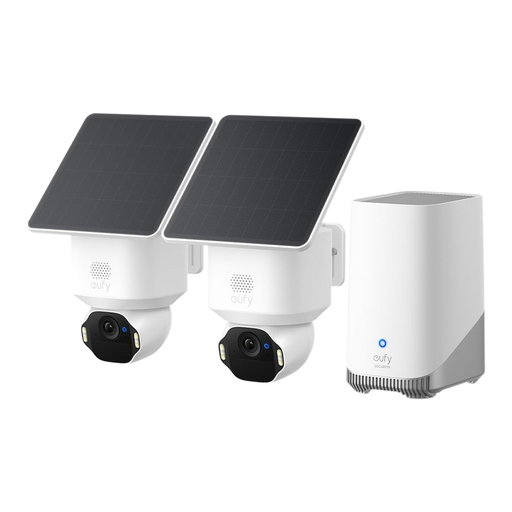
Why it's a great choice : For those who want to make no compromises on image quality and coverage. This kit offers Ultra HD 4K resolution, AI-powered motion tracking, and a 360° view thanks to its pan-and-tilt motor, all powered by solar energy.
It avoids the overstated autonomy trap with SolarPlus technology, which, according to the manufacturer, requires only two hours of sunlight per day for continuous power.
4K Image Quality : Allows for precise identification of details from a distance. 360° Protection : The Pan & Tilt motorisation eliminates blind spots.
For more specific needs, such as wildlife monitoring or surveillance of particularly large properties, other models may be more suitable.
Our team has also selected specialised models, particularly for wildlife monitoring, that meet very precise requirements.
Yes, but with logically reduced efficiency. A good model is designed to operate even in low light. Its actual autonomy will depend on its battery's ability to store energy on sunny days. Cameras with a high-performance solar panel and a large-capacity battery (e.g., 10,000?mAh or more) are much better equipped to handle long periods of low sunlight.
The lifespan is primarily determined by two components: the battery and the solar panel. Modern lithium-ion batteries can withstand several hundred charge cycles (averaging a lifespan of 3 to 5 years) before their capacity noticeably decreases. The solar panel, on the other hand, can operate for over 10 years with minimal maintenance (a simple cleaning from time to time is sufficient).
No. Many cameras, including those in our selection, offer local storage on a microSD card. This allows you to record and view videos without any monthly fees. A subscription remains an option, useful if you want additional services like cloud storage (to protect your recordings if the camera is stolen) or more advanced video analysis features.