
Livraison le jour même ou le lendemain

Qualité garantie

Débloquez vos offres de bienvenue: Livraison GRATUITE | Jusqu'à -80 % | 30 jours d'essai gratuits à JoyPlus
Téléchargez l'application
Securing a second home, a construction site, or a garden with no power outlet or Wi-Fi nearby can quickly become a real challenge. This is where the solar-powered outdoor security camera comes in: a flexible and autonomous solution to keep an eye on your property, wherever you are. Its secret? It combines a long-lasting battery, a solar panel for continuous recharging, and wireless connectivity. Say goodbye to wiring hassles!
This guide breaks down the available options for you and focuses on the essential technical criteria to find the model that truly fits your needs.
Before diving into our selection, here are the key points to consider to guide your decision.
This is the first and most crucial criterion: it all depends on where you plan to install your camera.
Autonomy is the most critical factor for a standalone outdoor security camera. Two elements need to be checked:
A good camera is, above all, about clear images and relevant alerts.
Here are a few models that stand out for their technical features and suitability for specific uses.
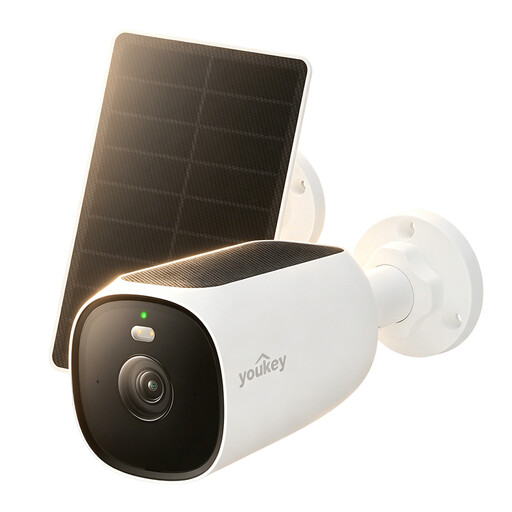
What sets it apart: The Youkey S420 stands out with its ability to record continuously 24/7, a feature rarely seen in battery-powered cameras, which usually only record upon detection. Paired with its dual-band Wi-Fi 6 connectivity, it ensures stable and fast data transmission.
Key Features:
Who is it for? Ideal for homeowners looking to secure the areas around their house (garden, driveway, garage) where the Wi-Fi signal reaches, but running a power cable is a headache.
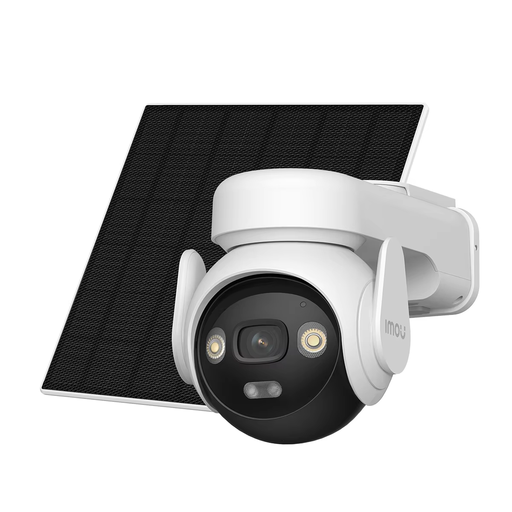
What sets it apart: This solar PTZ (Pan-Tilt-Zoom) camera offers complete 360° coverage thanks to its motorised head. Its secret weapon? Its dual connectivity: it can operate on both 4G (with a SIM card) and 2.4 GHz Wi-Fi, offering unbeatable versatility.
Key Features:
Who is it for? The versatile choice for those who need to monitor large areas, such as a large garden, a car park, or a farm. Its dual connectivity makes it equally suitable for a primary residence or an isolated site.
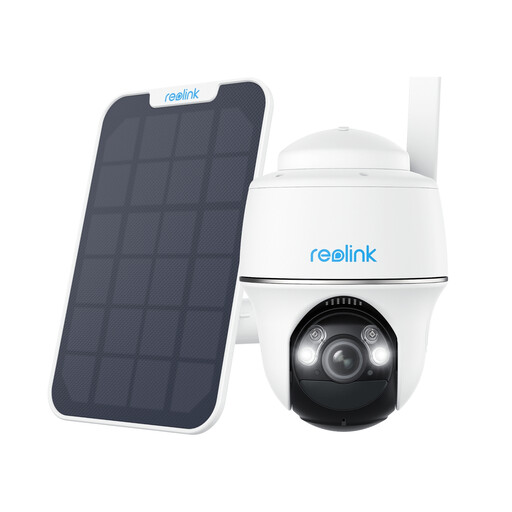
What sets it apart: The Reolink G430 is the specialist for off-grid areas: it's designed to work where there is neither Wi-Fi nor electricity. As a pure 4G solar camera, it is the go-to solution for monitoring an isolated site. Its PTZ function and smart detection make it an autonomous and incredibly effective guardian.
Key Features:
Who is it for? The perfect tool for professionals (managers of construction site cameras, farmers) and individuals with a second home, a boat, or land without any network or electrical infrastructure.
If these models don't check all the boxes or if you want to explore a wider range, feel free to browse our full catalogue.
Discover our full selection of battery-powered home security cameras
1. Does a solar camera work in winter or on cloudy days? Absolutely. The principle is simple: the solar panel charges the internal battery, which in turn powers the camera. On overcast days or at night, the camera runs on its energy reserve. That's why a large-capacity battery (10,000 mAh or more) and good panel orientation are crucial to get through the winter without any issues.
2. Is a subscription required to use a solar security camera? Not necessarily. Most of the models in our selection are subscription-free security cameras for essential uses: alerts, live viewing, and local recording on a MicroSD card. Paid subscriptions, which are always optional, unlock premium services like cloud storage, an extended video history, or more advanced image analysis.