
Livraison le jour même ou le lendemain

Qualité garantie

Débloquez vos offres de bienvenue: Livraison GRATUITE | Jusqu'à -80 % | 30 jours d'essai gratuits à JoyPlus
Téléchargez l'application
The promise of a wireless solar-powered outdoor security camera is appealing: secure your home or business premises in a simple, eco-friendly way. With no cables to run, installation is a breeze and your electricity bill gets lighter. But be warned—the market is full of misleading marketing claims that can turn what seemed like a smart investment into a major disappointment. As a product expert at Joybuy, my mission is to help you see things more clearly. Let's break down the most common pitfalls and the essential criteria for making the right choice.
The marketing speak is well-polished, but certain technical details can quickly render a camera unusable in daily life. Here are the points you absolutely must check.
To make the right choice, focus on these three technical points. They are what will make all the difference in your daily use of your security camera with a solar panel.
Image clarity is non-negotiable. A Full HD (1080p) resolution is the bare minimum today. For finer details, like reading a license plate from a distance, aim for a 2K (QHD) or 4K (UHD) resolution instead. But night quality is just as crucial. Check for colour night vision, often activated by a built-in LED spotlight. This feature, combined with a camera with motion detection and an alarm, offers a much higher level of deterrence and identification than classic infrared.
Most models are Wi-Fi. Make sure the camera is compatible with the 2.4 GHz band, which offers better range through walls than the 5 GHz band. For remote locations (second homes, construction sites, agricultural land) outside of Wi-Fi range, a 4G solar camera is the way to go. It uses a SIM card (and the accompanying mobile plan) for complete autonomy.
Storage is the crux of the matter for avoiding hidden fees. A camera that offers a microSD card slot allows you to keep your recordings locally, without depending on a paid cloud service. Finally, the viewing angle defines the area you can monitor. For a driveway or an entrance, a fixed 130° angle may be sufficient. To supervise a large garden or a car park, a motorised 360° outdoor solar camera (Pan & Tilt) allows you to scan the entire area and eliminate blind spots from your smartphone.
Rather than a long-winded list, here are three models that meet specific needs, perfectly aligned with the criteria we've just discussed.
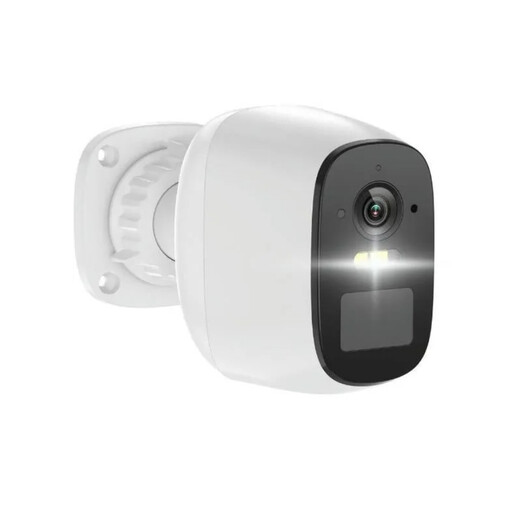
Why we recommend it: Perfect for a first-time setup, this camera gets straight to the point at an affordable price. It runs on a battery and can be paired with a solar panel (sold separately), giving you the flexibility to install it and monitor an entrance or a small yard.
It bypasses mandatory subscriptions thanks to its port for a microSD card (up to 256 GB). The cloud remains an option, never a requirement.
Its easy integration with smart home ecosystems (Tuya, Alexa, Google Assistant) and its 3 MP resolution (higher than Full HD) ensure a sharp, clear image.
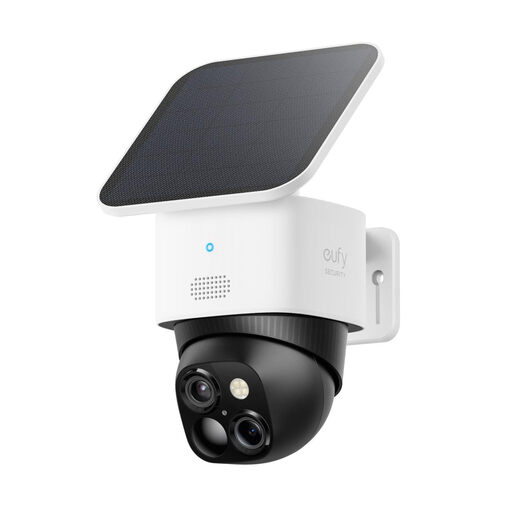
Why we recommend it: For those who want 360° surveillance and to leave nothing to chance. This model combines a directly integrated solar power supply, 3K resolution, and pan-and-tilt motorisation, enough to cover an entire garden or car park with no blind spots.
True to eufy's DNA, it operates with zero monthly fees. Storage and detection AI are managed locally, which guarantees both the privacy of your data and control over your budget.
Its dual-lens system (wide-angle + telephoto) and 360° rotation offer uncompromising surveillance. This is still a rare feature on an all-in-one solar model.
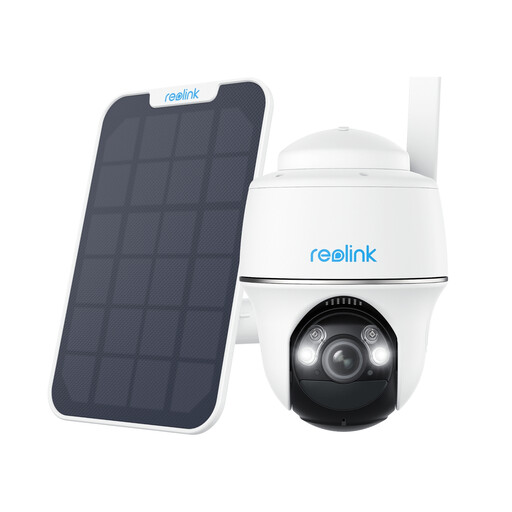
Why we recommend it: This is THE solution for locations without Wi-Fi: a second home, a warehouse, a construction site, or even a storage unit. It is 100% self-sufficient thanks to its 4G connectivity and included solar panel.
It bypasses the connection problem by using the mobile network. Its solar panel is properly sized to maintain the 6000 mAh battery's charge, ensuring truly reliable autonomy.
Its standalone 4G LTE connectivity, coupled with Pan & Tilt motorisation (355°/140°), allows you to keep an eye on vast areas remotely, without needing any internet router.
Discover our complete, up-to-date selection of cameras that meet our strict selection criteria and current standards.
Battery life depends on a trio of factors: battery capacity, the amount of sunlight, and the frequency of motion detections. In winter, with reduced sunlight, don't rely solely on the solar panel. A good capacity battery (over 5000 mAh) can last several weeks without direct sun with moderate use. For a high-traffic area, a model with a 10,000 mAh battery (or more) or a larger solar panel is essential.
Absolutely not. A subscription is most often required to store videos on the manufacturer's cloud and unlock advanced AI features. To control your budget, opt for a solar-powered outdoor IP camera with a microSD card slot. This allows you to store your recordings locally and access them from the app without any recurring fees.
Yes, provided you follow a few simple rules. You have the right to film only within your property (garden, entrance, driveway). However, it is strictly forbidden to film public property or your neighbours' land. The camera must be aimed so that it only captures your private space. It is also recommended to inform visitors (family, delivery drivers, etc.) of the device's presence, for example with a sticker.