
Livraison le jour même ou le lendemain

Qualité garantie

Débloquez vos offres de bienvenue: Livraison GRATUITE | Jusqu'à -80 % | 30 jours d'essai gratuits à JoyPlus
Téléchargez l'application
There's nothing quite like enjoying your garden or patio after dark. However, installing traditional lighting can often be discouraging: digging trenches, running cables, and watching your electricity bill soar... Fortunately, solar outdoor lighting is a game-changer, offering an economical, eco-friendly, and incredibly simple solution to install.
As a product expert for Joybuy, my mission is to guide you through the maze of available options. This guide gets straight to the point: breaking down the essential criteria for making the right choice and presenting a selection of tried-and-true products, whether you're looking to mark a pathway, create soft ambient lighting, or secure the areas around your home.
Before you settle on a model, a few technical points deserve your attention. These are the details that will make all the difference in your day-to-day use.
There's a lighting solution for every need.
Your lighting will have to face the elements, summer and winter. The IP (Ingress Protection) rating is therefore not optional. An IP65 rating is an excellent benchmark: it guarantees total protection against dust and resistance to powerful water jets (heavy rain, sprinklers...). The materials are also important: ABS, polycarbonate, or treated aluminium are signs of longevity against rust and UV rays.
Battery life is the crucial factor for solar lighting. It depends on two key elements: the battery's capacity and the solar panel's efficiency. A good model should provide between 8 and 12 hours of light after a full day's charge (which takes about 6 to 8 hours of direct sunlight). LED technology has become the standard, and for good reason: it consumes very little energy and promises a lifespan of tens of thousands of hours. Also, consider practical features like a dusk-to-dawn sensor, which automatically manages when your solar garden lamp turns on and off.
Here are a few options that meet different needs, selected for their performance and ease of use.

Why this model stands out This light is specifically designed to sit atop fence or deck posts. Its key strength is its impressive installation versatility, thanks to the different bases provided, which fit most wood or composite posts. It casts a soft, even light, ideal for elegant pathway marking.
The Pros
Who is it for? For those who want to enhance the look of their fence or deck with elegant, discreet, and hassle-free marker lighting.
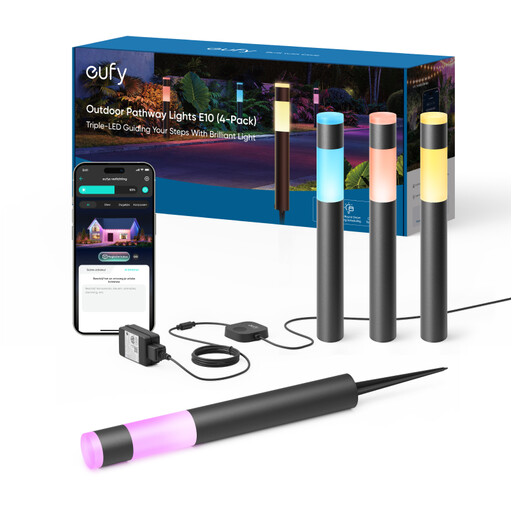
Why this model stands out Note: this model is wired, not solar. However, it earned a spot in our selection for fans of customisation and smart home ecosystems. It offers full control over colours and intensity via an app and can even be integrated into an existing security system.
The Pros
Who is it for? For smart home enthusiasts who want to sculpt complex lighting scenes in their garden and aren't afraid to run a power cable.
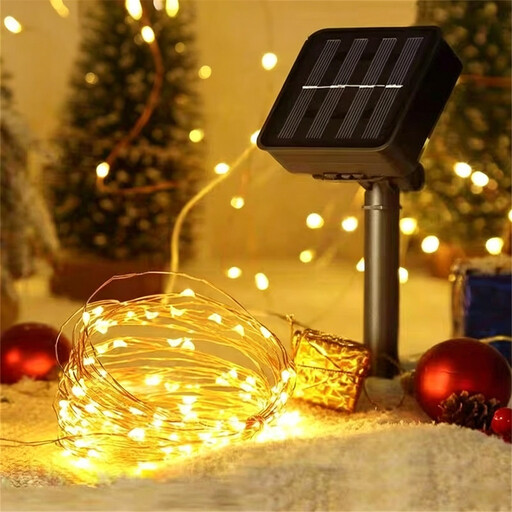
Why this model stands out This outdoor string light is the ultimate charming touch. Thanks to its thin and flexible copper wire, it can be wrapped and shaped to your heart's content. The two-pack provides ample length to decorate a large space, while the 8 lighting modes allow you to vary the ambiance.
The Pros
Who is it for? For anyone who dreams of a magical atmosphere on a balcony, pergola, or around a tree, all without any wiring constraints.
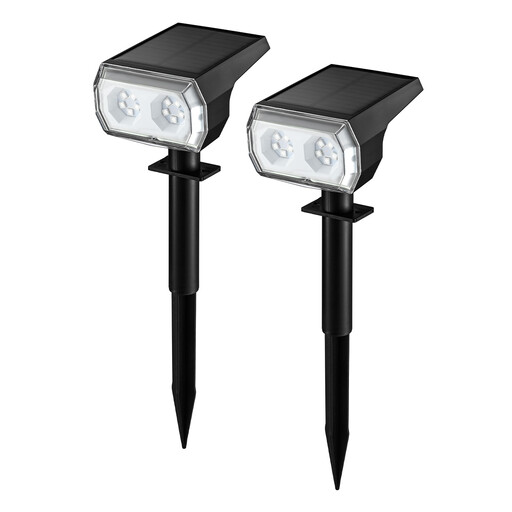
Why this model stands out This versatile and powerful solar spotlight is designed for accent lighting. With its 48 RGB LEDs, it projects colourful light to showcase a tree, a facade, or an architectural detail. It offers a dual installation option: stake it into the ground or mount it on a wall.
The Pros
Who is it for? For those who want to stage their garden with colourful touches of light, whether for everyday use or special occasions.
This selection is just a glimpse of the possibilities offered by outdoor lighting. To explore a wider variety of models, styles, and brightness levels, feel free to browse our full category.
Discover Our Full Range of Patio and Garden Lights
1. What is the real battery life of a solar lamp in winter? Battery life is directly dependent on the duration and intensity of sunlight. In winter, days are shorter and the sky is often overcast, so charging time is reduced, and performance is logically lower than in summer. However, modern solar panels are designed to capture energy even on cloudy days, still ensuring a few hours of operation. The trick to optimising the charge: point the panel due south, away from any shaded areas.
2. Can solar lighting be as powerful as electric lighting? It all depends on the model and its intended use. For ambient or pathway lighting (between 10 and 50 lumens), solar solutions easily compete with their electric counterparts. For powerful security lighting (over 300 lumens), solar spotlights with motion detectors are an excellent alternative. They only turn on at full power when needed, which intelligently conserves their battery.
3. Is installation really simple for everyone? Absolutely, and that's one of their biggest advantages. The vast majority of solar lights require no special tools or any electrical knowledge. Post and spotlights are staked into the ground, string lights are wrapped wherever you like, and wall lights are fixed with a few screws. The only golden rule: make sure the solar panel is well-exposed to the sun.